Mimic Stream Flow
Arrange the plant on a very gently sloped rock and direct water to run over it in one direction to imitate natural stream flow and keep shoots clean and well aerated.

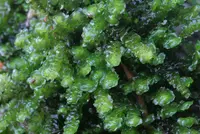
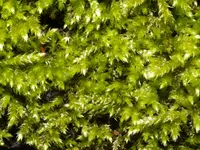
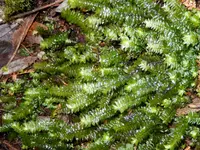
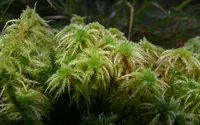
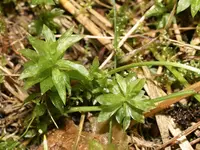
Water earwort is a small liverwort, a non-vascular plant that forms soft, overlapping mats along clean, fast-flowing streams and waterfalls. Scapania undulata has flat, wavy fronds that cling tightly to wet rocks and wood, giving a fine, moss-like texture.
This species is native to cool, humid regions across Europe and North America, where it thrives in very moist, shaded habitats with low pollution. It is sensitive to drying out and water quality changes, which makes it more challenging to keep healthy in artificial setups. For those wanting to learn how to care for Water Earwort, success usually depends on providing constant moisture, cool conditions, and gentle, indirect light.

Care Difficulty
Hard Care

Light Preference
Shade

Water Requirements
Aquatic

Temperature Preference
Cold Hardy

Hardiness Zone
3–9

Soil Texture
Sandy, Rocky, Organic-rich

Soil pH
Strongly acidic (4.5–5.5)

Soil Drainage
Waterlogged tolerant

Fertilization
Minimal (feed rarely)
Scan your plant to receive care tips personalized for your specific plant
Available on iOS and Android
This liverwort prefers cool, shaded conditions with only brief, gentle sun exposure.
This species is adapted to constantly moist to submerged conditions and does not tolerate drying.
This cool-water liverwort thrives in mild conditions and declines in prolonged heat or strong frost.
This liverwort needs very high humidity to stay hydrated and photosynthesize efficiently.
Scapania undulata naturally anchors on saturated, mineral-rich substrates rather than typical potting soil.
This species can be kept in containers if they simulate a shallow, constantly wet stream edge.
This liverwort is adapted to nutrient-poor, clean stream environments and usually needs no fertilizer in cultivation.
Pruning Scapania undulata is minimal and mainly hygienic rather than shaping.
This species is usually grown on rocks or substrate in flowing water, so care focuses on gentle transplanting rather than classic repotting.
Scapania undulata is commonly multiplied vegetatively using small divisions rather than spores in home setups.
This cold-hardy liverwort tolerates freezing conditions in nature and usually needs little specific winter care.

Plant Health Check
Not sure what's wrong with your plant? Check your plant's health inside the app.
This liverwort is strongly associated with cold, fast-flowing, well-oxygenated streams and is considered an indicator of clean, unpolluted water in upland and montane regions.
Its leaf lobes have distinctly wavy margins, a feature that helps increase surface contact with flowing water and gives submerged mats a characteristic rippled appearance.
Populations have been recorded growing in streams affected by mine drainage, showing a notable tolerance to dissolved metals such as copper and zinc compared with many other aquatic bryophytes.

This species is often one of the first bryophytes to colonize freshly exposed, water-swept rock in mountain streams, forming dense mats that create microhabitats for aquatic invertebrates and microorganisms.
Growth is quite slow, forming low, creeping mats that expand only a few centimeters per year. Rate depends heavily on constant moisture, clean cool water, and low nutrient levels. Disturbance or drying slows growth even further.
Keep your plants happy and healthy with plant identification, disease detection, and easy care guidance.