Substrate anchoring
Press the moss gently but firmly into a rough, stable surface such as bark, rotting wood, or a lava rock so the rhizoids can attach quickly and reduce desiccation risk during the first weeks.

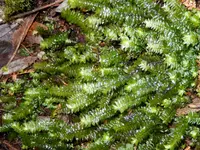
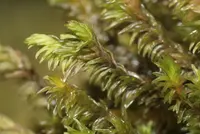
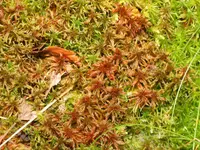
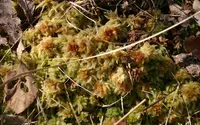
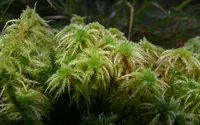
Quill moss (Cyathophorum bulbosum) is a delicate, creeping moss that forms soft, feather-like mats of bright to yellow-green foliage. Its shoots are flattened, giving a fine, textured look on wood or rock.
This species is native to moist forests in parts of Australasia and Asia, where it grows in shaded, humid habitats on logs, tree bases, and soil banks. It prefers stable moisture, cool to mild temperatures, and soft, filtered light, which makes how to care for quill moss somewhat similar to other woodland mosses.
Under consistent humidity and gentle handling, it can adapt to terrariums or shaded outdoor moss gardens, but it is sensitive to drying out and physical disturbance.

Care Difficulty
Moderate Care

Light Preference
Shade

Water Requirements
Keep Soil Moist

Temperature Preference
Cool Climate

Hardiness Zone
7–9

Soil Texture
Loamy, Silty, Organic-rich

Soil pH
Strongly acidic (4.5–5.5), Acidic (5.5–6.5)

Soil Drainage
Moist but well-drained

Fertilization
Minimal (feed rarely)
Scan your plant to receive care tips personalized for your specific plant
Available on iOS and Android
Cyathophorum bulbosum prefers cool, shaded forest-like light with only brief weak sun.
Cyathophorum bulbosum thrives in consistently moist, never stagnant conditions.
This moss favors cool, stable conditions similar to shaded stream banks or damp forest floors.
This moss prefers consistently moist, high-humidity conditions to maintain dense, healthy growth.
Provide a soft, consistently moist, organic-rich substrate that mimics damp forest or streambank conditions.
This species can be grown in shallow containers or terrariums when moisture and stability are carefully managed.
Cyathophorum bulbosum needs very little feeding when grown in suitable, humus-rich conditions.
Cyathophorum bulbosum requires minimal pruning, mainly to maintain cleanliness and healthy mats.
This moss is usually grown on substrates rather than in deep pots, so transplanting is more relevant than repotting.
Cyathophorum bulbosum is commonly propagated by division and re-establishing small mat fragments.
In climates with mild, consistently moist winters, this moss usually needs little special attention.

Plant Health Check
Not sure what's wrong with your plant? Check your plant's health inside the app.
This moss forms flattened, feather-like shoots with leaves arranged in two neat rows, giving mats a distinctive combed appearance compared with most tufted mosses around it.
The species name bulbosum refers to its slightly swollen leaf bases, a subtle morphological trait that helps bryologists distinguish it from visually similar forest mosses under magnification.
It is naturally associated with cool, moist forests of the southern hemisphere, especially in New Zealand and southeastern Australia, where it carpets rotting logs and shaded soil in stable, humid microclimates.

This moss often acts as an indicator of long-undisturbed, consistently damp forest, so its presence can signal relatively intact, high-humidity microhabitats valued in ecological surveys.
This species expands slowly, usually adding only a few millimeters of length per year. Growth is faster in consistently cool, humid, shaded conditions on moist substrates like rotting wood or damp rock, and slows sharply if humidity drops.
Keep your plants happy and healthy with plant identification, disease detection, and easy care guidance.