buxbaumia moss Care (Buxbaumia viridis)

Also known as: Green shield moss
buxbaumia moss

About buxbaumia moss

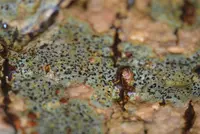
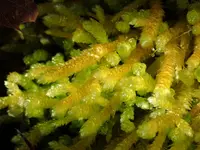
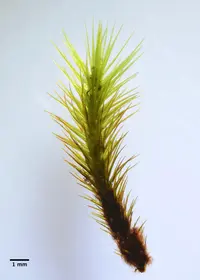
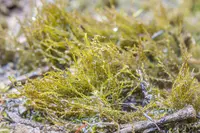
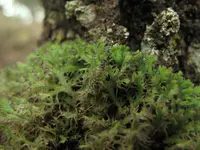
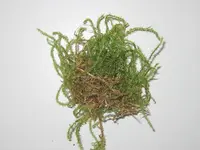
Buxbaumia viridis, often called green shield-moss, is a small, specialized moss known for its large, upright spore capsules and almost invisible leafy stage. It behaves as a decomposer, growing directly on well-decayed, moist conifer wood rather than forming dense carpets. This species is naturally found in cool, humid forests across parts of Europe, Asia, and North America, often in shaded, undisturbed woodland. It can be challenging for beginners, as it depends on stable moisture, clean air, and specific substrate conditions. Those who want to learn how to care for buxbaumia moss should understand its preference for constant humidity, low light, and softly decomposed wood rather than standard potting soil.

Main Plant Requirements

Care Difficulty

Hard Care

Light Preference

Shade

Water Requirements

Keep Soil Moist

Temperature Preference

Cool Climate

Hardiness Zone

4–8

Soil Texture

Loamy, Peaty, Organic-rich

Soil pH

Strongly acidic (4.5–5.5), Acidic (5.5–6.5)

Soil Drainage

Moist but well-drained

Fertilization

Minimal (feed rarely)

Get Personalized Care Plan

Scan your plant to receive care tips personalized for your specific plant

Available on iOS and Android

How to Care for the buxbaumia moss

This forest-floor moss prefers low, cool light that mimics shaded conifer woods.

  • Provide bright to moderate shade with dappled or filtered light, such as under trees or on the north side of rocks and logs, avoiding direct midday sun.
  • Allow brief early-morning or late-afternoon sun only in cool, moist sites; aim for no more than 1–2 hours of gentle direct light per day.
  • Protect buxbaumia moss from strong summer sun, which can desiccate tissues; in winter, slightly increased indirect light is acceptable if the substrate stays moist.

Moist, cool, humus-rich substrates are essential for Buxbaumia viridis to thrive.

  • Maintain consistently moist conditions in decaying wood or mossy soil, never allowing the substrate to fully dry; it should feel damp but not soupy when pressed.
  • Use visual cues rather than a fixed schedule: water or mist when the surface starts to look dull, lighter in color, or slightly dry to the touch, especially in warm or windy weather.
  • Reduce watering in cold winter periods when metabolic activity slows, but still prevent complete drying; slimy, foul-smelling patches or green algae films suggest chronic overwatering or stagnant conditions.

This species is adapted to cool, humid forest climates with moderate seasonal variation.

  • Aim for an optimal range of 50–68°F (10–20°C), where growth is typically most stable, especially under consistent shade and moisture.
  • Tolerate minimum temperatures down to about 23–28°F (-5 to -2°C) if the moss is insulated by snow, leaf litter, or moist wood, but repeated freeze–thaw cycles can damage capsules.
  • Limit exposure above 77–82°F (25–28°C); in hotter periods, increase shading and humidity, since prolonged heat combined with dryness can quickly desiccate and kill the gametophytes.

This moss needs consistently moist, humid conditions to remain healthy and active.

  • Aim for 70–90% humidity, mimicking damp forest floor or rotting wood surfaces where buxbaumia moss naturally occurs.
  • Low humidity leads to pale, shriveling capsules and crisp, brown gametophyte tissue.
  • Increase humidity with a closed terrarium, humidity dome, or by placing the substrate inside a covered, ventilated container.

This species prefers a soft, decaying, wood-based substrate rather than mineral garden soil.

  • Use finely crumbled, rotting conifer or hardwood pieces mixed with leaf litter and a small amount of peat or coco coir to mimic decaying logs.
  • Keep the substrate loose and spongy; it should retain moisture yet still allow slow drainage so it never becomes waterlogged.
  • A slightly acidic reaction around pH 5.0–6.0 suits Buxbaumia viridis, so avoid adding lime or alkaline materials.
  • Improve aeration by mixing in coarse bark chips or chunky wood fibers instead of sand or heavy composts that compact over time.

Buxbaumia viridis can be grown in shallow containers if the setup imitates moist, decaying wood habitat.

  • Choose a wide, shallow tray that allows a thin, continuous layer of decayed wood substrate rather than a deep soil column.
  • Use a rigid plastic or glazed ceramic container to slow evaporation and stabilize the constantly moist substrate surface.
  • Elevate the container slightly so any excess water can drain off a false bottom layer without saturating the moss substrate.

This moss is adapted to nutrient-poor forest substrates and needs only very light feeding in cultivation.

  • Use a very dilute balanced NPK liquid fertilizer at 1⁄8–1⁄4 strength, or a trace of fine compost tea, during active growth.
  • Apply at most once every 4–6 weeks in spring–early autumn, on moist substrate to avoid burn.
  • Avoid granular or slow-release fertilizers, which can concentrate salts around the tiny rhizoids.
  • Stop all feeding in late autumn and winter, as buxbaumia moss enters a low-activity phase.

Buxbaumia viridis does not require true pruning, only minimal grooming to keep the moss colony healthy.

  • Gently remove dead or collapsed sporophyte stalks by hand once they dry and turn brown.
  • Lift off fallen leaves, twigs, or other debris that shade or smother the moss surface.
  • Use soft tweezers or gloved fingers, avoiding disturbance of the underlying substrate.
  • Grooming maintains light access, air movement, and an even, natural carpet-like appearance.

This species is usually grown on stable substrates, so transplanting is infrequent and should be done carefully.

  • Transplant only when growth stagnates, substrate compacts heavily, or unwanted algae and weeds dominate.
  • Aim for cool, moist seasons such as early spring or early autumn, when evaporation stress is lower.
  • Typical intervals are several years or more, as stable, undisturbed conditions suit Buxbaumia viridis best.
  • Lift and move thin mats with a spatula, keeping substrate intact, then water gently to settle and reduce root stress.

Propagation is mainly by spores and is slow and specialized, so it is rarely attempted by average growers.

  • Collect mature sporophytes when capsules turn brownish and begin to release spores.
  • Sow spores on sterile, acidic, low-nutrient substrate kept evenly moist and shaded.
  • Maintain cool conditions around 50–59°F with high humidity and gentle air movement to limit mold.
  • Germination and colony formation can take many months, requiring stable moisture and minimal disturbance.

This moss is naturally cold hardy in cool, moist forests and usually needs little intentional winter care.

  • Tolerates subfreezing temperatures when substrate stays moist and does not freeze solid for long periods.
  • For containers, move to a sheltered, unheated but frost-exposed area to reduce freeze–thaw cycling.
  • Avoid drying winds; light leaf litter or shade cloth can moderate desiccation without smothering the moss.

Care Tips

Substrate preparation

Before introducing the moss, sterilize collected wood or soil by baking it at 180–200°F for 20–30 minutes to reduce competing mosses, fungi, and invertebrates that can quickly overrun slow-establishing colonies.

Shaded microhabitats

Create small, consistently shaded niches by placing pieces of decaying conifer wood under overhanging stones, logs, or nursery trays to give this moss stable, low-light pockets where sporophytes develop more reliably.

Moisture buffering layer

Lay a thin layer of finely shredded, already-rotting bark or wood fibers over the main substrate to act as a moisture buffer that stays damp longer and protects delicate gametophytes from brief drying.

Gentle spore handling

When moving material containing capsules, handle substrate gently and avoid brushing or rinsing, instead lifting small blocks intact so spores and juvenile plants remain in place and can reestablish quickly.

Monitoring competitors

Inspect patches every few weeks and carefully remove fast-growing mosses, algae crusts, or small seedlings with tweezers so they do not shade out or physically crowd this very small species, which is essential for successful Buxbaumia viridis plant care.

Common Pests and Diseases

Slugs and snails

This pest is strongly attracted to moist, shaded moss cushions and readily grazes on the sporophytes and surrounding organic layer. Symptoms include missing or shredded capsules, slime trails on nearby debris, and irregular gaps in the colony.

Solution

Hand-pick slugs and snails during damp evenings, use simple barriers such as copper tape on nearby hard edging, and place beer traps or iron phosphate pellets at a distance from colonies to reduce pressure without contaminating the immediate microhabitat. Maintaining slightly better air movement and removing dense leaf piles immediately around patches can also make conditions less favorable while still keeping humidity adequate for growing buxbaumia moss.

Springtails overpopulation

These insects are normally part of the decomposer community around moss, but very dense populations can disturb young protonemata and sporophytes by constant movement and grazing on biofilms. Symptoms include visible swarms of tiny jumping insects on very wet surfaces when disturbed.

Solution

Reduce continuous saturation by allowing brief surface drying between heavy soakings, improve micro-airflow with gentle spacing of debris, and flush colonies occasionally with clean, cool water to displace excess springtails. In enclosed or terrarium setups, temporarily lowering moisture levels and using sticky traps outside the moss patch usually brings numbers back to a balanced level.

Fungal overgrowth

This disease develops when persistent saturation, stagnant air, and dense organic litter allow saprophytic fungi to overrun the moss surface. Symptoms include white, gray, or fuzzy growths coating capsules or gametophyte patches and gradual loss of green color beneath the fungal mat.

Solution

Carefully remove heavily colonized plant material and loose fungal mats, then reduce shade density slightly and improve airflow to allow surfaces to dry between rains or misting. Avoid adding nutrient-rich mulches, keep surrounding leaf litter thinner, and use only clean, non-fertilized water to limit further fungal stimulation in sensitive Buxbaumia viridis care instructions.

Damping-off of protonemata

This disease affects the delicate thread-like juvenile stage, which can collapse and discolor rapidly under waterlogged, stagnant, or contaminated conditions. Symptoms include sudden thinning or disappearance of fine green filaments, often accompanied by a slight brown or translucent film on the substrate surface.

Solution

Use a clean, low-nutrient substrate, avoid standing water, and provide very gentle but regular air exchange, especially in propagation containers or highly sheltered woodland micro-sites. If loss is observed, reduce watering frequency, use boiled and cooled or filtered water for misting, and start new patches from spores on fresh, sterilized substrates to avoid recurring damping-off organisms.

Interesting Facts

Sporophyte Without Leaves

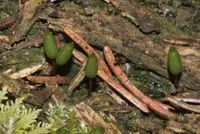
This moss is almost invisible in its leafy stage and is known mainly from its sporophytes, which form large, flattened, helmet-like capsules on tiny stalks that look unlike typical moss capsules.

Decay-Dependent Specialist

It grows almost exclusively on well-decayed, fallen conifer logs in cool, humid forests, making it highly dependent on long-term continuity of dead wood and stable microclimate conditions.

Conservation Indicator Species

Because it requires old, moist, decaying conifer wood that accumulates in undisturbed forests, it is used in Europe as an indicator of high conservation value and long forest continuity.

Botan icon

Did you know?

The species is dioicous, meaning male and female reproductive organs occur on separate plants, and both sexes are usually microscopic and buried in decaying wood, so even specialists often detect it only when the unusually shaped sporophyte capsules emerge.

FAQs about buxbaumia moss

Growth is slow. It often takes 2–3 years from spore to a visible colony, and expansion stays very modest. It relies on stable, cool, moist conditions and decaying wood, so any disturbance further reduces growth speed.

Grow Healthy Plants with Botan Care

Keep your plants happy and healthy with plant identification, disease detection, and easy care guidance.

Botan plant care app — identify plants on mobile

Explore More Plants