


Shaded mounting surfaces
Attach thalli to rough, inert materials like lava rock or unglazed tile and keep them in dappled shade, which stabilizes moisture around the plant body and reduces mechanical damage during routine handling.

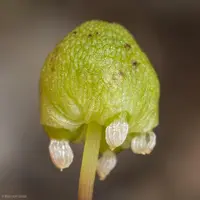
Palmer's asterella (Asterella palmeri) is a small thallose liverwort, a non-vascular plant that forms flat, mat-like green patches close to the ground. It has a simple, ribbon-like body rather than true leaves and stems.
This species is typically found on moist, often calcareous rocks and soil in arid and semi-arid regions of the southwestern United States and northern Mexico. Its ability to tolerate drying and then revive with moisture is a key trait that influences how to care for Palmer's asterella.
It prefers bright, indirect light, steady moisture, and a cool, humid microclimate, which can be challenging to maintain indoors without careful attention.

Care Difficulty
Moderate Care

Light Preference
Partial Shade

Water Requirements
Keep Soil Moist

Temperature Preference
Warm Climate

Hardiness Zone
Unknown

Soil Texture
Loamy, Silty, Organic-rich

Soil pH
Slightly acidic (6.5–7.0)

Soil Drainage
Moist but well-drained

Fertilization
Minimal (feed rarely)
Scan your plant to receive care tips personalized for your specific plant
Available on iOS and Android
This desert liverwort prefers bright exposure but is sensitive to prolonged, intense sun.
This species needs moist but not constantly saturated conditions around its thallus and substrate.
This plant is adapted to warm, arid climates but is vulnerable to frost and extreme heat stress.
This liverwort favors cool, moist air but tolerates brief drier periods if its substrate stays evenly damp.
This species prefers a thin, constantly moist, well-aerated substrate that mimics damp rock crevices or streamside ledges.
This species can be grown in shallow containers when moisture and drainage are tightly controlled.
This species is a small liverwort-like plant that usually grows on nutrient-poor rocky or soil surfaces and needs little added feeding in cultivation.
Asterella palmeri does not need structured pruning; only minimal cleanup is useful in culture.
Transplanting is rarely required, as this species is usually grown as a low mat on shallow trays or rock surfaces.
Propagation of this liverwort is possible but delicate and mainly suited to experienced growers.
Outdoor colonies are generally left in place, but potted or tray-grown Asterella palmeri may need modest winter attention.

Plant Health Check
Not sure what's wrong with your plant? Check your plant's health inside the app.
This liverwort is native to arid and semi-arid regions of southwestern North America, where it grows as a flattened, ribbon-like thallus closely appressed to rocky or compact soil surfaces.
It survives in habitats with irregular rainfall by entering a desiccation-tolerant state, then rapidly resuming photosynthesis after rehydration, a common liverwort strategy expressed in a particularly harsh, open-environment niche for this species.
Its reproductive structures release spores along with sterile, spring-like elaters that twist as they dry, helping scatter the spores into surrounding microhabitats during short windows of suitable moisture.
This liverwort forms low, creeping mats that expand slowly by vegetative growth and spores. It can gradually carpet suitable rock or soil surfaces but is not considered aggressive or invasive and is usually easy to keep within bounds.
Keep your plants happy and healthy with plant identification, disease detection, and easy care guidance.

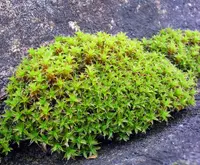
great hairy screw-moss
Syntrichia ruralis
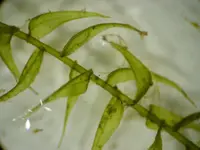
drepanocladus moss
Drepanocladus aduncus
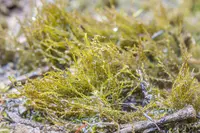
alternateleaf archidium moss
Archidium alternifolium
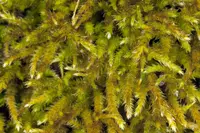
California antitrichia moss
Antitrichia californica
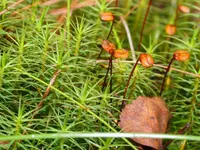
Common Haircap Moss
Polytrichum commune
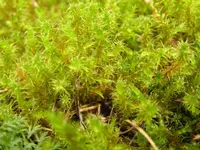
square goose neck moss
Rhytidiadelphus squarrosus
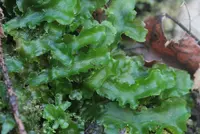
greasewort
Aneura pinguis
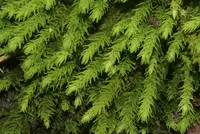
anomodon moss
Anomodon viticulosus