


Substrate top-dressing
Add a thin layer of fresh, finely milled sphagnum or neutral, washed sand on top of the colony every few months to keep the mat clean, encourage fresh growing tips, and reduce competition from algae and mosses.

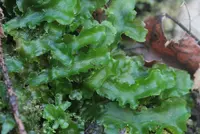
Greasewort (Aneura pinguis) is a small, flattened liverwort, a non-vascular plant that forms smooth, green to dark olive mats on moist surfaces. It lacks true leaves and roots, instead growing as simple ribbons of tissue pressed close to its substrate.
This species occurs in cool, damp habitats, often along stream banks, wet rocks, and shaded soil in temperate regions. It tolerates low light and constant moisture but is sensitive to drying out, which can make it challenging to keep in typical indoor conditions.
Those who care for greasewort should focus on stable humidity and gentle, indirect light, as it is adapted to consistently cool, shaded, and wet environments.

Care Difficulty
Hard Care

Light Preference
Partial Shade

Water Requirements
Keep Soil Moist

Temperature Preference
Cool Climate

Hardiness Zone
Unknown

Soil Texture
Peaty, Organic-rich, Loamy

Soil pH
Strongly acidic (4.5–5.5), Acidic (5.5–6.5)

Soil Drainage
Waterlogged tolerant

Fertilization
Minimal (feed rarely)
Scan your plant to receive care tips personalized for your specific plant
Available on iOS and Android
This small liverwort prefers soft, low-angle light similar to a shaded streambank or damp woodland floor.
This species thrives in constantly moist, cool substrates and reacts quickly to drying.
This liverwort prefers cool to mild temperatures and is sensitive to both hard frost and intense heat.
This liverwort needs very high, stable humidity to stay healthy in cultivation.
Aneura pinguis requires a constantly moist, low-nutrient, organic substrate rather than standard potting soil.
This species can be grown in shallow containers if moisture and humidity are tightly controlled.
Aneura pinguis is adapted to low-nutrient habitats, so added fertilizer is usually unnecessary and can easily damage the thallus.
Aneura pinguis needs very little pruning, limited to hygiene and access management rather than shaping.
This liverwort is rarely potted; management focuses on gently relocating or renewing its moist substrate when needed.
Aneura pinguis is usually multiplied vegetatively by dividing mats, not by spores, for reliable establishment.
In most temperate climates this liverwort tolerates cool conditions but suffers from hard freezes and desiccating winds.

Plant Health Check
Not sure what's wrong with your plant? Check your plant's health inside the app.
The plant’s body is packed with internal oil bodies that give it a greasy, translucent look, which inspired common names like greasewort. These oil bodies are important for species identification in liverworts and may help deter some small herbivores.
This liverwort can grow in a wide range of habitats, from wet rocks and damp woodland soil to lake margins and stream banks, often forming extensive dark-green mats. Its ability to colonize both calcareous and acidic substrates makes it one of the more widespread simple thalloid liverworts in temperate regions.
Although it can reproduce sexually with minute spores, this species often spreads mainly by fragmentation of its soft, ribbon-like thallus. Small pieces can detach and establish new patches, helping it rapidly occupy suitable moist surfaces.
Aneura pinguis has been used as a model taxon in molecular phylogenetic studies of simple thalloid liverworts, and DNA data have revealed that what was once treated as a single cosmopolitan species actually contains several genetically distinct lineages with more restricted geographic distributions.
This liverwort creeps slowly to moderately, forming low, flat mats over moist soil, rock, or wood. It can gradually carpet suitable surfaces but is usually easy to control by gently lifting and thinning unwanted patches by hand.
Keep your plants happy and healthy with plant identification, disease detection, and easy care guidance.

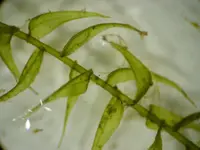
drepanocladus moss
Drepanocladus aduncus
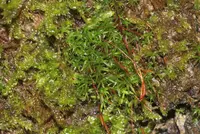
Red Beard-moss
Bryoerythrophyllum recurvirostrum
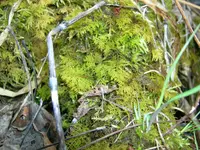
delicate thuidium moss
Thuidium delicatulum
andreaea moss
Andreaea rupestris
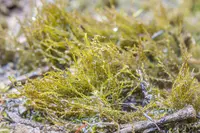
alternateleaf archidium moss
Archidium alternifolium
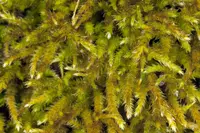
California antitrichia moss
Antitrichia californica
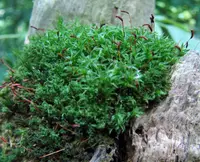
undulate atrichum moss
Atrichum undulatum
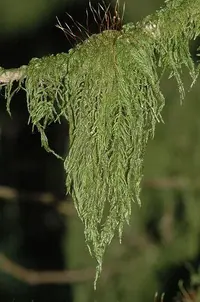
antitrichia moss
Antitrichia curtipendula