


Substrate anchoring
Press small fragments of the moss gently but firmly into rough, porous surfaces like lava rock or unglazed clay so rhizoids can grip and form a stable, even mat instead of loose clumps washing away.

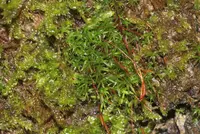
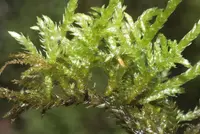
Red beard-moss, Bryoerythrophyllum recurvirostrum, is a small, hardy moss that forms dense, cushion-like mats with reddish to rust-colored stems and green tips. It stays low to the surface and slowly spreads over time.
In nature, it is typically found on dry, often calcareous rocks, walls, and soil in temperate regions, including parts of North America and Europe. Its ability to tolerate drying and rewetting makes it relatively forgiving in cultivation.
This species prefers bright, indirect light, stable moisture around the roots, and a well-drained, slightly alkaline substrate. Understanding these basic needs helps guide how to care for Red Beard-moss in containers, terrariums, or rock gardens.

Care Difficulty
Moderate Care

Light Preference
Partial Shade

Water Requirements
Regular Water

Temperature Preference
Cold Hardy

Hardiness Zone
3–8

Soil Texture
Sandy, Rocky, Organic-rich

Soil pH
Acidic (5.5–6.5), Slightly acidic (6.5–7.0)

Soil Drainage
Moist but well-drained

Fertilization
Minimal (feed rarely)
Scan your plant to receive care tips personalized for your specific plant
Available on iOS and Android
This moss prefers bright, indirect light with some gentle direct sun in cooler hours.
Bryoerythrophyllum recurvirostrum needs steady surface moisture but does not tolerate long-term waterlogging.
This hardy moss tolerates a wide temperature range but grows best in cool to mild conditions.
This moss prefers moderately moist air but copes better than many mosses with occasional dryness.
This species thrives on thin, mineral-based, sharply drained substrates rather than deep, rich potting soil.
This moss is suitable for shallow container culture when moisture and drainage are tightly controlled.
Bryoerythrophyllum recurvirostrum grown in typical low-nutrient substrates needs only very light feeding, if any.
Bryoerythrophyllum recurvirostrum needs minimal pruning, mainly to maintain appearance and colony health.
This moss is usually grown on rocks, soil surfaces, or wood, so care focuses on transplanting mats rather than classic repotting.
Bryoerythrophyllum recurvirostrum is commonly propagated by division and fragmenting small pieces of the moss cushion.
This hardy moss generally tolerates normal outdoor winters in temperate climates and needs little special attention.

Plant Health Check
Not sure what's wrong with your plant? Check your plant's health inside the app.
Under a hand lens, the leaf cells often appear red because of pigments that mask the usual green chlorophyll, giving the moss its common name red beard-moss.
When dry, the narrow leaves curl strongly backward around the stem, a trait reflected in the species name recurvirostrum, which means bent-back beak and helps reduce water loss in exposed habitats.
This species commonly colonizes calcareous rocks, mortar, roofs, and dry soil in temperate regions, showing high tolerance to desiccation and periodic heating compared with many other mosses, which is important to understand for Bryoerythrophyllum recurvirostrum plant care.

Bryoerythrophyllum recurvirostrum is widely used as a reference or indicator species in bryological surveys of urban and rural walls and calcareous substrates, because its distinctive red coloration and curled dry leaves make it easy to recognize even in harsh, man-made environments.
This species grows slowly, often adding only a few millimeters of height each year, but spreading gradually as mats expand. Growth rate improves with steady moisture, cool to mild temperatures, and clean, mineral-rich but not heavily fertilized substrates.
Keep your plants happy and healthy with plant identification, disease detection, and easy care guidance.

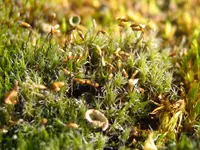
campylopus moss
Campylopus introflexus
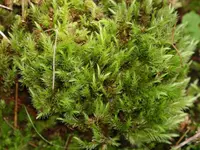
aulacomnium moss
Aulacomnium palustre
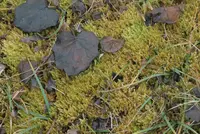
Lindberg's Hypnum Moss
Calliergonella lindbergii
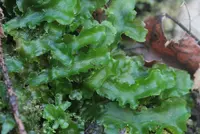
greasewort
Aneura pinguis
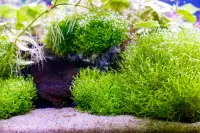
Crystalwort
Riccia fluitans
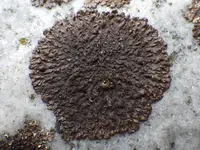
Warty Camouflage Lichen
Xanthoparmelia verruculifera
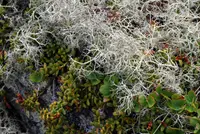
witch's hair lichen
Alectoria ochroleuca
brachythecium moss
Brachythecium rivulare