Anchor On Substrate
Press small clumps firmly onto rough bark, rock, or fibrous wood using biodegradable mesh or cotton thread so the shoots make immediate contact and establish faster instead of drying or washing away.

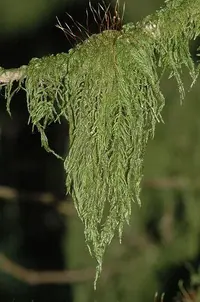
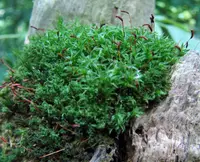
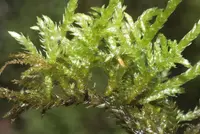
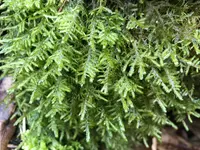
Antitrichia curtipendula is a robust, evergreen moss that forms loose, trailing mats with glossy green to yellow-green shoots. Its stems often arch and hang, giving a softly draping look on rocks and trunks.
This species is native to temperate regions, especially in western North America and parts of Europe, where it grows on bark, rocks, and occasionally soil in humid, shaded habitats. Its tolerance of cool temperatures and periodic drying makes it moderately easy to grow in cultivation.
Those who want to learn how to care for antitrichia moss should know it prefers consistent moisture, good air movement, and soft, indirect light rather than hot, direct sun.

Care Difficulty
Moderate Care

Light Preference
Partial Shade

Water Requirements
Keep Soil Moist

Temperature Preference
Cool Climate

Hardiness Zone
5–9

Soil Texture
Loamy, Rocky, Organic-rich

Soil pH
Acidic (5.5–6.5), Slightly acidic (6.5–7.0)

Soil Drainage
Moist but well-drained

Fertilization
Minimal (feed rarely)
Scan your plant to receive care tips personalized for your specific plant
Available on iOS and Android
This moss prefers bright, indirect light that mimics open woodland or rocky slope conditions.
Moist, not waterlogged, conditions support dense and healthy carpets of this moss.
Stable, cool to mild temperatures suit this species best in natural outdoor settings.
This moss prefers consistently moist, humid air to maintain dense, healthy cushions.
Antitrichia curtipendula anchors best on moist, aerated, organic-rich substrates rather than compact mineral soils.
This species can adapt to shallow container culture when moisture and stability are carefully managed.
This moss has very low nutrient demands and usually grows well without routine feeding in naturalistic or terrarium setups.
Pruning Antitrichia curtipendula is minimal and mainly aimed at tidying growth and maintaining healthy mats.
Transplanting is more relevant than repotting, since this moss is usually grown on bark, rocks, or outdoor substrates.
Propagation of this moss is straightforward and mainly relies on vegetative fragments rather than spores for home growers.
This species is generally cold hardy in temperate climates and usually needs little dedicated winter care outdoors.

Plant Health Check
Not sure what's wrong with your plant? Check your plant's health inside the app.
This species forms loose, often pendent mats on tree trunks and branches, with trailing stems and side branches that give it a characteristic draping appearance in humid forests.
It is strongly associated with mild, oceanic climates and is commonly found in coastal and submontane coniferous forests of western North America and parts of western Europe, where high air humidity and frequent fog support its growth.
This moss is sensitive to atmospheric pollution and habitat disturbance, so healthy populations often indicate relatively clean, stable forest air conditions and long habitat continuity.

Antitrichia curtipendula has a disjunct distribution, occurring on both sides of the North Atlantic (notably in western North America and parts of western Europe), which makes it a classic example studied in biogeography to understand how some moss species achieve broad yet patchy ranges.
This species spreads gradually by creeping stems and fragmenting shoots. It forms loose mats over time but usually does not overrun healthy, stable habitats. In small rock gardens or bonsai displays, contain it by trimming edges occasionally.
Keep your plants happy and healthy with plant identification, disease detection, and easy care guidance.