Shaded anchoring surfaces
Attach the thallus gently to flat stones or driftwood using fishing line or fine mesh, then remove the ties once new growth has visibly gripped the surface to create a stable, low-maintenance mat.

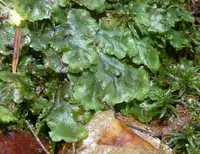
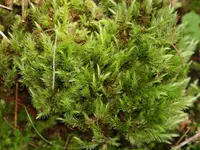
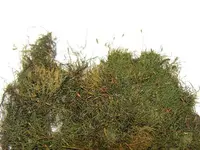
Common pellia (Pellia epiphylla) is a simple, non-vascular plant known as a liverwort, often used in aquariums and moist terrariums. It forms low, flat, ribbon-like mats that spread over rocks, wood, or soil.
In nature it occurs across Europe, parts of Asia, and North America, typically along stream banks, damp soil, and shaded rock faces. It prefers cool, humid, low-light environments and steady moisture, which makes indoor culture sensitive to drying out.
Once its moisture and shade needs are met, it is generally stable and slow-growing, so care for common pellia focuses mainly on avoiding strong light, desiccation, and major water quality swings.

Care Difficulty
Moderate Care

Light Preference
Partial Shade

Water Requirements
Aquatic

Temperature Preference
Cool Climate

Hardiness Zone
5–9

Soil Texture
Silty, Peaty, Organic-rich

Soil pH
Acidic (5.5–6.5), Slightly acidic (6.5–7.0)

Soil Drainage
Waterlogged tolerant

Fertilization
Minimal (feed rarely)
Scan your plant to receive care tips personalized for your specific plant
Available on iOS and Android
This low-growing liverwort prefers cool, shaded positions with soft, indirect light.
This species requires constant moisture and should never be allowed to dry out completely.
This liverwort thrives in cool to mild conditions and declines quickly in heat or hard frost.
This liverwort prefers constant high humidity and declines quickly in dry air.
This aquatic–semi-aquatic liverwort anchors best on fine, stable, organic-rich substrates rather than typical potting soil.
This species is well suited to containers such as aquariums, paludariums, or shallow water trays.
This small liverwort has very low nutrient demand, so feeding is light and infrequent.
Pruning for Pellia epiphylla focuses on gentle thinning to maintain healthy, open mats of growth.
Handling this liverwort is more about relocating and resetting mats than classic repotting.
Propagation of Pellia epiphylla is straightforward through vegetative division of existing mats.
This liverwort is quite cold tolerant in its natural range and usually needs minimal winter care.

Plant Health Check
Not sure what's wrong with your plant? Check your plant's health inside the app.
This thalloid liverwort often appears as one of the first plants on bare, wet soil or stream banks, helping stabilize the substrate and create microhabitats for other small organisms such as algae, fungi, and invertebrates.
Its thallus contains distinctive internal air canals and water-conducting tissues that are visible in cross-section under a microscope, illustrating a simple but effective system for gas exchange and moisture transport without true vascular tissue.
It frequently produces gemmae and sexual reproductive structures in positions where rain or water splash can easily move them, allowing efficient short-distance dispersal along stream margins and damp ground.

This species tolerates frequent submergence and exposure, allowing it to occupy the fluctuating edges of streams and seeps where few other land plants can persist, making it an important component of dynamic freshwater margins in temperate regions.
This liverwort spreads slowly to moderately, often adding only a few millimeters per month. Growth speeds up in cool, stable, moist conditions with gentle water movement and low nutrient levels, especially on rocks, wood, or saturated soil.
Keep your plants happy and healthy with plant identification, disease detection, and easy care guidance.