


Use mineral-poor water
Collect rainwater or use filtered, low-mineral water to avoid lime deposits on the leaf tips and to keep the substrate slightly acidic over time.

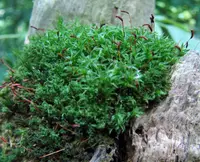
Undulate atrichum moss (Atrichum undulatum) is a small, upright moss known for its wavy, bright to deep green leaves that form loose, attractive patches. It is a non-vascular plant, meaning it has no true roots and relies on surface moisture to thrive.
This moss typically grows on acidic, shaded forest soils, banks, and moist paths across Europe, parts of Asia, and introduced areas in North America. It is considered moderately easy to grow under stable, cool, and evenly moist conditions.
Those who want to learn how to care for undulate atrichum moss should focus on filtered light, constant but not stagnant moisture, and a free-draining, slightly acidic substrate.

Care Difficulty
Moderate Care

Light Preference
Partial Shade

Water Requirements
Keep Soil Moist

Temperature Preference
Cold Hardy

Hardiness Zone
3–8

Soil Texture
Loamy, Silty, Organic-rich

Soil pH
Strongly acidic (4.5–5.5), Acidic (5.5–6.5)

Soil Drainage
Moist but well-drained

Fertilization
Minimal (feed rarely)
Scan your plant to receive care tips personalized for your specific plant
Available on iOS and Android
This woodland moss prefers soft, indirect light that mimics a forest floor.
This moss requires consistently moist conditions but is sensitive to stagnating water.
This species is adapted to cool, temperate climates with moderate seasonal variation.
This moss prefers consistently moist air and surface conditions to stay healthy in cultivation.
Provide a loose, consistently damp, acidic substrate that mimics a forest floor.
This species adapts well to shallow container culture when moisture and stability are carefully managed.
This moss is adapted to low-nutrient habitats and usually needs no supplemental fertilizer when grown in suitable substrate.
Atrichum undulatum needs minimal pruning, focused on hygiene rather than shaping.
Transplanting is mainly needed when moss patches outgrow their space or substrate conditions decline.
This species is usually propagated vegetatively by dividing existing cushions rather than by spores at home scale.
Atrichum undulatum is hardy in temperate climates and generally needs little specific winter care outdoors.

Plant Health Check
Not sure what's wrong with your plant? Check your plant's health inside the app.
The moss has narrow leaves with strongly undulating margins, which create a characteristic rippled appearance that helps distinguish it in the field from most other acrocarpous mosses on forest floors.
This species is most frequent on acidic, nutrient-poor soils in woodlands and along banks, so its presence often indicates leached, low-calcium substrates in temperate forests.
It is dioicous, meaning male and female reproductive organs occur on separate shoots, which often results in dense, clonal patches where only one sex is visible unless conditions allow successful fertilization and sporophyte formation.

The leaf cells of this moss species show a clear differentiation between the chlorophyll-rich upper cells and thicker-walled basal cells with elongated shapes, a structural pattern that bryologists use as a key diagnostic character when identifying the species under a microscope.
This moss spreads slowly to moderately by spores and short creeping stems, forming patches rather than fast-moving carpets. It usually stays where moisture and shade are stable and is not considered aggressive in typical garden settings.
Keep your plants happy and healthy with plant identification, disease detection, and easy care guidance.

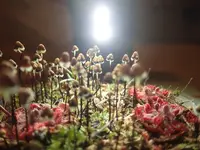
Asterella drummondii
Asterella drummondii
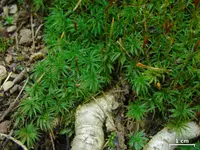
atrichum moss
Atrichum altecristatum
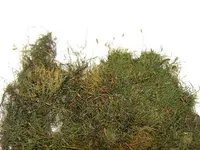
Creeping Feather Moss
Amblystegium serpens
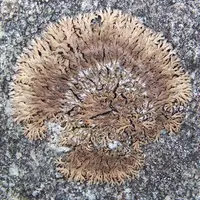
Anaptychia runcinata
Anaptychia runcinata
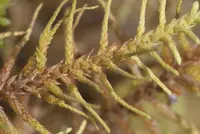
abietinella moss
Abietinella abietina
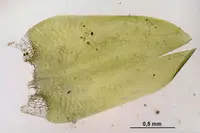
calliergonella moss
Calliergonella cuspidata
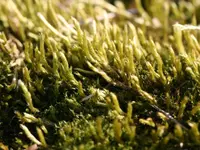
brachythecium moss
Brachythecium salebrosum
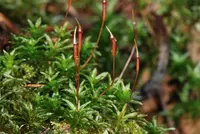
Selwyn's atrichum moss
Atrichum selwynii