Surface preparation
Before placing mats or fragments, scrub rock or concrete surfaces with a stiff brush and plain water to remove dust, algae, and loose particles so the moss rhizoids can anchor firmly.

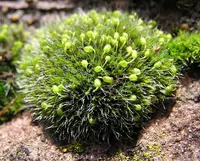
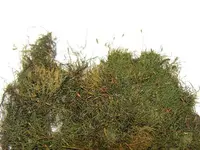
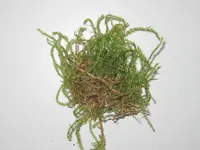
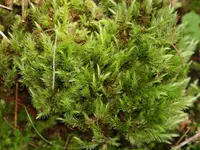
Pulvinate dry rock moss, Grimmia pulvinata, is a compact, cushion-forming moss that naturally colonizes dry rocks, walls, and roofs. It creates dense, rounded tufts with fine gray-green leaves and often dark, hair-tipped capsules.
This moss is widely distributed in temperate regions, especially in urban and coastal areas where stone and concrete surfaces are common. It is relatively resilient and tolerates drying out between rains, which makes it easier to keep than many moisture-loving mosses.
Those who want to care for pulvinate dry rock moss should know it prefers bright, indirect light, clean surfaces to anchor on, and occasional moisture rather than constantly wet conditions.

Care Difficulty
Easy Care

Light Preference
Full Sun

Water Requirements
Low Water

Temperature Preference
Cold Hardy

Hardiness Zone
4–10

Soil Texture
Rocky, Sandy

Soil pH
Slightly acidic (6.5–7.0), Neutral (7.0)

Soil Drainage
Well-drained

Fertilization
Minimal (feed rarely)
Scan your plant to receive care tips personalized for your specific plant
Available on iOS and Android
This moss thrives in bright outdoor conditions with some protection from harsh midday sun.
Grimmia pulvinata is drought-tolerant but responds best to intermittent surface moisture.
This hardy moss tolerates a wide temperature range but grows best in cool to mild conditions.
This moss prefers relatively dry air but responds best to a stable, moderate humidity band.
This species prefers a mineral, fast-draining substrate that mimics thin soils on rocks or walls.
This species can be grown in shallow containers that simulate rocky crevices.
Grimmia pulvinata needs little added nutrition and usually performs well without routine fertilizing in outdoor rock or wall habitats.
Grimmia pulvinata requires minimal pruning, mainly to keep cushions tidy and healthy.
This moss is usually grown on rocks or masonry, so care focuses on transplanting patches rather than classic repotting.
New clumps are most often produced by division and relocation of small cushions rather than from spores at home.
This moss is naturally frost hardy and usually needs no special winter protection in the ground or on outdoor stone.

Plant Health Check
Not sure what's wrong with your plant? Check your plant's health inside the app.
This moss commonly forms dense cushions on concrete, brick, and asphalt in cities, exploiting tiny alkaline niches created by building materials and road dust that many other mosses cannot tolerate.
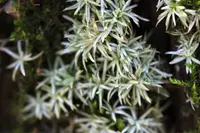
Its leaves end in a distinct white hairpoint that helps trap moisture and dew, and also reflects excess light, allowing the plant to survive exposed, sun-baked rock and wall surfaces.
Individuals can dry out almost completely and remain in a dormant, crisp state for long periods, then rapidly rehydrate and resume metabolism within minutes after rain or fog, an adaptation central to Grimmia pulvinata care instructions.

Grimmia pulvinata often appears as one of the first bryophytes on newly built walls and urban structures, playing a pioneer role in ecological succession by trapping dust and fine particles that later help other mosses and lichens establish.
This species adapts to both, but performs more reliably outdoors where it experiences natural moisture cycles, airflow, and light changes. Indoors, success depends on high light, cool temperatures, and careful humidity control, so pulvinate dry rock moss indoor care is more demanding.
Keep your plants happy and healthy with plant identification, disease detection, and easy care guidance.