Shaded Water Tray
Set the container on a shallow tray of clean rainwater or dechlorinated water with small stones, keeping the water just below the substrate surface so the thallus stays constantly moist without being submerged.

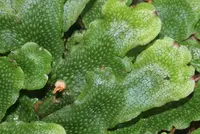
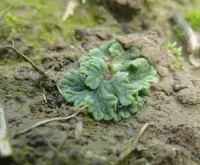
Great scented liverwort, Conocephalum conicum, is a large thallose liverwort, a non-vascular plant more closely related to mosses than to typical garden plants. It forms low, flat, glossy green mats with a patterned surface and a noticeable, fresh scent when crushed.
In nature it occurs on shaded, constantly damp rocks and soil near streams, springs, and seeps across temperate regions of the Northern Hemisphere. It favors cool, humid, low-light spots, which makes it sensitive to drying out and strong sun under cultivation.
These traits mean it is best suited to terrariums, paludariums, or outdoor settings that stay moist and shaded. Anyone wanting to learn how to care for Great Scented Liverwort should focus on steady moisture, gentle air movement, and protection from heat and direct sun.

Care Difficulty
Hard Care

Light Preference
Shade

Water Requirements
Aquatic

Temperature Preference
Cool Climate

Hardiness Zone
4–9

Soil Texture
Loamy, Silty, Organic-rich

Soil pH
Acidic (5.5–6.5)

Soil Drainage
Waterlogged tolerant

Fertilization
Minimal (feed rarely)
Scan your plant to receive care tips personalized for your specific plant
Available on iOS and Android
This shade-loving liverwort needs soft, filtered light to prevent scorching and drying.
This species requires constantly moist conditions that mimic seepage areas and stream banks.
This liverwort prefers cool, moist, and stable temperatures similar to streamside or woodland microclimates.
This species needs consistently high humidity to stay healthy in cultivation.
Conocephalum conicum grows best on constantly moist, soft, oxygenated substrates rather than standard potting mixes.
This liverwort can be grown in shallow containers or trays if moisture is carefully controlled.
This woodland liverwort is sensitive to nutrient buildup, so use very light feeding only during active growth.
Pruning needs for Conocephalum conicum are minimal and focus on hygiene rather than shaping.
This species is usually grown on shallow trays or rocks, so transplanting focuses on refreshing the habitat rather than enlarging pots.
Propagation of this liverwort relies mainly on vegetative division rather than spores for home cultivation.
This species is quite cold tolerant in the ground but needs some attention in containers during winter.

Plant Health Check
Not sure what's wrong with your plant? Check your plant's health inside the app.
The thallus has a highly patterned surface made of polygonal air chambers, each with a central pore that aids gas exchange while helping the plant tolerate intermittent wetting and drying on stream banks.
When crushed or rubbed, the plant releases a noticeable camphor‑ or turpentine‑like smell produced by specialized oil bodies in its tissues, which may help deter some herbivores and microbes.
This species often grows only where water and substrate are relatively clean and continuously moist, so its presence along streams and seeps is used as a simple bioindicator of good local water quality.

This liverwort can reproduce both sexually, via tiny spores released from umbrella‑like spore‑bearing structures, and asexually, by fragments of the thallus breaking off and rooting downstream, which allows it to rapidly colonize suitable wet rock and soil surfaces along flowing water.
This species spreads slowly to moderately by creeping, branching mats. It can form dense patches over time in consistently moist, shaded spots but is not considered aggressively spreading or difficult to control in typical garden settings.
Keep your plants happy and healthy with plant identification, disease detection, and easy care guidance.