Anchor With Mesh
Sandwich the thalli under fine plastic mesh or stainless-steel mesh on rock or wood so the plant locks in place and forms an even carpet instead of floating away.

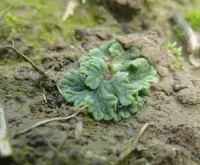
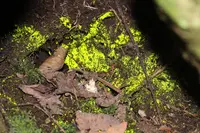
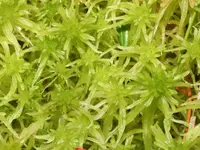
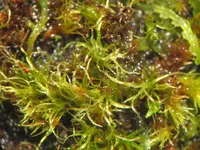
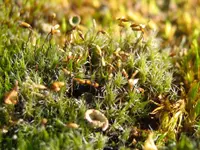
Common crystalwort (Riccia sorocarpa) is a small, thallose liverwort often used in aquariums and paludariums for its fine, moss-like appearance. It forms dense, bright green mats that spread over rock, wood, or substrate, both submerged and in very moist, humid environments.
In nature, it occurs in damp habitats such as stream banks, wet soil, and periodically flooded areas across temperate regions. Its lack of true roots and delicate structure makes handling slightly tricky, but rapid growth can compensate for losses.
Once established, Riccia sorocarpa is considered relatively easy to maintain if moisture and stable conditions are provided. Understanding how to care for Common Crystalwort mainly involves managing light, water movement, and access to gentle, consistent moisture.

Care Difficulty
Moderate Care

Light Preference
Partial Shade

Water Requirements
Aquatic

Temperature Preference
Cool Climate

Hardiness Zone
Unknown

Soil Texture
Silty, Peaty, Organic-rich

Soil pH
Acidic (5.5–6.5), Slightly acidic (6.5–7.0)

Soil Drainage
Waterlogged tolerant

Fertilization
Minimal (feed rarely)
Scan your plant to receive care tips personalized for your specific plant
Available on iOS and Android
Riccia sorocarpa thrives in bright but gentle light that mimics open, moist habitats.
This liverwort requires constant moisture and does not tolerate drying out.
This species prefers cool to mild conditions and is sensitive to temperature extremes.
This moss-like liverwort needs very high humidity to stay dense and green.
Riccia sorocarpa usually grows attached to moist substrates rather than rooted in conventional soil.
This species adapts well to shallow containers and terrariums when humidity and moisture are controlled carefully.
This small liverwort has modest nutrient needs but responds to gentle feeding in cultivation.
Pruning helps keep Riccia sorocarpa mats dense, healthy, and well-shaped in cultivation.
This species is usually grown as a mat on hardscape or substrate rather than in traditional pots.
Riccia sorocarpa is commonly multiplied by division rather than by spores in home cultivation.
This species is cold tolerant in nature but may need some adjustment in artificial setups during winter.

Plant Health Check
Not sure what's wrong with your plant? Check your plant's health inside the app.
This liverwort typically grows in cool, moist, subalpine to alpine habitats, often along mountain streams, wet soil, and rock faces in high-elevation regions of Europe and parts of North America.
Its thallus forms narrow, often branching ribbons with a conspicuously thickened midline and small dorsal scales, features used by bryologists to separate it from related Riccia species that look more ribbon-like or fan-shaped.
The spores show a finely patterned surface with characteristic ridges and warts under a microscope, and this ornamentation is one of the key traits used in scientific identification and classification of this species.
Growth is relatively quick under cool, consistently moist, high-humidity conditions, often forming noticeable new patches within a few weeks. Poor water quality, strong currents, or frequent disturbance slow it down significantly and can cause mats to thin or fragment.
Keep your plants happy and healthy with plant identification, disease detection, and easy care guidance.