Reflective backdrop
Place a light-colored stone, ceramic shard, or pale slate behind the colony to bounce low light back onto the cushions and enhance the moss’s natural glow without increasing light intensity.

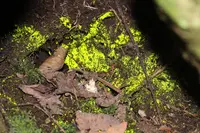
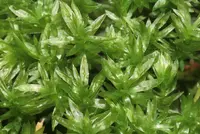
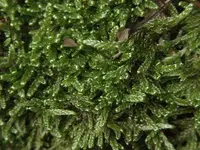
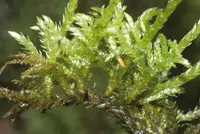
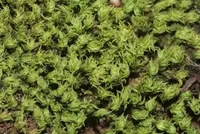
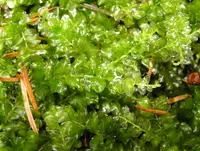
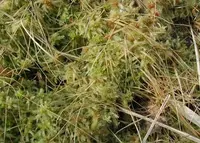
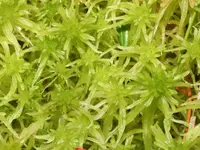
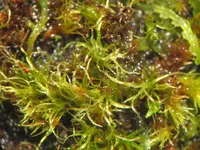
Goblin gold, Schistostega pennata, is a small moss best known for its unusual golden-green glow in low, indirect light. It forms soft, low cushions or mats rather than tall shoots.
In nature it usually grows on damp, shaded rock crevices, cave entrances, and rotting wood, especially in cool, humid forests of Europe, Asia, and North America. Its glowing effect comes from specialized leaf cells that reflect and focus light.
This species is delicate and slow-growing, which makes it more challenging to maintain than common mosses. Successful how to care for Goblin Gold usually depends on stable moisture, high humidity, gentle airflow, and protection from direct sun or drying conditions.

Care Difficulty
Hard Care

Light Preference
Shade

Water Requirements
Keep Soil Moist

Temperature Preference
Cool Climate

Hardiness Zone
6–9

Soil Texture
Silty, Rocky, Organic-rich

Soil pH
Acidic (5.5–6.5)

Soil Drainage
Moist but well-drained

Fertilization
Minimal (feed rarely)
Scan your plant to receive care tips personalized for your specific plant
Available on iOS and Android
This moss thrives in low, indirect light that mimics shaded rock crevices or cave entrances.
This species prefers consistently moist, cool substrates without saturation.
This moss favors cool, stable conditions similar to sheltered rock caves or mine entrances.
This moss requires consistently high humidity to maintain its luminous, healthy cushions.
This species prefers a moist, fine-textured, acidic, organic substrate that mimics shaded rock crevices or cave floors.
This moss is suitable for small, enclosed containers rather than standard open pots.
Schistostega pennata is very nutrient-efficient and usually performs best with minimal or no fertilization in low-nutrient substrates.
Schistostega pennata does not benefit from structural pruning, but limited cleaning maintains a healthy, even moss mat.
Goblin Gold resents disturbance, so repotting or transplanting should be infrequent and done only when clearly needed.
Propagation of Schistostega pennata is possible but slow and best treated as an advanced project.
This moss is cold hardy in many temperate climates and usually needs only basic moisture management over winter.

Plant Health Check
Not sure what's wrong with your plant? Check your plant's health inside the app.
This moss grows in very dim cave entrances and mine shafts where direct light is almost absent, using specialized cells that concentrate and direct scattered light onto its chloroplasts for photosynthesis.
Its protonemal cells contain curved, lens-like vacuoles that act as micro-mirrors, reflecting incoming light and giving the colony its characteristic green-gold shimmer on dark, rocky substrates.
The species has a disjunct distribution across parts of Europe, Asia, and North America, occurring only in very specific microhabitats that combine darkness, constant humidity, and stable, cool temperatures.

The shimmering effect that gave rise to common names such as goblin gold and luminous moss is so distinctive that this species has historically been mistaken for mineral deposits by miners exploring dim tunnel walls.
Growth is slow. This moss forms small, shimmering patches over many months rather than quickly covering a surface. Expansion depends on stable moisture, low light, and humidity; even under good conditions, noticeable spreading usually takes a full season or longer.
Keep your plants happy and healthy with plant identification, disease detection, and easy care guidance.