Many-fruited Thyme-moss Care (Plagiomnium affine)

Many-fruited Thyme-moss

About Many-fruited Thyme-moss

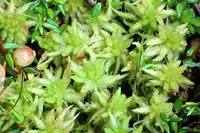
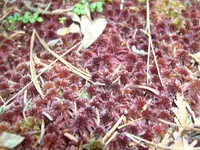
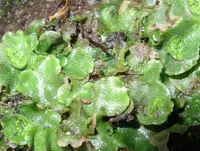
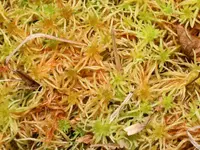
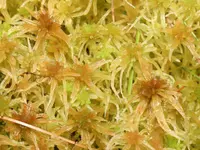
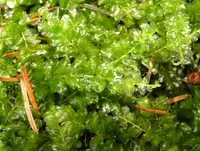
Many-fruited thyme-moss, Plagiomnium affine, is a low, mat-forming moss that creates dense, bright to deep green cushions. Its small, rounded leaves line creeping stems, giving a soft, carpet-like look.

This species occurs naturally in temperate regions of Europe and parts of western Asia, often on moist soil, shaded banks, and woodland floors. It is valued in terrariums, bonsai accents, and shaded garden areas for its neat, compact growth.

Plagiomnium affine is generally considered easy to grow if given consistent moisture, cool to mild temperatures, and protection from strong sun and drying winds. Understanding how to care for Many-fruited Thyme-moss mainly involves keeping its environment evenly damp and sheltered from extremes.

Main Plant Requirements

Care Difficulty

Moderate Care

Light Preference

Partial Shade

Water Requirements

Keep Soil Moist

Temperature Preference

Cool Climate

Hardiness Zone

4–8

Soil Texture

Loamy, Silty, Organic-rich

Soil pH

Acidic (5.5–6.5), Slightly acidic (6.5–7.0)

Soil Drainage

Moist but well-drained

Fertilization

Minimal (feed rarely)

Get Personalized Care Plan

Scan your plant to receive care tips personalized for your specific plant

Available on iOS and Android

How to Care for the Many-fruited Thyme-moss

This moss thrives in cool, shaded habitats with only brief, gentle sun exposure.

  • Provide bright, dappled shade or full shade with at most 1–2 hours of weak morning sun; avoid direct midday and afternoon sun that can scorch Many-fruited Thyme-moss.
  • Site it under shrubs, trees, or on the north or east side of structures where light is filtered through foliage or reflected, not harsh.
  • In summer, increase shade or add leaf litter to reduce light and surface drying; in winter, more open but still indirect light is acceptable.

This moss prefers consistently moist conditions without long dry periods or stagnant water.

  • Aim for evenly moist substrate; surface should feel damp but not soupy and must never dry out completely for more than 1–2 days.
  • Use soft, low-mineral water if possible and apply gently so the mat is wetted without pooling; good drainage prevents foul smell, algae, or slimy patches that suggest overwatering.
  • Watch for curling, brittle fronds as a sign of underwatering, and yellowing, translucent, or decaying patches as a sign that Plagiomnium affine is staying too wet or poorly aerated.

This species favors cool, mild climates and does not tolerate extreme heat or severe frost well.

  • For steady growth, keep it in the range of 50–68°F (10–20°C), similar to a cool forest floor or shaded garden edge.
  • It can survive brief dips to about 28–32°F (-2–0°C) if kept moist and shaded, but repeated freezing and thawing can damage cushions.
  • Heat above 77–82°F (25–28°C), especially in full sun, causes rapid drying; increase shade, humidity, and watering during hot spells to limit stress.

This moss prefers consistently moist air and benefits from elevated humidity.

  • Aim for 60–80% humidity, as Many-fruited Thyme-moss dehydrates quickly in dry indoor air.
  • Crisping tips, dull color, and slowed growth indicate humidity stress or chronic drying.
  • Increase humidity with regular fine misting, nearby open trays of water, or growing in a terrarium-style enclosure.

Plagiomnium affine grows best in consistently moist, soft, organic-rich substrates.

  • Use a fine-textured mix of sifted peat or coco coir with leaf mold or compost to mimic damp woodland soil.
  • Ensure slow but steady drainage; the surface should never crust or fully dry, yet the container must not stay waterlogged.
  • A slightly acidic pH around 5.0–6.5 supports healthy growth and helps limit competing algae or mold.
  • Improve aeration by blending in fine sand and a small amount of perlite, avoiding coarse bark or chunky grit that can expose rhizoids.

This moss is suitable for shallow containers, trays, and terrariums.

  • Choose a wide, shallow container so the colony can spread laterally without deep saturated pockets.
  • Select non-porous materials like glass or glazed ceramic to maintain the consistently damp conditions this species prefers.
  • Raise the container slightly on feet or mesh so excess water can drain away quickly without flooding the moss surface.

This moss has low nutrient needs, so fertilizing Many-fruited Thyme-moss should stay light and infrequent.

  • Use a very dilute balanced NPK liquid fertilizer (about 1/4 strength) formulated for foliage plants or mosses.
  • Apply only during active growth in spring–summer, about every 6–8 weeks, on thoroughly moistened substrate.
  • Skip feeding in winter or during dormancy-like slow phases to avoid salt buildup and tissue burn.
  • Rinse with plain water occasionally if kept in containers to flush excess nutrients from the substrate.

Pruning Plagiomnium affine is minimal and mainly helps keep carpets dense and clean.

  • Trim only in active growth, typically spring to early autumn, to allow quick recovery.
  • Remove dead, browned, or decaying patches by gently pinching or cutting just above the substrate.
  • Thin overly thick or crowded tufts to improve air movement and reduce mold or algae issues.
  • Use clean fine scissors or tweezers and avoid disturbing the rhizomes anchored in the substrate.

This moss is usually grown as a groundcover or in terrariums, so focus on gentle transplanting rather than frequent repotting.

  • Transplant in cool, moist conditions, ideally in spring or early autumn, to limit stress and drying.
  • Move mats when growth becomes patchy, the substrate compacts, or water drainage and aeration decline.
  • Lift thin sheets of moss with attached substrate, then press onto fresh, moist, shaded soil or terrarium mix.
  • Water with soft, non-chlorinated water, keep humidity high for 1–2 weeks, and avoid foot traffic until reanchored.

Plagiomnium affine is commonly propagated by simple division of existing mats rather than from spores.

  • Divide healthy, moist clumps in spring or early autumn when growth is active and temperatures are mild.
  • Tear or cut mats into small sections, each with several leafy stems and some attached substrate or rhizoids.
  • Press divisions firmly onto fresh, consistently damp, shaded soil, rock, or terrarium medium.
  • Maintain high humidity and gentle, indirect light until new tips extend and sections knit together.

This moss is generally cold hardy in temperate climates and often needs little specific winter care outdoors.

  • Tolerates light to moderate frosts when rooted in the ground with consistent ambient moisture.
  • Avoid complete drying of the substrate; occasional thaw-period watering may be needed in exposed sites.
  • For containers, move to a shaded, frost-free but cool area and keep the substrate just slightly damp.

Care Tips

Use Shallow Substrate

Grow colonies in a shallow tray or dish with only 1–2 cm of substrate so that the moss forms a dense carpet instead of growing tall and floppy.

Pre‑soak New Substrate

Before planting, soak and then drain the chosen substrate for 12–24 hours to flush excess soluble salts that can damage delicate rhizoids and leaf tips.

Gentle Debris Cleaning

Periodically rinse the moss surface with a fine mist or use soft tweezers to remove fallen leaves and algae mats, which improves air movement and reduces rot in dense patches.

Sectional Propagation

Lift small, intact clumps with a thin spatula or plant label and replant them 1–2 cm apart to quickly establish an even carpet when growing Many-fruited Thyme-moss.

Seasonal Light Shifting

In outdoor or bright-window setups, shift the container slightly farther from the light source during peak summer and closer again in winter to keep growth compact and reduce stress bleaching.

Common Pests and Diseases

Mite damage

This pest is often associated with greenhouse or indoor cultures of this moss, where fine webbing and pale, stippled patches appear on cushions. Symptoms include slow growth and a dry, rough texture on the upper moss surface.

Solution

Rinse the moss gently but thoroughly with clean, lukewarm water and increase humidity to 60–80% while avoiding stagnant air. If mites persist, use a dilute insecticidal soap or horticultural oil spray, applied very lightly and then rinsed off after a short contact time to avoid harming the moss, and keep the colony slightly cooler to discourage reinfestation.

Fungus gnat larvae

These insects lay eggs in consistently wet, organic substrates, and the larvae feed on decaying material and delicate moss structures. Symptoms include thinning patches, poor new growth, and small black adult gnats flying around trays or terrariums.

Solution

Allow the upper substrate layer to become just slightly less wet between waterings, remove any decomposing plant debris, and improve air circulation around the moss. For persistent problems, use yellow sticky traps to reduce adults and a biological control such as Bacillus thuringiensis israelensis (Bti) in the irrigation water to target larvae without harming the moss.

Algal overgrowth

This disease-like condition appears in very wet, nutrient-rich, brightly lit setups, where a slimy green film or crust forms on the surface and smothers moss shoots. Symptoms include dull color, reduced cushion density, and slippery patches on substrate or glass.

Solution

Reduce nutrient input by avoiding fertilizer, slightly decrease light intensity, and improve air movement so surfaces dry lightly between mistings. Gently rinse the moss surface, mechanically remove thick algal films with soft tweezers or a soft brush, and, if possible, tilt or regrade the substrate so excess water drains away instead of pooling on the moss.

Grey mold (Botrytis)

This disease develops in cool, stagnant, very humid conditions, leading to soft, waterlogged moss tips covered by grey, fuzzy fungal growth. Symptoms include collapsing cushions and a patchy, brownish appearance starting in the densest, least ventilated areas.

Solution

Promptly remove and discard affected moss patches and any decaying plant material, then increase ventilation and reduce overcrowding in trays or terrariums. Allow surfaces to dry slightly between mistings, avoid water sitting on the moss for long periods, and, if necessary, temporarily lower humidity and temperature to slow fungal spread while growth recovers.

Interesting Facts

Cushion-forming growth

This species forms low, dense cushions or carpets with glossy, tongue-shaped leaves that often appear slightly asymmetrical due to their off-center midrib and finely toothed leaf margins.

Calcareous soil preference

It commonly occurs on base-rich, often calcareous soils, such as limestone-influenced woodland floors and shaded banks, which helps distinguish it from similar mosses that favor more acidic substrates.

Distinctive reproductive stalks

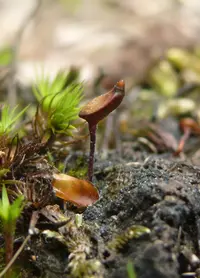
Its sporophytes develop on relatively short, often slightly curved reddish stalks with inclined capsules, a combination of features used by bryologists to separate it from closely related Mnium and Plagiomnium species.

Botan icon

Did you know?

Plagiomnium affine is frequently used as a standard reference species in bryology training and identification workshops, because its leaf shape, marginal teeth, and sporophyte characters clearly illustrate several key diagnostic features used across the Mniaceae family.

FAQs about Many-fruited Thyme-moss

This moss spreads slowly to moderately by short creeping stems and spores, usually forming low, dense patches rather than running aggressively. It can gradually fill moist, shaded gaps but is rarely a nuisance in typical garden conditions.

Grow Healthy Plants with Botan Care

Keep your plants happy and healthy with plant identification, disease detection, and easy care guidance.

Botan plant care app — identify plants on mobile

Explore More Plants