Water Quality Control
Use rainwater, distilled, or reverse-osmosis water and flush the container periodically to prevent mineral buildup, which can stunt growth and discolor the moss.

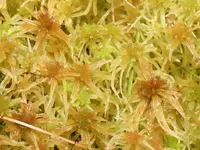
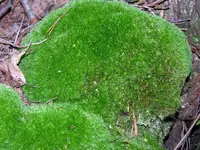
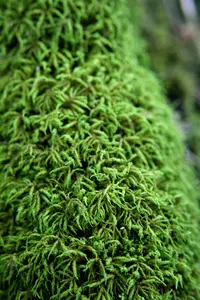
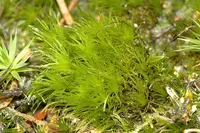
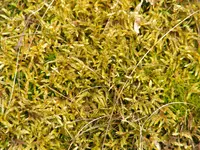
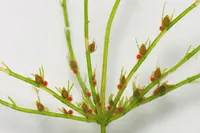
Sphagnum angustifolium is a species of sphagnum moss that forms soft, dense carpets rather than upright stems or leaves. It is a non-vascular plant, meaning it lacks true roots and absorbs water across its surface.
This moss is common in cool, wet habitats such as bogs, fens, and peatlands across the Northern Hemisphere. Its compact, spongy cushions hold large amounts of water and create acidic, low-nutrient conditions that slow decay and form peat.
These same traits make it useful in horticulture but also mean growers must maintain constant moisture and good airflow. Understanding how to care for sphagnum starts with replicating its naturally cool, bright, and consistently damp environment without letting it stagnate or overheat.

Care Difficulty
Hard Care

Light Preference
Partial Shade

Water Requirements
Aquatic

Temperature Preference
Cool Climate

Hardiness Zone
2–7

Soil Texture
Peaty, Organic-rich, Silty

Soil pH
Strongly acidic (4.5–5.5)

Soil Drainage
Waterlogged tolerant

Fertilization
Minimal (feed rarely)
Scan your plant to receive care tips personalized for your specific plant
Available on iOS and Android
This moss prefers cool, moist conditions with gentle light rather than strong direct sun.
This species needs constantly wet conditions and does not tolerate drying out.
This cool-temperate moss prefers mild conditions and is sensitive to both hard frost and intense heat.
This moss needs very high, constant humidity to stay healthy and actively growing.
This species prefers saturated, acidic, organic substrates rather than typical mineral garden soils.
This species can be grown successfully in shallow containers that hold stable moisture levels.
This moss typically grows in nutrient-poor bogs and usually does not need added fertilizer in cultivation.
Sphagnum angustifolium needs only light grooming to keep growth tidy and healthy.
Container-grown Sphagnum angustifolium is transplanted mainly to refresh the medium and manage spread.
This species is commonly multiplied by simple vegetative methods rather than seed.
Sphagnum angustifolium is quite cold hardy outdoors and usually needs minimal winter care.

Plant Health Check
Not sure what's wrong with your plant? Check your plant's health inside the app.
This species strongly favors nutrient-poor, raised peat bogs, where it typically forms carpets on hummocks that sit slightly elevated above the surrounding waterlogged hollows.
Its leaves show a clear pattern of large, empty hyaline cells mixed with narrow green photosynthetic cells, but the hyaline cells of this species are comparatively narrow and elongated, which helps field bryologists separate it from closely related sphagna.
Because it is sensitive to water-table depth and acidity, this moss is used in ecological monitoring to detect shifts in bog hydrology and chemistry linked to regional climate change, especially across boreal and subarctic peatlands.

In many northern peatlands, this species contributes measurably to long-term carbon accumulation by building peat layers that can persist for thousands of years, effectively locking atmospheric carbon into the bog substrate over geological timescales.
Growth is generally slow to moderate. In consistently wet, cool conditions it may extend 2–5 cm per year. Growth slows in warmth, low humidity, or waterlogged, stagnant setups. Stable moisture and gentle airflow support the best growth rate.
Keep your plants happy and healthy with plant identification, disease detection, and easy care guidance.