Acidic Substrate Layer
Create a shallow base of long-fiber sphagnum or fine pine bark under the moss to maintain an acidic, low-nutrient buffer that keeps clumps dense and prevents invasion by more aggressive mosses and algae.

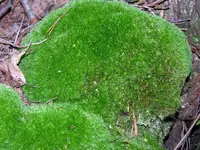
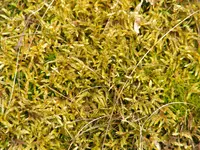
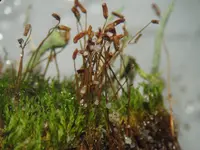
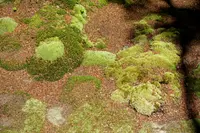
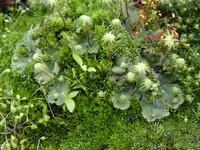
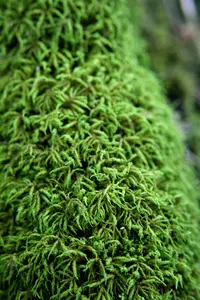
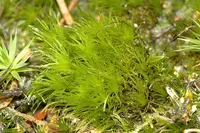
Leucobryum glaucum, often called leucobryum moss or cushion moss, is a compact, mound-forming moss valued for its dense, velvety tufts. It typically appears as rounded, pale green to blue‑green cushions that hold their shape and create a soft, structured look on soil, rocks, or wood.
This species occurs naturally in cool, humid forests across Europe, North America, and parts of Asia, usually on acidic, well-drained substrates. It is relatively slow growing but quite resilient once established, which makes it stable but not fast to spread.
Consistent moisture, good air circulation, and indirect light support healthy growth and make it easier to care for leucobryum moss, both outdoors and in controlled indoor setups.

Care Difficulty
Moderate Care

Light Preference
Partial Shade

Water Requirements
Keep Soil Moist

Temperature Preference
Cold Hardy

Hardiness Zone
3–9

Soil Texture
Loamy, Peaty, Organic-rich

Soil pH
Strongly acidic (4.5–5.5), Acidic (5.5–6.5)

Soil Drainage
Moist but well-drained

Fertilization
Minimal (feed rarely)
Scan your plant to receive care tips personalized for your specific plant
Available on iOS and Android
This moss prefers bright, indirect light that mimics dappled woodland shade.
Moist but not waterlogged conditions suit this moss best.
Cool to mild temperatures are ideal for steady growth.
This moss needs sustained high humidity to stay dense and cushion-like.
Leucobryum glaucum prefers a consistently moist, airy, acidic substrate rich in decomposed organic matter.
This species adapts well to shallow containers when moisture and stability are controlled carefully.
This moss generally grows best with minimal feeding and is often maintained without any fertilizer.
Leucobryum glaucum needs only light grooming to stay dense and healthy.
Transplanting this moss is mainly about moving intact cushions rather than disturbing roots.
Propagation focuses on division of clumps rather than spores for practical home use.
This moss is cold hardy in most temperate regions and usually needs no special winter care outdoors.

Plant Health Check
Not sure what's wrong with your plant? Check your plant's health inside the app.
This species forms dense, dome-shaped cushions that can grow into thick, compact mounds, often resembling green or bluish-gray pillows on forest floors and rocks.
Its tiny leaves can swell as they rehydrate, trapping water and air in the cushion structure, which helps the colony buffer rapid moisture changes in its environment.
It is strongly associated with acidic, nutrient-poor substrates such as coniferous forest floors, peat, and sandstone, where it often becomes a dominant ground-covering moss.

This species often acts as a pioneer on exposed, acidic substrates, gradually accumulating organic matter within its dense cushions and helping to create the first thin layer of soil that later supports other plants.
Growth is generally slow to moderate. In suitable, consistently moist conditions, it may expand a few centimeters per year. It spreads outward as dense cushions rather than gaining height, so visible coverage increases gradually over several seasons.
Keep your plants happy and healthy with plant identification, disease detection, and easy care guidance.