Aged Wood Substrate
Attach the moss to fully weathered hardwood or old bark rather than fresh wood, which reduces tannin leaching and supports more stable, long-term colony development.

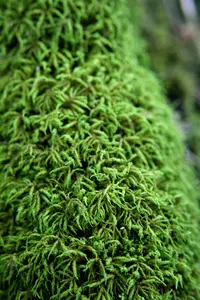
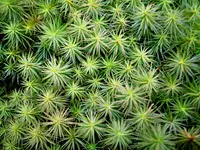
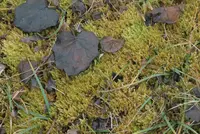
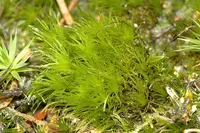
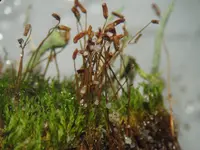
Seductive entodon moss (Entodon seductrix) is a creeping moss that forms dense, bright to yellow-green carpets on rocks, logs, and soil. Its slender, glossy stems and fine overlapping leaves create a soft, velvety texture.
This species is naturally found in temperate regions, often in forests and along streams where humidity stays fairly high. It is generally adaptable but prefers stable moisture, indirect light, and a consistently cool to mild environment.
Growth is relatively fast when conditions are right, which makes it attractive for terrariums, vivariums, and moss gardens. Those who want to care for seductive entodon moss benefit from its tolerance of varied substrates, as long as it does not dry out completely or sit in stagnant water.

Care Difficulty
Moderate Care

Light Preference
Partial Shade

Water Requirements
Keep Soil Moist

Temperature Preference
Cool Climate

Hardiness Zone
Unknown

Soil Texture
Loamy, Silty, Organic-rich

Soil pH
Acidic (5.5–6.5), Slightly acidic (6.5–7.0)

Soil Drainage
Moist but well-drained

Fertilization
Minimal (feed rarely)
Scan your plant to receive care tips personalized for your specific plant
Available on iOS and Android
This creeping moss prefers soft, indirect light that mimics a shaded forest floor.
This moss needs consistently moist conditions but suffers if left waterlogged for long periods.
This species thrives in cool to mild conditions typical of shaded woodland or rock habitats.
This moss prefers consistently moist, humid air to maintain dense, healthy growth.
Entodon seductrix grows best on moist, airy, organic-rich substrates rather than dense mineral soils.
This species is well-suited to shallow container or tray culture.
This moss grows well on low nutrients, so fertilizing Entodon seductrix should stay minimal and carefully diluted.
Pruning Entodon seductrix focuses on light grooming to maintain an even, healthy carpet.
This moss is usually grown as a ground or substrate cover, so transplanting matters more than classic repotting.
Entodon seductrix is most often propagated by division of existing mats rather than spores.
This moss is generally cold hardy in temperate climates and needs little special winter care outdoors.

Plant Health Check
Not sure what's wrong with your plant? Check your plant's health inside the app.
This moss is most often found creeping over rocks, logs, and soil in humid ravines and along streams, where constant moisture and shade create a narrow ecological niche.
Its shoots form dense, shiny yellow‑green carpets with leaves that lie closely pressed to the stem when dry, a feature bryologists use to distinguish it from similar pleurocarpous mosses.
Natural populations are commonly associated with relatively undisturbed, consistently moist microclimates, so their presence can signal long‑term humidity stability in forested stream corridors.
This moss spreads slowly to moderately by creeping stems and spores, forming low carpets rather than fast-moving patches. It is usually easy to confine by physically trimming edges and avoiding accidental transfer on tools, shoes, or substrate.
Keep your plants happy and healthy with plant identification, disease detection, and easy care guidance.