


Shaded water tray
Place the moss container on a shallow tray filled with rainwater and pebbles, keeping the water level just below the substrate surface to maintain steady moisture without submerging the rhizoids.

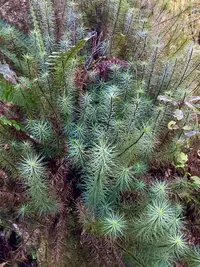
Dawsonia superba is a giant moss known for its unusually tall, upright shoots that can resemble tiny forest stems. It forms dense, glossy green clumps with clear vertical structure.
This species occurs naturally in moist, shaded habitats in parts of Australasia and Southeast Asia, often on soil banks or rotting wood. It prefers consistently damp conditions, high humidity, and protection from harsh sun.
Compared with common houseplants, it is more demanding because it needs stable moisture, clean soft water, and cool, shaded conditions. For anyone wanting to care for Dawsonia superba, success depends on mimicking its naturally cool, wet, and sheltered environment as closely as possible.

Care Difficulty
Moderate Care

Light Preference
Partial Shade

Water Requirements
Keep Soil Moist

Temperature Preference
Cool Climate

Hardiness Zone
Unknown

Soil Texture
Loamy, Silty, Organic-rich

Soil pH
Strongly acidic (4.5–5.5), Acidic (5.5–6.5)

Soil Drainage
Moist but well-drained

Fertilization
Minimal (feed rarely)
Scan your plant to receive care tips personalized for your specific plant
Available on iOS and Android
This moss prefers bright, gentle light that mimics the dappled forest conditions of its native habitat.
This species thrives in consistently moist conditions that never fully dry out.
Stable cool to mild temperatures support the healthiest growth for this moss.
This moss prefers consistently high humidity similar to its native forest habitat.
This species grows best on moist, loose, organic substrates that stay damp but never stagnant.
This moss can be grown in shallow containers if moisture and stability are carefully managed.
This moss is adapted to low-nutrient habitats, so Dawsonia superba generally needs minimal fertilization in cultivation.
Pruning needs are minimal, focused on hygiene rather than shaping for Dawsonia superba.
This species is usually grown as a moss colony on shallow substrates, so repotting is infrequent and done mainly to refresh conditions.
Propagation of this moss is generally done vegetatively rather than from spores in home culture.
In mild climates this moss tolerates cool, damp conditions well and usually needs little targeted winter care.

Plant Health Check
Not sure what's wrong with your plant? Check your plant's health inside the app.
This species is one of the tallest mosses known, routinely forming shoots well over 20 cm tall, which is exceptional in a group of plants that are usually only a few millimeters high.
It has highly specialized internal water-conducting cells called hydroids and leptoids, which function somewhat like the xylem and phloem of vascular plants and help it transport water and nutrients through its unusually tall stems.
Its narrow, lance-shaped leaves are arranged in dense spirals around the stem, creating a distinct, almost miniature conifer-like appearance when viewed from the side.

In its native habitats of Australasia and Southeast Asia, this moss often forms dense, towering colonies on wet, shaded forest floors and stream banks, creating a unique microhabitat that shelters small invertebrates and influences local moisture and temperature at ground level.
This moss is much easier to maintain outdoors in cool, consistently moist, shaded conditions. Indoors, stable humidity and gentle airflow are difficult to provide long term, so Dawsonia superba indoor care is considered challenging for most growers.
Keep your plants happy and healthy with plant identification, disease detection, and easy care guidance.

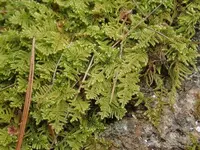
brocade moss
Callicladium imponens
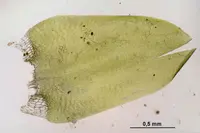
calliergonella moss
Calliergonella cuspidata
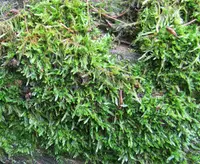
callicladium moss
Callicladium haldanianum
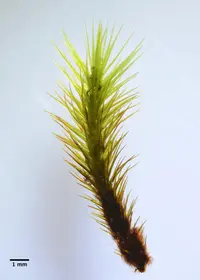
Menzies' anacolia moss
Anacolia menziesii
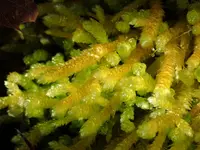
bryoandersonia moss
Bryoandersonia illecebra
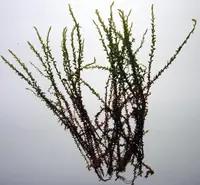
calliergon moss
Calliergon cordifolium
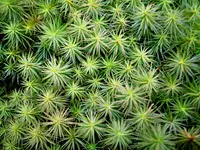
juniper polytrichum moss
Polytrichum juniperinum
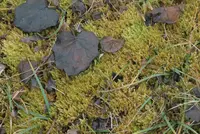
Lindberg's Hypnum Moss
Calliergonella lindbergii