


Sphagnum Underlayer
Place a thin, well-hydrated layer of long-fiber sphagnum moss under the colony to act as a moisture reservoir and stabilize the carpet on rock, wood, or shallow trays.

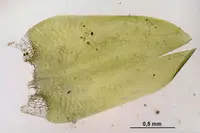
Calliergonella cuspidata, often called calliergonella moss, is a low-growing, carpet-forming moss commonly found in damp grasslands, stream banks, and wet woodland edges. It forms soft, bright green mats with fine, feathery stems that spread horizontally over soil, rocks, or decaying wood.
This moss is widely distributed across temperate regions and adapts well to cool, moist environments. It is generally considered easy to grow when given consistent moisture and protection from harsh, direct sun. Because it tolerates a range of substrates and recovers well from minor disturbance, it suits beginners learning how to care for calliergonella moss.

Care Difficulty
Easy Care

Light Preference
Partial Shade

Water Requirements
Keep Soil Moist

Temperature Preference
Cold Hardy

Hardiness Zone
3–9

Soil Texture
Loamy, Silty, Organic-rich

Soil pH
Acidic (5.5–6.5), Slightly acidic (6.5–7.0)

Soil Drainage
Waterlogged tolerant

Fertilization
Minimal (feed rarely)
Scan your plant to receive care tips personalized for your specific plant
Available on iOS and Android
This moss prefers cool, moist sites with soft, indirect light rather than strong sun exposure.
This species favors consistently moist conditions and does not tolerate prolonged drying.
This moss is adapted to cool, temperate climates and tolerates a broad temperature range outdoors.
This moss prefers consistently high humidity close to its natural bog and stream-edge habitats.
Calliergonella cuspidata thrives in saturated, soft substrates that mimic wetland conditions rather than typical potting soil.
This species can be grown in shallow containers if moisture and stability are carefully managed.
This moss thrives with very low nutrient input, so fertilizing Calliergonella cuspidata is usually unnecessary and should be minimal if done at all.
Pruning Calliergonella cuspidata is mainly cosmetic and helps maintain an even, healthy mat.
Transplanting is more relevant than repotting for Calliergonella cuspidata, which is usually grown as a ground or carpet moss.
Propagation of Calliergonella cuspidata is straightforward through division of existing mats rather than spores for most growers.
This moss is naturally cold hardy and usually needs minimal winter care in temperate climates.

Plant Health Check
Not sure what's wrong with your plant? Check your plant's health inside the app.
This moss is a classic indicator of base-rich, nutrient-poor fens and wet meadows, and its presence often signals groundwater influenced by calcium-rich substrates rather than acidic bog conditions.
Dense mats of this species can survive long periods of waterlogging and fluctuating water tables, allowing it to dominate in ditches, marsh edges, and slow-flowing streams where many other bryophytes decline.
By forming loose but extensive carpets, this moss creates microhabitats that shelter aquatic invertebrates and small soil organisms, contributing to the structural complexity and biodiversity of wetland ecosystems.

Paleobotanical and biogeographic evidence show that this species has a remarkably broad Holarctic distribution, extending from temperate lowlands to subarctic regions, which makes it one of the most widespread fen mosses across the Northern Hemisphere.
This species spreads slowly to moderately by creeping stems and fragmenting mats, not by deep roots. It usually forms soft carpets without smothering neighbors, so it is manageable in gardens, terrariums, and paludariums under normal conditions.
Keep your plants happy and healthy with plant identification, disease detection, and easy care guidance.

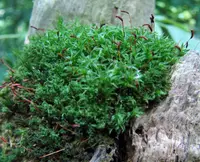
undulate atrichum moss
Atrichum undulatum
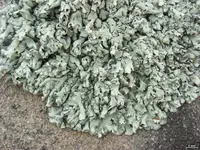
Cumberland rock-shield
Xanthoparmelia cumberlandia
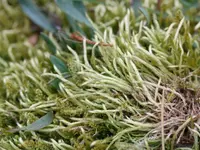
brachythecium moss
Brachythecium albicans
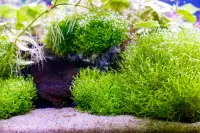
Crystalwort
Riccia fluitans
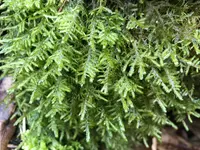
Flat Neckera
Alleniella complanata
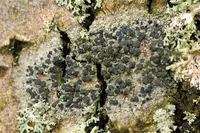
Tiny button lichen
Amandinea punctata
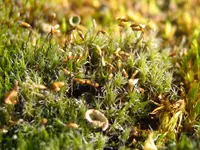
campylopus moss
Campylopus introflexus
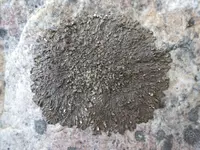
Blistered Camouflage Lichen
Xanthoparmelia loxodes