Substrate anchoring
Press small pieces of the moss firmly onto rough, stable substrates like bark, lava rock, or unglazed clay using a nylon mesh or biodegradable netting for the first 4–6 weeks, then remove the mesh once rhizoids have attached.

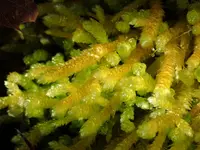
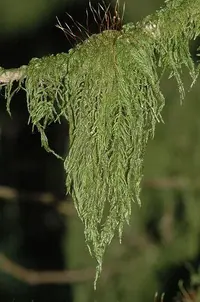
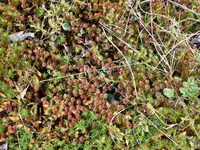
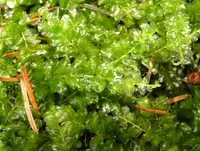
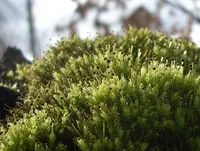
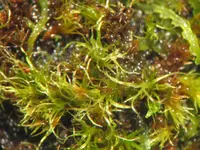
Bryoandersonia moss (Bryoandersonia illecebra) is a creeping, carpet-forming moss often found covering logs, rocks, and soil in moist forests. It forms dense, cushiony mats with fine, overlapping leaves that give it a textured, almost fern-like look.
This species is native to eastern North America, where it thrives in shaded, humid woodland habitats. It is considered moderately easy to grow in cultivation if its need for constant moisture and cool, stable conditions is met.
Those who want to learn how to care for bryoandersonia moss should focus on providing soft, indirect light, evenly moist substrate, and protection from drying winds or strong sun.

Care Difficulty
Moderate Care

Light Preference
Partial Shade

Water Requirements
Keep Soil Moist

Temperature Preference
Cold Hardy

Hardiness Zone
3–8

Soil Texture
Loamy, Silty, Organic-rich

Soil pH
Strongly acidic (4.5–5.5), Acidic (5.5–6.5)

Soil Drainage
Moist but well-drained

Fertilization
Minimal (feed rarely)
Scan your plant to receive care tips personalized for your specific plant
Available on iOS and Android
This moss prefers cool, shaded woodland-style light rather than direct, open sun.
Bryoandersonia illecebra thrives in consistently moist, but not stagnant, conditions.
This moss is naturally cold-tolerant but grows best in mild, stable temperatures.
This moss prefers consistently moist, high-humidity conditions to stay dense and green.
This species thrives on moist, loose, organic-rich substrates rather than compact mineral soils.
This moss is suitable for shallow containers and trays where constant surface moisture can be maintained.
This moss usually thrives without added nutrients, so fertilizing Bryoandersonia illecebra is rarely necessary in naturalistic or woodland-style culture.
Bryoandersonia illecebra needs only light grooming to keep mats dense and tidy in culture.
This moss is more often transplanted as mats or patches than repotted in the usual sense.
Bryoandersonia illecebra is commonly expanded by simple division and replanting of mats.
This species is naturally cold hardy across much of its native range and usually needs no special winter care outdoors.

Plant Health Check
Not sure what's wrong with your plant? Check your plant's health inside the app.
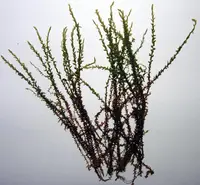
This species forms dense, creeping mats with stiff, tree-like branch tips that look almost like miniature conifer shoots when dry, a growth form quite distinctive among North American pleurocarpous mosses.
It is one of the most widespread and locally abundant forest-floor mosses in eastern North America, especially in moist hardwood forests where it can dominate large patches of soil and decaying wood.
Its leaves curl tightly around the stem when dry and spread outward when moist, a reversible response that reduces water loss and protects delicate tissues during short dry periods.

This moss often acts as a microhabitat engineer on the forest floor, trapping leaf litter and fine soil particles in its dense mats, which in turn support tiny invertebrates and help stabilize and slowly build the uppermost soil layer over time.
This species establishes more reliably outdoors, where humidity and airflow are naturally higher. Indoors it is possible but more demanding; consistent moisture, high humidity, and gentle air circulation are essential for bryoandersonia moss indoor care to succeed.
Keep your plants happy and healthy with plant identification, disease detection, and easy care guidance.