tamarisk thuidium moss Care (Thuidium tamariscinum)

Also known as: Common Tamarisk-moss
tamarisk thuidium moss

About tamarisk thuidium moss

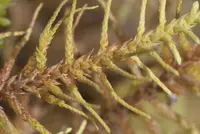
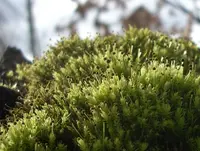
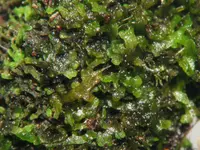
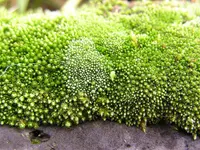
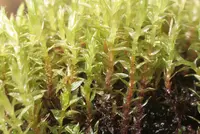
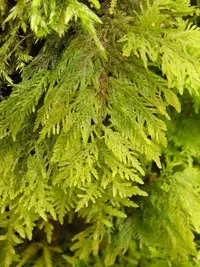
Tamarisk thuidium moss, Thuidium tamariscinum, is a creeping, feathery moss that forms dense, fern-like carpets on soil, rocks, and rotting wood. It is a bryophyte, a non-vascular plant that absorbs water and nutrients through its leaves and surface.

This species is common in temperate forests across Europe and parts of North America, usually in humid, shaded sites. Its layered, branching stems and fine leaf texture create a soft, intricate ground cover that helps retain moisture.

Because it prefers consistent moisture, cool conditions, and stable shade, it is moderately easy to grow when these needs are met. Understanding how to care for tamarisk thuidium moss mainly involves keeping its environment evenly moist and protected from strong sun and drying winds.

Main Plant Requirements

Care Difficulty

Moderate Care

Light Preference

Partial Shade

Water Requirements

Keep Soil Moist

Temperature Preference

Cold Hardy

Hardiness Zone

5–9

Soil Texture

Loamy, Peaty, Organic-rich

Soil pH

Strongly acidic (4.5–5.5), Acidic (5.5–6.5)

Soil Drainage

Moist but well-drained

Fertilization

Minimal (feed rarely)

Get Personalized Care Plan

Scan your plant to receive care tips personalized for your specific plant

Available on iOS and Android

How to Care for the tamarisk thuidium moss

This moss prefers cool, shaded woodland-style light rather than strong direct sun.

  • Provide bright dappled shade or full shade with at most 1–2 hours of gentle morning sun, especially in cooler climates.
  • Protect tamarisk thuidium moss from strong midday and afternoon sun, which can scorch fronds and dry cushions within hours.
  • In summer, increase shade or filtered light; in winter, allow more open sky exposure so it still receives 2–4 hours of low-angle light.

This moss thrives in consistently moist, but not flooded, conditions.

  • Aim for evenly damp soil or substrate; surface should feel moist to the touch but not spongy or muddy.
  • Water when the upper 0.5–1 cm starts to feel less moist, then rewet gently until the area is evenly damp, allowing excess to drain away.
  • In hot or windy weather, monitor daily for crisp or pale fronds (too dry) and for slimy, browning patches (waterlogged).

This species is adapted to cool, temperate climates with moderate seasonal variation.

  • Optimal growth occurs around 50–70°F (10–21°C), with slow but steady activity in cool, moist conditions.
  • The moss tolerates short dips to about 20°F (-6°C) under snow or leaf cover but may desiccate if exposed to dry, freezing winds.
  • In hot periods above 80°F (27°C), provide extra shade and humidity, and prevent drying winds to limit heat stress and dormancy.

This moss needs consistently high humidity to thrive in cultivation.

  • Aim for 70–90% humidity, mimicking its naturally moist woodland and streamside habitats.
  • Tamarisk thuidium moss dries quickly in air below 50%, leading to crisping tips and dull, brownish fronds.
  • Increase humidity with a closed terrarium, covered tray with moist sphagnum, or regular fine misting that keeps surfaces damp but not waterlogged.

This species prefers a soft, moisture-retentive but aerated substrate rather than standard potting soil.

  • Use a mix of fine bark, leaf mold or compost, and sharp sand in roughly equal parts to create a loose, organic-rich base.
  • Ensure constant, gentle moisture with slow drainage; the surface should stay damp but not submerged or soupy.
  • Keep pH slightly acidic to neutral (pH 5.5–7.0), avoiding strongly alkaline substrates such as heavy lime-rich mixes.
  • For Thuidium tamariscinum, spread a thin, even layer over the substrate, avoiding thick, compact mats that restrict air movement around stems.

This moss can adapt well to shallow containers and trays when moisture is stable.

  • Choose wide, shallow trays so the creeping stems can spread evenly without piling up and shading themselves.
  • Select heavier ceramic or glass containers for outdoor use to reduce tipping and to buffer rapid moisture loss.
  • Line the base with a thin layer of inert gravel to stabilize moisture levels while still preventing persistent standing water at the roots.

This moss usually thrives without added nutrients if grown on suitable, mildly acidic, organic-rich substrates.

  • In containers or controlled terrariums, use a very dilute balanced NPK fertilizer (about 1⁄8–1⁄4 strength) only during active growth.
  • Apply no more than once every 6–8 weeks in spring and summer, then stop feeding in fall and winter.
  • Rinse foliage lightly with water after feeding to reduce salt buildup on tamarisk thuidium moss surfaces.

Thuidium tamariscinum needs only light grooming to keep mats dense and healthy.

  • Best time for tidying is during active growth in spring or early fall, when recovery is fastest.
  • Pinch or trim away dead, browned, or decaying fronds to reduce mold and improve air flow.
  • Remove overcrowded tufts that shade others to maintain an even, fern-like carpet.
  • Use fine scissors or tweezers, making shallow, surface-level cuts without disturbing the substrate.

This moss is more often transplanted as patches than repotted like rooted houseplants.

  • Transplant when growth becomes patchy, substrate compacts, or mats lift easily from the surface.
  • Ideal timing is cool, moist weather in spring or early fall to limit water stress and shock.
  • Typical refresh is every 2–3 years, renewing the substrate with moisture-retentive, low-nutrient material.
  • Lift mats gently, press onto the new surface, water thoroughly, then keep evenly moist and shaded until reanchored.

Thuidium tamariscinum is commonly propagated vegetatively rather than from spores for faster establishment.

  • Use division or small patch cuttings, separating healthy, green segments with minimal handling.
  • Carry out work in spring or early fall, when cool, moist conditions support new rhizoid formation.
  • Lay fragments flat on a rough, acidic, moist substrate and press gently for good contact.
  • Maintain high humidity, consistent moisture, and shade until new growth clearly spreads from the fragments.

This moss is generally cold hardy and usually needs no special winter care in the ground.

  • Tolerates typical frosts; foliage may discolor but living tissues often resume growth in spring.
  • In very exposed sites, a light leaf litter layer helps buffer freeze–thaw cycles in the substrate.
  • Container-grown mats benefit from shelter in a cold, bright, frost-free spot to avoid complete freezing of the substrate.

Care Tips

Anchor To Substrate

Press fronds gently into rough, absorbent surfaces like decaying wood, rock crevices, or fibrous tree bark so rhizoids can attach quickly and form a stable, even mat.

Use Rain Or RO Water

In hard-water areas, collect rainwater or use reverse-osmosis water to avoid lime buildup, which can gradually raise pH and cause thinning, brown tips, and poor regrowth.

Create Layered Cushion

Stack a thin, loose layer of moss fragments over an existing moss mat or damp leaf litter to encourage a thicker, more insulated carpet that tolerates short dry spells better.

Seasonal Shading Adjustments

In outdoor culture, add temporary shade cloth or move containers under deciduous shrubs during summer to reduce heat and moisture stress while allowing more light in cooler seasons.

Gentle Hygiene Maintenance

Every few weeks, use a soft brush or low-pressure water stream to remove fallen leaves, algae, and soil splashes so fronds stay open, photosynthetic surfaces remain exposed, and caring for tamarisk thuidium moss stays predictable over time.

Common Pests and Diseases

Bryozoan overgrowth

This pest forms small, pale, crust-like colonies that can smother moss fronds in slow-moving or stagnant water. Symptoms include reduced green color and a rough, encrusted surface on the moss mat.

Solution

Reduce nutrient-rich runoff and avoid placing moss where water becomes stagnant, since bryozoans thrive in high-nutrient, low-flow conditions. Gently rinse affected mats in clean, soft water and physically pick or brush off colonies, then improve water movement or relocate the moss to better-circulating, low-nutrient conditions for more stable Thuidium tamariscinum care.

Mite damage

This pest consists of tiny arachnids that feed on moss tissues, causing dull, patchy, or bronzed areas, often under warm, dry conditions. Symptoms include fine speckling and gradual thinning of the moss carpet.

Solution

Increase ambient humidity to 60–80% and avoid direct sun or strong drying airflow, which favors mite buildup. Lightly mist and rinse the moss with soft water, then, if damage continues, use repeated applications of a mild insecticidal soap or horticultural oil, making sure runoff does not pool around the colony.

Fungal leaf spot

This disease causes small brown or black lesions that spread across the fern-like fronds, especially in poorly ventilated, constantly wet setups. Symptoms include irregular dead patches that can merge into larger necrotic areas.

Solution

Improve airflow, reduce constant overhead misting, and avoid leaving water standing on the moss surface. Remove and discard heavily spotted clumps and, in persistent cases, apply a gentle copper-based fungicide at low concentration, testing on a small area first to avoid phytotoxicity.

Algal overgrowth

This problem occurs when filamentous or slimy green algae cover the moss surface, usually in bright light combined with excess nutrients. Symptoms include a slick, shiny layer that obscures the moss texture and slows its growth.

Solution

Lower light intensity to bright indirect levels, shorten light duration to 6–8 hours, and reduce nutrient input from nearby soil, fertilizers, or aquarium water. Manually tease off algae with tweezers or a soft brush, then maintain stable low-nutrient, shaded, and cool-moist conditions to favor the moss over algae.

Slugs and snails

These insects feed on tender moss tips and new growth, leaving irregular grazed patches and a slightly ragged surface, often with shiny trails nearby. Symptoms include uneven thinning of the mat, especially at edges and along moist stone or wood surfaces.

Solution

Handpick slugs and snails during the evening or early morning and remove nearby hiding spots such as loose debris or dense leaf litter. If grazing is heavy, place copper tape barriers or use iron phosphate slug baits around, not directly on, the moss, and keep the substrate moist but not overly saturated to reduce their activity near the colony.

Interesting Facts

Tamarisk-like branching

This moss forms delicate, regularly pinnate fronds that closely resemble the branch structure of a tamarisk shrub, which is the origin of its species name tamariscinum.

Indicator of humid woodlands

It commonly carpets the floor of moist, shaded deciduous and mixed forests in Europe, and its presence often indicates relatively stable, humid, and lightly disturbed woodland conditions.

Clonal carpet formation

The species spreads mainly by creeping stems that root at the nodes, creating extensive, interconnected mats that can stabilize leaf litter and fine soil on forest floors and tree bases.

Botan icon

Did you know?

In older European forestry and bryology literature, this moss has been used as a recognizable field marker when describing and classifying specific temperate forest community types, because its large, feathery patches are easy to see and reliably associated with certain moist woodland habitats.

FAQs about tamarisk thuidium moss

This species spreads slowly to moderately by creeping stems and fragmentation. It usually forms soft mats rather than taking over large areas. In gardens, it is not considered aggressive if moisture and shade are kept balanced.

Grow Healthy Plants with Botan Care

Keep your plants happy and healthy with plant identification, disease detection, and easy care guidance.

Botan plant care app — identify plants on mobile

Explore More Plants