


Substrate anchoring
Secure loose fragments onto the substrate with biodegradable mesh or fine plastic netting for 4–6 weeks so rhizoids can attach firmly and the moss forms an even, stable carpet instead of floating or shifting.

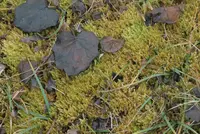
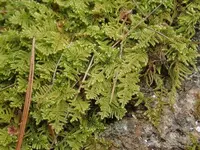
Lindberg's hypnum moss (Calliergonella lindbergii) is a low-growing, carpet-forming moss often used for naturalistic terrariums, vivariums, and shaded garden areas. It creates soft, dense mats of fine, feathery stems that spread horizontally over soil, rocks, or rotting wood.
In nature, it is common in cool, moist habitats such as stream banks, wetlands, and damp forest floors across temperate regions. Its shallow, fibrous growth makes it relatively easy to establish where moisture is steady and light is gentle.
This moss prefers consistently damp conditions, soft light, and a stable environment, so learning how to care for Lindberg's Hypnum Moss mainly involves avoiding drying out and strong sun exposure.

Care Difficulty
Moderate Care

Light Preference
Partial Shade

Water Requirements
Aquatic

Temperature Preference
Cold Hardy

Hardiness Zone
2–8

Soil Texture
Silty, Peaty, Organic-rich

Soil pH
Acidic (5.5–6.5)

Soil Drainage
Waterlogged tolerant

Fertilization
Minimal (feed rarely)
Scan your plant to receive care tips personalized for your specific plant
Available on iOS and Android
This moss prefers soft, indirect light that mimics a shaded woodland floor.
This moisture-loving moss needs consistently damp conditions without stagnant water.
This species prefers cool to mild conditions and tolerates cold better than heat.
This moss needs consistently high humidity to stay dense and green.
This species prefers saturated, soft, organic-rich substrates rather than typical potting soil.
This moss is suitable for shallow container culture when the container maintains stable surface moisture.
This moss grows well in low-nutrient conditions, so feeding Calliergonella lindbergii should stay very light.
Pruning Calliergonella lindbergii is minimal and mainly helps maintain an even, healthy moss carpet.
Calliergonella lindbergii is usually grown as a mat that is lifted and reset rather than repotted in the usual sense.
Propagation of Calliergonella lindbergii is straightforward through division of existing mats.
This moss is quite cold hardy and usually needs little special winter care in the ground or on outdoor substrates.

Plant Health Check
Not sure what's wrong with your plant? Check your plant's health inside the app.
This moss is naturally most abundant in cool boreal and subarctic regions, where it often dominates wet fens and peatlands and helps stabilize the soft, waterlogged substrate.
It thrives in habitats that experience periodic flooding and water level changes, remaining physiologically active even when submerged for extended periods in cold, low‑nutrient water.
In northern Europe and parts of Asia, this species is used in biomonitoring studies because its tissues reliably reflect atmospheric nitrogen deposition in wetland landscapes.

In some high‑latitude wetlands, dense carpets of this species can significantly influence local hydrology by slowing surface water flow and promoting long‑term peat accumulation, which in turn helps lock away atmospheric carbon in soil over centuries.
This species spreads slowly to moderately by creeping stems and fragments, forming low mats rather than thick carpets. It is generally easy to contain and is not considered aggressive in typical garden or terrarium settings.
Keep your plants happy and healthy with plant identification, disease detection, and easy care guidance.

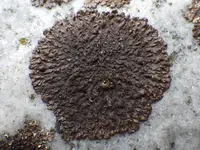
Warty Camouflage Lichen
Xanthoparmelia verruculifera
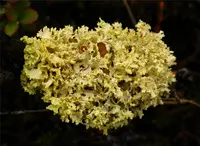
Yellow Lichen
Vulpicida juniperinus
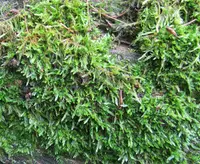
callicladium moss
Callicladium haldanianum
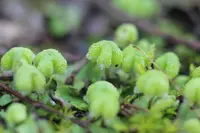
California asterella
Asterella californica
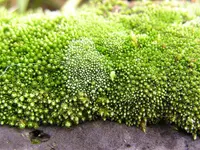
silvergreen bryum moss
Bryum argenteum
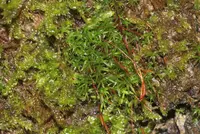
Red Beard-moss
Bryoerythrophyllum recurvirostrum
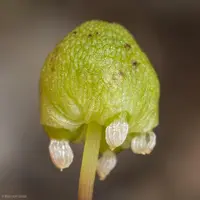
Palmer's asterella
Asterella palmeri
brocade moss
Callicladium imponens