Use moss tiles
Establish the moss on shallow trays or mesh-backed tiles first, then move these pre-colonized pieces into the landscape or terrarium to create faster, more even coverage with less disturbance to the colonies.

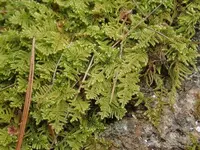
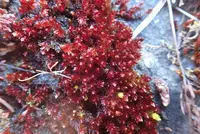
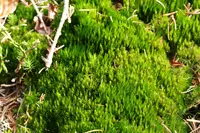
Brocade moss, Callicladium imponens, is a low-growing, mat-forming moss often found carpeting forest floors, rotting logs, and rocks in moist, shaded woodlands. It occurs widely in eastern North America, where it forms dense, finely textured green carpets with a slightly glossy surface.
This moss spreads by creeping stems and delicate side branches, creating an even, patterned look that suits terrariums and shaded garden features. It generally prefers cool, humid conditions, consistent moisture, and stable shade.
Because it has no true roots and absorbs water and nutrients through its leaves, it is sensitive to drying out but tolerant of low light. These traits make care for brocade moss straightforward if moisture and shade are kept relatively stable.

Care Difficulty
Moderate Care

Light Preference
Shade

Water Requirements
Keep Soil Moist

Temperature Preference
Cold Hardy

Hardiness Zone
3–8

Soil Texture
Loamy, Silty, Organic-rich

Soil pH
Acidic (5.5–6.5)

Soil Drainage
Moist but well-drained

Fertilization
Minimal (feed rarely)
Scan your plant to receive care tips personalized for your specific plant
Available on iOS and Android
This moss prefers cool, shaded woodland-style light with brief soft sun at most.
This species needs consistently moist conditions and does not tolerate drying out.
This moss is adapted to cool, temperate conditions and dislikes temperature extremes.
This moss prefers consistently moist air and benefits from elevated humidity.
Callicladium imponens grows best in a moist, airy, organic-rich substrate that never becomes waterlogged.
This moss can be grown successfully in shallow containers if moisture is managed carefully.
Callicladium imponens needs very little feeding when grown in natural or well-prepared substrates.
Pruning Callicladium imponens is minimal and mainly for tidiness and health.
This moss is usually transplanted rather than repotted, especially when used as a groundcover or terrarium carpet.
Propagation of Callicladium imponens is straightforward using vegetative fragments rather than spores for most home growers.
Callicladium imponens is generally cold hardy in its native range and needs little winter attention in the ground.

Plant Health Check
Not sure what's wrong with your plant? Check your plant's health inside the app.
This species forms flattened, overlapping shoots whose leaves lie in a single plane, creating a distinctive brocade-like texture that helps distinguish it from many other pleurocarpous mosses in eastern North American forests.
It is native to and widespread across moist, shaded forests of eastern North America, where it commonly carpets decaying logs, stumps, and humus-rich soil in mixed hardwood and conifer stands.
It often thrives in cool, humid microhabitats with stable moisture, so its presence is frequently used by bryologists as a field clue to relatively undisturbed, consistently moist forest conditions.
This species spreads slowly to moderately, usually adding a few centimeters of new coverage each year under stable moisture and shade. Growth is faster on consistently damp, decaying wood or soil and slower on exposed, fluctuating sites.
Keep your plants happy and healthy with plant identification, disease detection, and easy care guidance.