bartramia moss Care (Bartramia pomiformis)

Also known as: Apple moss, Common Apple-moss
bartramia moss

About bartramia moss

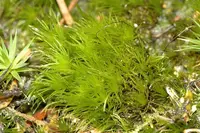
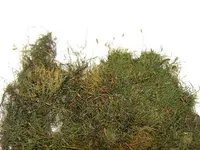
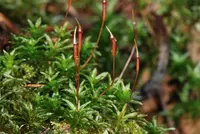
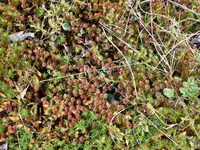
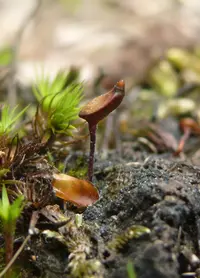
Bartramia moss (Bartramia pomiformis) is a small, cushion-forming moss known for its round, pea-like spore capsules held on short stalks. These dense, bright green tufts give rocks, banks, and tree bases a soft, textured look.

It naturally occurs in temperate regions of Europe, North America, and parts of Asia, usually in cool, humid, and shaded habitats with consistent moisture. The species prefers stable, undisturbed sites, which makes it sensitive to drying out and physical damage.

Because it relies on constant humidity and clean, slightly acidic substrates, it can be more challenging to care for bartramia moss indoors or in dry climates without controlled conditions.


Main Plant Requirements

Care Difficulty

Moderate Care

Light Preference

Partial Shade

Water Requirements

Keep Soil Moist

Temperature Preference

Cold Hardy

Hardiness Zone

4–8

Soil Texture

Loamy, Silty, Organic-rich

Soil pH

Strongly acidic (4.5–5.5), Acidic (5.5–6.5)

Soil Drainage

Moist but well-drained

Fertilization

Minimal (feed rarely)

Get Personalized Care Plan

Scan your plant to receive care tips personalized for your specific plant

Available on iOS and Android

How to Care for the bartramia moss

This moss prefers soft, cool light that mimics shaded, moist woodland habitats.

  • Provide dappled or filtered light with 2–4 hours of weak morning sun; avoid strong midday and afternoon sun to prevent bleaching and drying.
  • Site bartramia moss on north or east-facing slopes, rock crevices, or under low shrubs where it receives bright shade most of the day.
  • In summer, increase shade or distance from open exposures; in winter, allow slightly more indirect light where deciduous cover has dropped.

Consistently moist conditions are essential, but the substrate should not stay waterlogged for long periods.

  • Aim for a constantly damp surface; if the top 0.5–1 cm of soil or substrate feels only slightly moist, add water with a gentle spray or fine rose.
  • Use a free-draining but moisture-retentive substrate over rock or compact soil so Bartramia pomiformis gets steady moisture without standing pools.
  • In hot, windy, or very dry weather, increase misting or light watering frequency, and watch for curling, crisp tips as a sign of underwatering and slimy, dark patches as a sign of excess moisture.

This moss is adapted to cool, temperate climates and tolerates a broad outdoor temperature range when moisture is stable.

  • Optimal active growth occurs around 45–65°F (7–18°C), especially in cool, moist spring and autumn conditions.
  • It can usually survive brief drops to about 14–20°F (-10 to -6°C) under snow or leaf cover, but repeated freeze–thaw with exposed, dry cushions can cause damage.
  • Heat above 77–82°F (25–28°C) increases stress; provide deeper shade and higher humidity, and never allow the substrate to dry completely during warm spells.

This moss prefers consistently moist, high-humidity conditions to thrive.

  • Aim for 70–95% humidity, mimicking the damp, shaded woodland habitats of bartramia moss.
  • Tolerates brief dips to 50–60% but dries rapidly in heated indoor air, leading to browning and crisp texture.
  • Humidity stress shows as pale, shriveled cushions; increase moisture with frequent fine misting and placement near a water tray or in a terrarium.

Bartramia pomiformis grows best on moist, fine-textured, acidic substrates rather than standard potting soil.

  • Use a mix of finely milled peat or coco coir with sand and a small amount of crumbled, well-rotted leaf litter to mimic woodland banks.
  • Keep the texture soft, compact, and consistently damp but not waterlogged, allowing slow drainage rather than rapid runoff.
  • Target slightly acidic conditions around pH 5.0–6.0, avoiding lime or alkaline additives that inhibit moss growth.
  • Avoid chunky bark, heavy clay, or highly fertilized mixes, which either dry unevenly, stay saturated too long, or burn delicate tissues.

This species can be grown in shallow containers or trays when moisture and stability are controlled carefully.

  • Choose a wide, shallow container to support its low, cushion-forming growth and reduce uneven drying across the surface.
  • Line the base with a thin layer of fine gravel or coarse sand beneath the substrate to slow but not block drainage.
  • Select plastic or glazed ceramic containers, which retain surface moisture longer than porous terracotta and reduce edge drying.

This moss is adapted to nutrient-poor substrates and usually needs no additional fertilizer in cultivation.

Bartramia pomiformis needs almost no pruning, only light grooming to maintain a clean, even cushion.

  • Trim away browned, dead, or damaged tufts with fine scissors at any time of year.
  • Remove small patches affected by mold or algae to improve air flow and reduce rot risk.
  • Avoid cutting deeply into healthy green cushions, which can leave bare patches and slow regrowth.

In cultivation, this moss is usually transplanted rather than repotted, and it resents frequent disturbance.

  • Transplant only when the patch is clearly outgrowing its stone, log, or tray, or when drainage is poor.
  • Choose cool, moist weather for outdoor moves, or a mild period indoors, to limit stress and desiccation.
  • Lift the moss as intact mats, keeping attached soil or substrate, and transfer onto a similar, moist surface.
  • Press gently for good contact, mist thoroughly, then keep shaded and evenly damp for 2–3 weeks while it re-establishes.

Bartramia pomiformis is usually spread by division of cushions rather than from spores in home culture.

  • Divide small sections of healthy green cushions, keeping some attached substrate to support regrowth.
  • Carry out division in cool, moist conditions, such as early spring or fall, to reduce drying stress.
  • Press the divisions firmly onto a rough, moist, well-drained surface like stone, compact soil, or wood.
  • Maintain high humidity with frequent misting and bright, indirect light until new growth anchors securely.

This moss is naturally cold hardy and typically needs no special winter care in temperate climates.

  • Outdoor cushions usually tolerate freezing and snow without damage if drainage remains good.
  • Container-grown patches can be overwintered outdoors in a shaded, sheltered spot to avoid repeated freeze–thaw cycles.
  • If containers dry out in winter wind, water lightly on mild days to keep the substrate just barely moist.

Care Tips

Use rainwater trays

Set shallow trays or saucers filled with rainwater around the moss patch so excess water gently seeps into the substrate, which mimics natural seepage on rocky banks and keeps the colony evenly moist without direct overhead soaking.

Anchor on rough stone

Press small clumps into crevices of porous rocks or broken concrete with a rough surface, then secure lightly with biodegradable twine or mesh until the rhizoids (anchoring filaments) grip, which stabilizes the cushions on sloped or vertical features.

Limit leaf litter

Regularly lift off fallen leaves, needles, and twigs with chopsticks or tweezers instead of fingers to avoid compressing the soft cushions and to prevent decay pockets that can smother the moss.

Create cool pockets

In warm regions, position the colony in shaded pockets beside larger stones or wood pieces that stay cooler and retain moisture, reducing heat and evaporation stress during hotter spells.

Monitor spore capsules

Observe and leave the spherical spore capsules intact through their maturation, then gently mist around rather than directly on them so they can release spores and slowly thicken or expand the moss population over time.

Common Pests and Diseases

Desiccation damage

Symptoms include pale, shriveled cushions and brittle leaves, often on exposed or sloping substrates that dry quickly. This condition reflects prolonged moisture stress rather than a living pest.

Solution

Improve moisture retention by adding a thin layer of moisture-holding substrate such as fine, acid leaf litter around but not over the cushions, and reduce direct sun and wind exposure. In garden or cultivation settings, provide frequent fine misting with soft, low-mineral water and, where possible, increase shade and humidity, which is central to Bartramia pomiformis care instructions.

Shading by vascular plants

Symptoms include thinning, elongated shoots and eventual dieback where taller mosses, grasses, or seedlings overtop the cushions and block light. This problem is common on nutrient-enriched or slightly disturbed banks where competitive plants invade.

Solution

Carefully trim or hand-remove small herbaceous plants, tree seedlings, and taller mosses that encroach over the cushions without disturbing the substrate. Maintain moderate, filtered light by controlling overhanging vegetation while avoiding heavy disturbance of the moss colonies.

Bryophyte parasitic fungi

This disease appears as localized brown or black patches, softening of stems, and a patchy collapse of cushions while nearby areas remain healthy. The damage is often associated with prolonged wetness and stagnant air on finely textured soil or rock.

Solution

Gently remove and discard affected patches, including a thin layer of underlying substrate, to reduce fungal inoculum. Improve air movement and avoid chronic waterlogging by adjusting watering patterns, reducing splash, and, in cultivation, providing sloped or freely draining substrates.

Algal overgrowth

Symptoms include slimy green films on the moss surface, reduced cushion texture visibility, and a dull, saturated green color that does not dry and fluff normally. This condition often develops on nutrient-enriched, constantly wet surfaces with limited airflow or low light.

Solution

Reduce nutrient input by preventing runoff with fertilizers or soil rich in dissolved nutrients, and slightly increase light and air movement. Where feasible, gently rinse the surface with soft water to dilute surface nutrients, and adjust irrigation so the substrate remains moist but not continuously saturated.

Slugs and snails

These pests graze on tender moss tips and young sporophytes, leaving irregularly cropped or scraped patches and scattered slime trails. Damage is often most apparent in damp, shaded garden or outdoor cultivation settings.

Solution

Hand-pick slugs and snails during cool, damp periods and remove hiding spots such as decaying wood in close contact with cushions. If pressure is high, use iron-phosphate-based bait placed at some distance from the moss to lower populations while limiting direct contact with the cushions.

Interesting Facts

Spherical spore capsules

This moss produces unusually round, apple-like spore capsules on long stalks, which is why it is sometimes called apple moss. The capsules often stand above the cushion in early spring, making the species easy to recognize in the field.

Cushions on acidic rocks

It commonly forms dense, bright green cushions on acidic, well-drained substrates such as sandstone, schist, and compacted soil banks. The species is characteristic of humid, shaded ravines and stream banks in temperate regions of Europe, North America, and parts of Asia.

Twisted leaves when dry

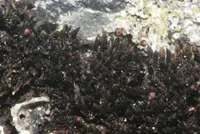
The narrow, lance-shaped leaves spread when moist but twist around the stem when dry, a reversible response that reduces water loss. This hygroscopic movement is a typical adaptation in this species to cope with intermittent drying on exposed rock faces.

Botan icon

Did you know?

The spores of this moss are dispersed mainly by wind once the spherical capsules dry and open, but the sticky spores can also cling to passing invertebrates or small vertebrates, helping the species colonize new, scattered rock outcrops across a landscape.

FAQs about bartramia moss

This species expands slowly, usually a few millimeters per year, forming tight cushions over time. Growth is fastest in consistently cool, moist, shaded conditions on stable substrates like rocks, compact soil, or decaying wood.

Grow Healthy Plants with Botan Care

Keep your plants happy and healthy with plant identification, disease detection, and easy care guidance.

Botan plant care app — identify plants on mobile

Explore More Plants