tree climacium moss Care (Climacium dendroides)

Also known as: Tree-moss, Marsh Tree-moss
tree climacium moss

About tree climacium moss

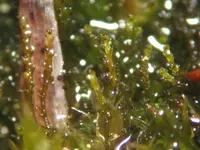
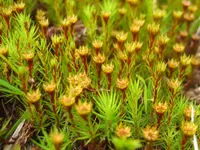
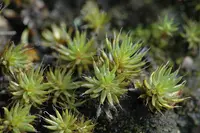
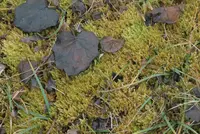
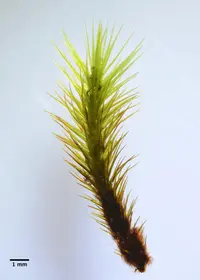
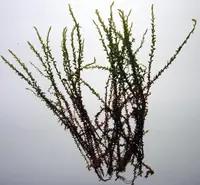
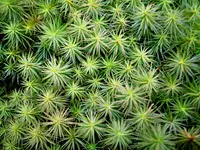
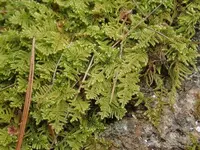
Tree climacium moss (Climacium dendroides) is a terrestrial moss that forms dense, miniature tree-like tufts rather than flat carpets. Its upright, branched stems and fine, feathery leaves give it a small forest appearance at ground level.

This species naturally occurs in cool, moist regions of the Northern Hemisphere, often in damp woodlands, along stream banks, and in shaded low-lying areas. It tends to be slow but steady in growth and is fairly forgiving as long as it does not dry out completely.

For those wanting to learn how to care for tree climacium moss, it generally prefers consistent moisture, cool temperatures, soft, low-mineral water, and shaded locations with gentle, indirect light.

Main Plant Requirements

Care Difficulty

Moderate Care

Light Preference

Partial Shade

Water Requirements

Keep Soil Moist

Temperature Preference

Cold Hardy

Hardiness Zone

3–8

Soil Texture

Loamy, Silty, Organic-rich

Soil pH

Strongly acidic (4.5–5.5), Acidic (5.5–6.5)

Soil Drainage

Waterlogged tolerant

Fertilization

Minimal (feed rarely)

Get Personalized Care Plan

Scan your plant to receive care tips personalized for your specific plant

Available on iOS and Android

How to Care for the tree climacium moss

This moss prefers cool, moist sites with soft, indirect light that mimics woodland conditions.

  • Provide dappled or filtered light with 2–4 hours of weak morning sun and shade the rest of the day, especially in summer.
  • Allow bright shade or light under shrubs or trees; direct midday and afternoon sun can scorch and dry tree climacium moss quickly.
  • In winter, low-angle sun is usually safe, but monitor for drying; in summer, increase shading or leaf litter cover to buffer intense light.

Climacium dendroides needs consistently moist conditions but declines in stagnant or waterlogged sites.

  • Aim for evenly damp substrate; the surface should feel moist to the touch and never fully crack or turn powdery dry.
  • Increase watering or misting frequency during warm, windy periods whenever the top 1–2 cm begin to feel less springy or start to pale.
  • Reduce added water in cool, wet seasons to avoid standing puddles; dark, mushy stems and a sulfur smell suggest overwatering, while brittle, browning fronds indicate underwatering.

This species prefers cool to mild temperatures and tolerates cold winters when moisture is stable.

  • Optimal growth occurs around 50–68°F (10–20°C), typical of shaded forest floors and stream banks.
  • It tolerates short dips down to about 14°F (-10°C) under snow or leaf litter, but exposed moss can desiccate in freezing winds.
  • Heat above 77–86°F (25–30°C) stresses the plant; provide deep shade and extra moisture during hot spells and expect slower growth in peak summer and midwinter.

This moss needs consistently moist, high-humidity conditions to stay dense and healthy.

  • Aim for 60–90% humidity, mimicking damp woodland or boggy margins.
  • Dry air causes pale, brittle shoots and shrinking, brown tips on tree climacium moss.
  • Increase humidity with frequent fine misting, water trays around the colony, or placing it near a constantly damp, non-calcareous water feature.

This species prefers a constantly moist, organic-rich substrate with gentle, slow drainage.

  • Use a loose mix of fine composted bark, leaf mold, and peat-free compost to recreate the soft texture Climacium dendroides occupies in nature.
  • Ensure drainage is slow but functional, with no standing water; add a small amount of fine sand if the mix feels heavy or sticky.
  • Maintain slightly acidic to neutral conditions, roughly pH 5.5–7, avoiding limy or strongly alkaline substrates that can inhibit growth.
  • Avoid compacted, clay-heavy, or rapidly drying sandy mixes, and never allow the substrate surface to bake hard between waterings.

This moss can adapt to shallow containers if moisture and stability are carefully managed.

  • Choose a broad, shallow container so the colony can spread horizontally while moisture stays more evenly distributed near the surface.
  • Line the base with a thin, even layer of fine gravel to slow water flow while still allowing excess to exit the drainage holes.
  • Group containers close together or within a low-sided tray to create a humid microclimate directly around the moss cushions.

This moss gains most nutrients from moist, organic substrates and usually needs only minimal feeding under cultivation.

  • Use a very dilute balanced liquid fertilizer (around 1/8–1/4 strength, low NPK such as 5-5-5) only if growth appears pale or weak.
  • Apply during the main growing season, about every 6–8 weeks, onto moist substrate rather than directly onto dry moss.
  • Pause feeding in winter or when Climacium dendroides is cool and semi-dormant to avoid salt buildup and tissue burn.

Pruning needs for Climacium dendroides are light and mainly hygienic rather than shaping.

  • Trim away dead, browned, or decaying tufts with fine scissors to maintain a clean, even carpet.
  • Remove damaged or overly compact clumps to improve airflow and reduce mold and algae growth.
  • Cut only the upper portions of shoots, avoiding deep cuts into the main cushion to limit stress.
  • Disinfect scissors before and after use to reduce the chance of fungal or bacterial spread.

This moss is usually grown as a ground cover or in shallow trays, so management focuses on gentle transplanting rather than frequent repotting.

  • Transplant in cool, moist weather or in spring when temperatures are mild and the substrate stays evenly damp.
  • Shift or divide mats only when growth becomes patchy, the substrate compacts, or water pools instead of draining.
  • Lift sections of Climacium dendroides with a thin layer of underlying soil or substrate to keep rhizoids attached and reduce shock.
  • Reinstall pieces onto fresh, slightly acidic, moisture-retentive substrate, press gently for contact, then keep evenly moist until re-established.

Climacium dendroides is most commonly propagated by division of existing mats rather than from spores in home settings.

  • Divide healthy, dense cushions in early spring or early fall when conditions are cool and moist.
  • Tear or cut the moss mat into small sections, each carrying live green shoots and some attached substrate.
  • Press sections firmly onto a fresh, moist, low-nutrient medium and mist to ensure good surface contact.
  • Maintain high humidity, indirect light, and consistent moisture for several weeks to encourage strong re-anchoring and new shoot growth.

Climacium dendroides is generally cold hardy in temperate climates and usually requires little special winter care outdoors.

  • In garden settings, ensure the substrate drains well so repeated freeze–thaw cycles do not cause standing water and rot.
  • Avoid heavy foot traffic on frozen moss carpets to prevent mechanical damage to the stems and cushions.
  • For containers, move trays to a cold, sheltered spot and keep the substrate just slightly moist, never waterlogged.

Care Tips

Secure Moss Mats

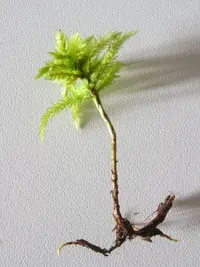
Anchor the moss to rocks, driftwood, or shallow trays using plastic mesh or cotton thread so the clumps stay stable while new rhizoids (anchoring filaments) attach and form an even, tree-like carpet.

Use Rain or Bog Water

Collect rainwater or use water from an established, pesticide-free pond or bog system to introduce beneficial microorganisms that help stabilize moisture and reduce algae dominance around the moss.

Seasonal Water Table

In outdoor troughs or shallow pans, slightly raise the water level in late spring–summer and lower it in late autumn to mimic natural flood/dry cycles, which encourages dense, compact growth rather than lanky, weak shoots.

Shade Net Adjustment

In exposed gardens, use 30–40% shade cloth above the colony during hot, bright months, then remove or raise it in cooler seasons to prevent sun scorch while still allowing enough light for steady growth.

Gentle Debris Management

Regularly lift off larger fallen leaves and twigs by hand but leave a thin layer of fine organic particles, which helps retain moisture and supports a microhabitat beneficial for growing tree climacium moss.

Common Pests and Diseases

Springtails

These insects are common in wet moss beds and feed mainly on decaying material but can graze on delicate moss tips in very dense, saturated conditions. Symptoms include slight thinning or ragged edges on new moss growth in overly wet containers or trays.

Solution

Reduce standing water and allow the moss surface to drain between mistings while keeping the substrate consistently moist, not flooded. Rinse affected cushions gently with clean, chlorine-free water and use sticky traps around propagation trays; in persistent cases, a targeted soil-drench product labeled for springtails can be used at low dose, avoiding direct spray on the moss carpet.

Moss mites

This pest consists of tiny arachnids that live within moist moss carpets and can cause localized browning and patchy thinning when populations are high. Symptoms include small, irregular dead patches and a fine, dusty appearance when cushions are disturbed.

Solution

Rinse the moss thoroughly with a gentle stream of clean water to flush mites from the cushions, then slightly reduce humidity and improve air circulation around the planting. In terraria or indoor trays, introduce short periods of increased ventilation and, if needed, apply a mild, moss-safe insecticidal soap as a brief dip or spot treatment, followed by thorough rinsing.

Algal overgrowth

This disease-like condition appears when bright light and constant surface wetness encourage green or bluish films to coat the moss and substrate. Symptoms include slippery, shiny patches that smother the moss and reduce its vigor.

Solution

Reduce light intensity slightly and limit continuous surface wetness by watering from the side or below rather than misting to runoff. Gently rub or rinse off visible algal films, thin the moss to improve airflow, and, for containers, briefly allow the top layer to approach just-damp rather than saturated before rewatering, which supports healthy growing tree climacium moss without encouraging algae.

Fungal leaf blight

This disease affects the tiny leaf-like structures of the moss, causing scattered brown or gray necrotic spots that can coalesce into dead patches, especially in stagnant, saturated conditions. Symptoms include off-color, dull fronds and a soft, collapsing texture in affected cushions.

Solution

Remove and discard all visibly blighted clumps, then increase air movement and reduce overcrowding of the moss carpet. Avoid constant misting; instead keep the substrate evenly moist and, if needed, use a low-dose, moss-safe fungicide drench applied sparingly, followed by close monitoring for new lesions.

Slugs and snails

These pests are attracted to damp, shaded moss beds and can chew through the upright stems, leaving irregular gaps and torn, missing tufts. Symptoms include slime trails, nighttime damage, and sudden disappearance of small cushions near edges and stones.

Solution

Handpick slugs and snails during the evening or early morning and remove nearby debris, stones, or boards that act as hiding places. For outdoor plantings, use physical barriers such as copper tape or collars and, if necessary, apply iron phosphate-based slug pellets around but not directly on the moss to reduce feeding pressure.

Interesting Facts

Miniature tree growth form

This moss develops upright, branched stems that resemble tiny trees, each with a distinct trunk-like axis and a crown of branchlets, which is unusual among mosses that are typically mat-forming or cushion-forming.

Preference for flooded soils

It often grows in seasonally flooded or waterlogged forests, swamps, and along slow streams, tolerating periodic submersion better than many woodland mosses adapted to drier substrates.

Indicator of stable wetlands

Its presence can indicate long-standing, relatively undisturbed wet habitats, since it tends to form persistent colonies in cool, humid, nutrient-moderate sites rather than in recently disturbed or highly polluted areas.

Botan icon

Did you know?

In some parts of Europe, this species has been used as a model organism for studying moss morphology and branching patterns because its tree-like architecture makes developmental changes easy to observe and quantify under low magnification.

FAQs about tree climacium moss

This species performs best outdoors in cool, consistently moist, shaded conditions that mimic woodland or streamside habitats. Indoors, humidity, air movement, and moisture are difficult to balance, so tree climacium moss indoor care is usually less reliable long term.

Grow Healthy Plants with Botan Care

Keep your plants happy and healthy with plant identification, disease detection, and easy care guidance.

Botan plant care app — identify plants on mobile

Explore More Plants