


Acidic substrate refresh
Top-dress the moss bed 1–2 times per year with a thin layer of rinsed, milled sphagnum peat to maintain a mildly acidic surface and support healthy new shoot formation.

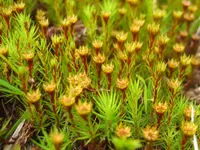
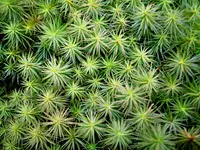
Polytrichum strictum, often called haircap moss, is a hardy, upright moss that forms dense, bristly tufts or carpets. Its stems are relatively tall for a moss and covered with narrow, structured leaves that give a coarse, brush-like look.
This species is common in cool, wet habitats such as bogs, peatlands, and moist heaths across northern regions. It is generally resilient and slow-growing, making it moderately easy to manage once established, but it needs consistently moist conditions and does not tolerate drying out.
For those learning how to care for polytrichum moss, it typically prefers bright, indirect light, cool temperatures, and acidic, low-nutrient substrates that stay evenly damp but not waterlogged.

Care Difficulty
Moderate Care

Light Preference
Partial Shade

Water Requirements
Keep Soil Moist

Temperature Preference
Cold Hardy

Hardiness Zone
2–7

Soil Texture
Peaty, Sandy, Organic-rich

Soil pH
Strongly acidic (4.5–5.5)

Soil Drainage
Waterlogged tolerant

Fertilization
Minimal (feed rarely)
Scan your plant to receive care tips personalized for your specific plant
Available on iOS and Android
This moss prefers bright, indirect light that mimics open bog or woodland edge conditions.
Moist, cool, and consistently damp conditions suit this bog moss best.
This species is naturally cold hardy but grows best in cool to mild conditions.
This moss prefers consistently moist, cool, high-humidity conditions to stay active and green.
This species thrives in acidic, moist, low-nutrient substrates that mimic peatland conditions.
This moss can grow in shallow containers when moisture and stability are carefully managed.
This moss gains most nutrients from rainwater and substrates, so additional feeding for Polytrichum strictum is minimal and should stay very light.
Pruning needs for Polytrichum strictum are low and focus on tidying rather than shaping.
Moving Polytrichum strictum is mainly about transplanting surface mats rather than classic repotting.
New Polytrichum strictum patches are most often started by division and relocation of existing cushions rather than from spores at home.
This moss is naturally cold hardy and usually needs no special winter care outdoors.

Plant Health Check
Not sure what's wrong with your plant? Check your plant's health inside the app.
This moss is tightly associated with ombrotrophic raised bogs, where it helps stabilize acidic, nutrient-poor peat surfaces that many other plants cannot tolerate.
Its stems contain central strands of specialized conducting cells (hydroids and leptoids) that transport water and nutrients, a relatively advanced feature for mosses that supports its tall, stiff growth.
Populations in boreal and subarctic regions tolerate long periods under snow cover and repeated freeze–thaw events, allowing the species to dominate cold, exposed peatland hummocks.

Polytrichum strictum can form dense, elevated hummocks that gradually raise parts of a bog surface above the water table, influencing local hydrology and creating microhabitats for other peatland species.
Growth is relatively slow. In suitable cool, moist conditions, this species usually extends 1–3 cm per year. It spreads mainly by fragments and short rhizomes, so forming a dense carpet can take several years.
Keep your plants happy and healthy with plant identification, disease detection, and easy care guidance.

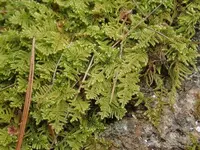
brocade moss
Callicladium imponens
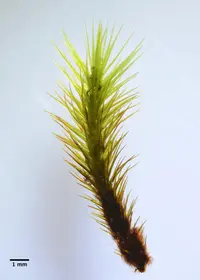
Menzies' anacolia moss
Anacolia menziesii
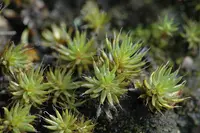
polytrichum moss
Polytrichum piliferum
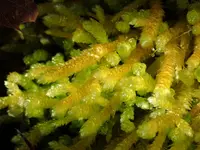
bryoandersonia moss
Bryoandersonia illecebra
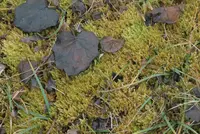
Lindberg's Hypnum Moss
Calliergonella lindbergii
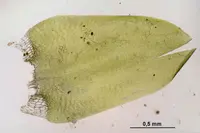
calliergonella moss
Calliergonella cuspidata
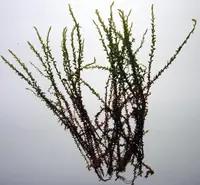
calliergon moss
Calliergon cordifolium
juniper polytrichum moss
Polytrichum juniperinum