


Anchor On Substrate
Press small tufts firmly onto rough, stable surfaces like bark, lava rock, or porous brick, then secure with biodegradable mesh or cotton thread for 4–6 weeks so the moss can attach before the support is removed.


Isothecium myosuroides, often called slender mouse-tail moss, is a creeping moss that forms soft, trailing mats on bark, rocks, and damp soil. It has fine, overlapping leaves that create a feathery texture and a delicate, green to yellow-green appearance.
This species is common in cool, humid forests across western and northern Europe and is often found in shaded, moist woodland habitats. It is generally adaptable and resilient, but consistent moisture and protection from strong sun make it easier to care for isothecium moss.
Isothecium myosuroides suits terrariums, shaded outdoor rock gardens, and naturalistic displays where humidity stays moderate to high and air movement is gentle but steady.

Care Difficulty
Moderate Care

Light Preference
Shade

Water Requirements
Keep Soil Moist

Temperature Preference
Cold Hardy

Hardiness Zone
5–9

Soil Texture
Loamy, Silty, Organic-rich

Soil pH
Strongly acidic (4.5–5.5), Acidic (5.5–6.5)

Soil Drainage
Moist but well-drained

Fertilization
Minimal (feed rarely)
Scan your plant to receive care tips personalized for your specific plant
Available on iOS and Android
This moss prefers cool, shaded conditions that mimic a damp woodland floor.
This moss thrives in consistently moist conditions but declines if kept saturated or allowed to dry out completely.
This moss is naturally cool-temperate and copes best with mild, stable conditions.
This moss prefers consistently moist, cool, high-humidity conditions to stay dense and green.
Isothecium myosuroides grows best on moist, airy, organic-rich substrates that never become waterlogged.
This moss is suitable for shallow containers, trays, and terrariums where stable surface moisture can be maintained.
This moss grows on nutrient-poor substrates and usually needs no added fertilizer in gardens or terraria.
Isothecium myosuroides needs minimal pruning, mainly to keep mats tidy and healthy.
This moss is usually established on logs, rocks, or soil and is moved only when a patch must be relocated.
Most gardeners multiply Isothecium myosuroides by vegetative division rather than by spores.
This moss is naturally cold hardy and typically needs no special winter care outdoors.

Plant Health Check
Not sure what's wrong with your plant? Check your plant's health inside the app.
This species often grows on rocks and tree bases that are regularly splashed by streams and waterfalls, showing a high tolerance to constant moisture and mechanical disturbance from flowing water.
Its creeping stems carry densely overlapping leaves that give the shoots a tail-like appearance, which inspired the species name myosuroides, meaning mouse-tailed.
It is frequently found forming loose mats on the bark of broadleaf trees in humid forests of western Europe and the Pacific Northwest, where it helps trap moisture and fine organic particles on trunk surfaces.
Growth is slow to moderate. New patches usually take many months to knit together, often expanding just a few centimeters per year. Moisture, shade, clean substrates, and stable temperatures are more important than fertilizer for growing isothecium moss successfully.
Keep your plants happy and healthy with plant identification, disease detection, and easy care guidance.

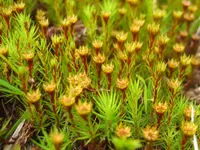
polytrichum moss
Polytrichum strictum
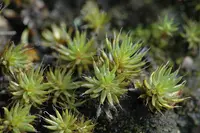
polytrichum moss
Polytrichum piliferum
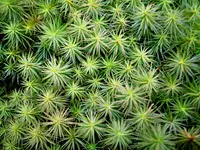
juniper polytrichum moss
Polytrichum juniperinum
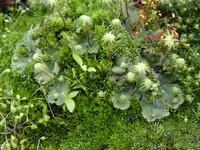
Common Liverwort
Marchantia polymorpha
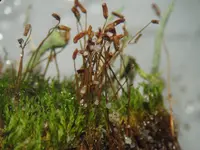
ceratodon moss
Ceratodon purpureus
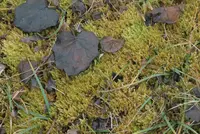
Lindberg's Hypnum Moss
Calliergonella lindbergii
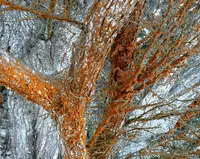
Orange Rock Hair
Trentepohlia aurea
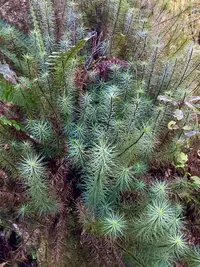
Dawsonia superba
Dawsonia superba