Use neutral water
Collect rainwater or use dechlorinated, low-mineral water, since tap water with high hardness or added salts can gradually weaken Pleurozium schreberi mats over time.

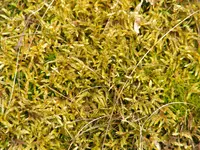
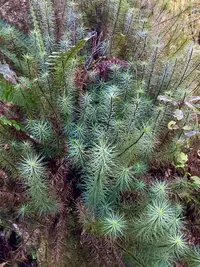
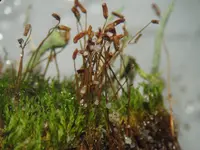
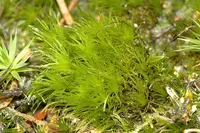
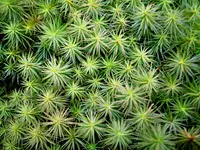
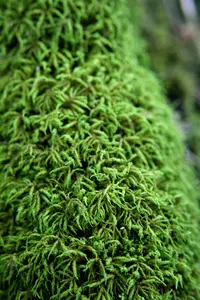
Schreber's big red stem moss (Pleurozium schreberi) is a common carpet-forming moss, often seen as a soft, dense ground cover in forests. It spreads by creeping red to reddish-brown stems with many fine, overlapping leaves.
This species occurs widely across cool, temperate regions of the Northern Hemisphere, especially in coniferous and mixed woodlands and on well-drained, acidic soils. It is hardy and tolerant of cold, drought periods, and low nutrients, which makes it relatively easy to maintain in suitable conditions.
Those who want to learn how to care for Schreber's big red stem moss should note its preference for consistent moisture, good air flow, and indirect light rather than strong, direct sun.

Care Difficulty
Moderate Care

Light Preference
Partial Shade

Water Requirements
Keep Soil Moist

Temperature Preference
Cold Hardy

Hardiness Zone
2–7

Soil Texture
Loamy, Peaty, Organic-rich

Soil pH
Strongly acidic (4.5–5.5), Acidic (5.5–6.5)

Soil Drainage
Moist but well-drained

Fertilization
Minimal (feed rarely)
Scan your plant to receive care tips personalized for your specific plant
Available on iOS and Android
This forest-floor moss prefers soft, filtered light that mimics dappled woodland conditions.
This species prefers consistently moist conditions without prolonged saturation.
This moss is cold-hardy but grows best in cool to mild conditions.
This moss prefers steady high humidity to keep its fine shoots hydrated and photosynthetically active.
Pleurozium schreberi grows best in loose, acidic, consistently moist substrates rich in decayed organic matter.
This species can be grown in shallow containers or trays that replicate a cool, moist forest floor.
Pleurozium schreberi is adapted to low-nutrient habitats and generally performs best with little to no added fertilizer.
Pleurozium schreberi needs only light pruning to maintain a clean, even mat.
This moss is usually grown as a groundcover or on substrates, so transplanting is more common than repotting.
Pleurozium schreberi spreads mainly by division and reattachment of living fragments rather than by seed-like spores in home settings.
This hardy boreal moss typically needs no special winter care in outdoor plantings, even in freezing climates.

Plant Health Check
Not sure what's wrong with your plant? Check your plant's health inside the app.
This species is one of the most abundant forest-floor mosses across boreal and northern temperate conifer forests, often forming continuous carpets that can dominate ground vegetation layers.
Its dense mats store significant amounts of organic carbon in cold forests, contributing to long-term carbon sequestration because decomposition is slow in its cool, often acidic habitats.
It is widely used in environmental monitoring as a bioindicator of air pollution and heavy metal deposition, since its tissues efficiently trap airborne particles and reflect long-term contaminant loads.

The growth form and chemistry of this moss create a thick, springy layer that strongly insulates the soil, keeping forest floors cooler and moister in summer and slowing snowmelt in spring, which in turn shapes seedling establishment and nutrient cycling patterns in conifer forests.
This moss spreads by creeping stems and fragments but is not usually aggressive in gardens. It forms low carpets that expand slowly, especially in cool, moist, acidic sites, and rarely overwhelms established, taller vegetation under normal conditions.
Keep your plants happy and healthy with plant identification, disease detection, and easy care guidance.