Prepare rock surfaces
Before attaching the moss, scrub the rock or brick surface with a stiff brush and rinse to remove dust, algae, and loose particles so new cushions can anchor firmly to clean pores and crevices.

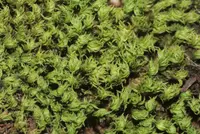
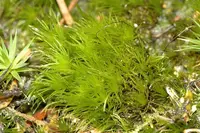
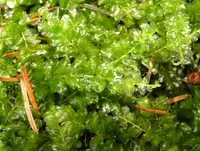
Park Yoke-moss (Zygodon rupestris) is a small, cushion-forming moss that grows tightly against rock surfaces, tree bark, and old walls. Its dense, green tufts create a fine, velvety texture.
This species is native to temperate regions and is often found in shaded, humid microhabitats with stable surfaces. It anchors using tiny rhizoids, which are root-like structures that help it cling and absorb moisture from its surroundings.
Zygodon rupestris is relatively undemanding but needs consistent moisture and protection from harsh sun and drying wind. Once suitable conditions are provided, it is straightforward to care for Park Yoke-moss, especially in shaded rock gardens, terrariums, or moss displays.

Care Difficulty
Moderate Care

Light Preference
Partial Shade

Water Requirements
Keep Soil Moist

Temperature Preference
Cool Climate

Hardiness Zone
5–9

Soil Texture
Rocky, Loamy, Organic-rich

Soil pH
Acidic (5.5–6.5)

Soil Drainage
Moist but well-drained

Fertilization
Minimal (feed rarely)
Scan your plant to receive care tips personalized for your specific plant
Available on iOS and Android
This moss prefers soft, indirect light that mimics shaded rock or bark surfaces in nature.
This moss needs steadily moist conditions but suffers if its substrate stays waterlogged for long periods.
This moss is cold hardy but grows best in cool, stable conditions without extreme heat or deep, prolonged freezes.
This moss prefers consistently moist air and reacts quickly to drying conditions.
This species anchors best in shallow, mineral-based, sharply draining substrates rather than deep, rich potting mixes.
This moss can be grown in shallow containers or troughs that allow a thin, stable substrate layer over rock or gravel.
Zygodon rupestris is adapted to nutrient-poor substrates and usually needs no fertilizer in naturalistic or low-input settings, so avoid feeding unless growth is clearly weak.
Zygodon rupestris rarely needs structured pruning; maintenance is mainly about tidying the colony surface.
This moss is usually grown on rocks, bark, or shallow trays, so transplanting the colony is more relevant than traditional repotting.
Propagation of Zygodon rupestris is typically done by dividing and relocating small cushions rather than by spores in home settings.
This species is generally cold hardy in its native range and usually needs little special winter care outdoors.

Plant Health Check
Not sure what's wrong with your plant? Check your plant's health inside the app.
This moss is strongly associated with base-rich, often limestone or mortar-rich rocks and walls, and is used as an indicator of calcareous microhabitats in bryological surveys.
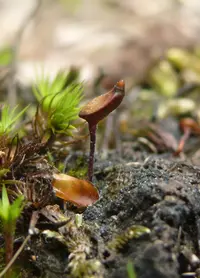
Its spore capsules have short, incurved peristome teeth (the tooth-like structures around the capsule mouth), which bryologists use as a key feature to separate it from visually similar rock-dwelling mosses.
The species has a scattered distribution in Europe, being locally frequent on suitable old masonry and natural rock outcrops, but completely absent from large areas that lack stable, lime-rich stone substrates.
This species spreads slowly by forming small, tight cushions. It does not usually become aggressive and is simple to control. Growth remains localized, especially on rock or bark, so it suits detailed landscaping and small terrariums.
Keep your plants happy and healthy with plant identification, disease detection, and easy care guidance.