Use Rain or RO
Collect rainwater or use reverse-osmosis (RO) water to top up trays and misting, since low-mineral water prevents salt buildup that can quickly damage compact bog-moss in shallow culture trays.

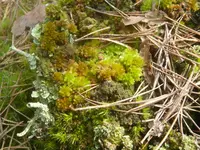
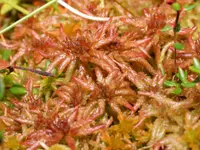
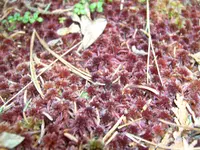
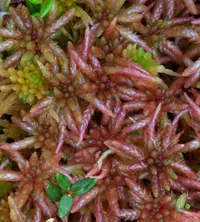
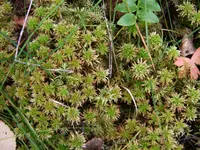
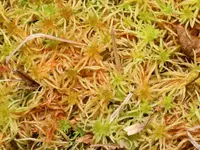
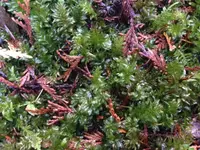
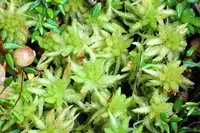
Compact bog-moss (Sphagnum compactum) is a small, cushion-forming moss found in acidic, waterlogged habitats. It forms dense, low mats rather than tall, feathery tufts. The stems and tightly packed branch clusters create a spongy surface that can hold large amounts of water. Colors range from pale green to yellow-green, sometimes with light brown tips in exposed spots. This species occurs mainly in bogs, wet heaths, and moorlands across cooler, humid regions. It is adapted to poor, acidic substrates and constant moisture, which makes it sensitive to drying out in cultivation. To care for compact bog-moss, provide consistently damp conditions, soft low-mineral water, and gentle light without harsh drying sun or heat sources.

Care Difficulty
Moderate Care

Light Preference
Partial Shade

Water Requirements
Aquatic

Temperature Preference
Cool Climate

Hardiness Zone
3–8

Soil Texture
Peaty, Organic-rich, Silty

Soil pH
Strongly acidic (4.5–5.5)

Soil Drainage
Waterlogged tolerant

Fertilization
Minimal (feed rarely)
Scan your plant to receive care tips personalized for your specific plant
Available on iOS and Android
This moss prefers bright, indirect light that mimics open but not fully exposed bog conditions.
This bog moss needs continuously moist to saturated conditions without long dry periods.
This species prefers cool to mild conditions typical of temperate bogs and is sensitive to strong temperature extremes.
This moss needs very high, constant humidity to stay alive and actively grow.
This species prefers saturated, acidic, organic substrates that mimic natural bog conditions rather than conventional potting soil.
This moss is suitable for shallow, controlled containers that maintain stable moisture and humidity.
Sphagnum compactum typically grows in nutrient-poor habitats and requires no routine fertilization in cultivation.
Pruning needs for Sphagnum compactum are minimal and focus on hygiene rather than shaping.
Sphagnum compactum in culture is usually transplanted rather than traditionaly repotted, focusing on maintaining a fresh, saturated substrate.
Propagation of Sphagnum compactum is straightforward by division of living shoots rather than by spores for most growers.
This moss is cold tolerant when grown outdoors in consistently moist conditions and usually needs little specific winter care.

Plant Health Check
Not sure what's wrong with your plant? Check your plant's health inside the app.
This species often dominates drier, more elevated parts of Atlantic bogs, where many other Sphagnum species struggle, forming tight cushions rather than loose carpets.
It is characteristic of oceanic, high-rainfall regions along Atlantic coasts in Europe and parts of North America, and its presence is used by peatland ecologists to help distinguish these climates from more continental ones.
By forming dense, compact hummocks on slightly raised peat surfaces, it helps create small-scale height differences that influence water flow, plant community patterns, and habitat for specialized invertebrates.
Growth is slow to moderate. In consistently wet, acidic conditions it usually adds only a few millimeters to about 1–2 cm of height per year, expanding outward as a cushion or low mat rather than forming tall shoots.
Keep your plants happy and healthy with plant identification, disease detection, and easy care guidance.