

Use Mesh Trays
Grow cushions on shallow trays lined with plastic mesh so you can lift the whole mat for inspection, rinsing, and division without tearing the fragile stems.

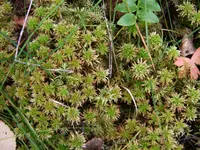
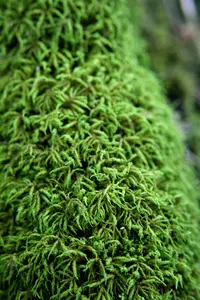
Wulf's sphagnum (Sphagnum wulfianum) is a cold-loving moss species that forms dense, cushion-like mats rather than upright stems or leaves. It is typically found in boreal and subarctic regions, growing in bogs, fens, and other wet, acidic habitats.
The moss has soft, moisture-holding stems that can range from pale green to brownish tones, creating thick carpets over soil or old wood. Its strong ability to retain water and acidify its surroundings shapes the wetland ecosystems where it grows.
These traits mean it prefers constant moisture, cool conditions, and low-nutrient, acidic substrates, which affects how to care for Wulf's sphagnum under cultivation.

Care Difficulty
Hard Care

Light Preference
Partial Shade

Water Requirements
Aquatic

Temperature Preference
Cool Climate

Hardiness Zone
2–6

Soil Texture
Peaty, Organic-rich, Silty

Soil pH
Strongly acidic (4.5–5.5)

Soil Drainage
Waterlogged tolerant

Fertilization
Minimal (feed rarely)
Scan your plant to receive care tips personalized for your specific plant
Available on iOS and Android
This moss prefers bright, indirect light that mimics open, cool bog conditions.
This species requires constantly moist to saturated conditions with clean, low-nutrient water.
This moss is adapted to cool climates and performs best in consistently mild to cool temperatures.
This moss needs constantly high humidity to stay hydrated and actively growing.
Sphagnum wulfianum thrives in very wet, acidic, organic substrates rather than conventional potting soil.
This species is suitable for container culture when the setup keeps the moss constantly moist and stable.
This moss naturally occupies nutrient-poor habitats and Wulf's sphagnum usually needs no supplemental fertilization in cultivation.
Pruning needs for Sphagnum wulfianum are minimal and mainly hygienic rather than shaping.
Transplanting is more important than true repotting, since this moss is usually grown as a living carpet or in shallow trays.
Sphagnum wulfianum is most often propagated vegetatively rather than from spores in typical hobby or research setups.
This cold-tolerant sphagnum usually needs little special winter care when grown outdoors in regions with stable snow cover.

Plant Health Check
Not sure what's wrong with your plant? Check your plant's health inside the app.
This moss has a mainly Arctic–alpine distribution, occurring from northern Fennoscandia and Siberia to high mountains of eastern Asia and western North America, where it grows in cold, open habitats above or near the treeline.
Unlike many sphagnum species that favor very acidic bogs, this species often occupies moderately base-rich fens and seeps influenced by mineral-rich groundwater, reflecting a more calciphilous, or lime-tolerant, ecology.
It forms relatively tall, robust cushions or lawns with thick stems and strongly spreading branches, and under magnification its stem leaves show characteristic narrow, tongue-shaped anatomy used by bryologists to distinguish it from closely related taxa.
Growth is slow to moderate. In good conditions it may extend 2–5 cm per year, forming thicker cushions rather than tall shoots. Cool, constantly moist conditions and soft, low-mineral water are key to faster, healthy development.
Keep your plants happy and healthy with plant identification, disease detection, and easy care guidance.

Square-leaved Crestwort
Chiloscyphus polyanthos
tortula moss
Tortula muralis
sphagnum
Sphagnum angustifolium
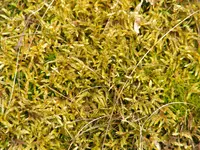
Schreber's big red stem moss
Pleurozium schreberi
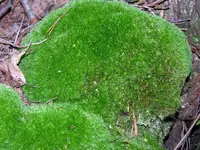
leucobryum moss
Leucobryum glaucum
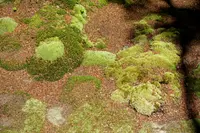
leucobryum moss
Leucobryum albidum
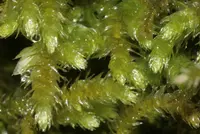
Common Striated Feather-moss
Eurhynchium striatum
seductive entodon moss
Entodon seductrix