Use mineral substrates
Establish colonies on rough, stable mineral surfaces such as brick, unglazed clay, or porous rock, which mimic its natural saxicolous habitat and help cushions anchor firmly.

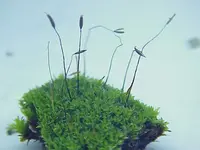
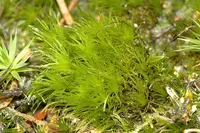
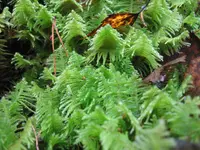
Tortula muralis, often called wall screw-moss, is a small, hardy moss that forms dense green to gray-green cushions or tufts. Its leaves are narrow and often twist when dry, then quickly turn greener and fuller after moisture returns.
This moss commonly grows on walls, rocks, roofs, and pavement in cities and rural areas, especially where surfaces are lime-rich or slightly alkaline. It is valued for its toughness, ability to handle drying out, and low nutrient needs, which make it fairly easy to keep in culture.
For those who want to care for tortula moss, it generally prefers bright indirect light, regular light moisture, and a stable, well-drained surface rather than rich potting soil.

Care Difficulty
Easy Care

Light Preference
Partial Sun

Water Requirements
Low Water

Temperature Preference
Cold Hardy

Hardiness Zone
3–9

Soil Texture
Rocky, Sandy, Loamy

Soil pH
Slightly acidic (6.5–7.0), Neutral (7.0)

Soil Drainage
Well-drained

Fertilization
Minimal (feed rarely)
Scan your plant to receive care tips personalized for your specific plant
Available on iOS and Android
This moss thrives in bright, open conditions but is more shade tolerant than many sun-loving groundcovers.
This species is drought-tolerant but responds best to intermittent moisture that mimics natural wet–dry cycles.
This moss is naturally adapted to exposed, temperate climates with wide daily and seasonal swings in temperature.
This moss handles relatively dry air but grows best with moderate ambient humidity.
This species naturally anchors on rocky, compact substrates but adapts well to simple, lean mixes in cultivation.
This moss is suitable for shallow container growing, especially in trays or crevice-style planters.
This moss is adapted to low-nutrient habitats and usually needs no additional fertilizer in normal conditions.
Tortula muralis needs only minimal pruning to keep mats tidy and healthy.
This moss is usually grown on rocks, walls, or shallow trays, so transplanting focuses on moving surface mats rather than deep roots.
Tortula muralis is commonly propagated by division of existing mats rather than by spores in home settings.
Tortula muralis is very cold hardy and usually needs no special winter care outdoors.

Plant Health Check
Not sure what's wrong with your plant? Check your plant's health inside the app.
This moss commonly colonizes mortar joints, brick walls, and concrete surfaces in cities, thriving in alkaline, nutrient-poor substrates that many other mosses cannot tolerate.
Its narrow leaves twist tightly around the stem when dry, reducing surface area and water loss, then quickly rehydrate and reopen when moisture returns.
As a pioneer species on bare stone and masonry, it endures frost and freeze–thaw cycles, slowly trapping dust and organic particles that help other organisms establish later.

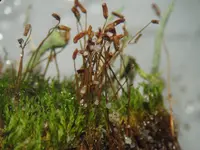
The sporophytes of Tortula muralis often develop during cooler months and can remain conspicuous for a long period, making it one of the most easily recognized wall mosses in temperate urban environments.
Growth is relatively slow. In suitable conditions, it usually spreads a few millimeters to about 1–2 cm per year, forming low, dense cushions. Disturbance, drought, or frequent drying can reduce this rate significantly.
Keep your plants happy and healthy with plant identification, disease detection, and easy care guidance.