Use stable substrate
Attach the moss to rough-barked wood, porous lava rock, or coarse sandstone so its creeping stems can anchor firmly and form an even mat that resists being washed away by rain or misting.

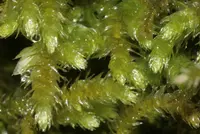
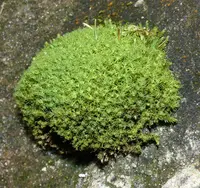
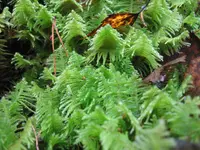
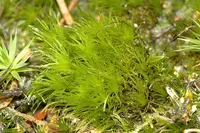
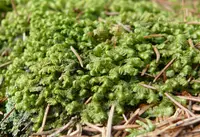
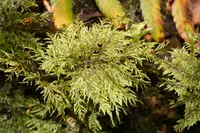
Common striated feather-moss, Eurhynchium striatum, is a creeping, evergreen moss that forms soft, dense mats of finely feathered stems. Its fronds are usually bright to yellow-green, giving a fresh, textured look to shaded ground or wood surfaces.
This species occurs naturally on forest floors, rotting logs, rocks, and stream banks across much of Europe and parts of North America, especially in cool, humid woodlands. It is generally easy to grow when provided with constant moisture, shade to dappled light, and a stable, undisturbed surface.
Because it is tolerant of low light and adapts to a range of neutral to slightly acidic substrates, many hobbyists find it straightforward to care for Common Striated Feather-moss in terrariums or shaded garden corners.

Care Difficulty
Moderate Care

Light Preference
Shade

Water Requirements
Keep Soil Moist

Temperature Preference
Cool Climate

Hardiness Zone
6–9

Soil Texture
Loamy, Silty, Organic-rich

Soil pH
Strongly acidic (4.5–5.5), Acidic (5.5–6.5)

Soil Drainage
Moist but well-drained

Fertilization
Minimal (feed rarely)
Scan your plant to receive care tips personalized for your specific plant
Available on iOS and Android
This woodland moss prefers low to moderate light that mimics a shaded forest floor.
This moss thrives in consistently moist, cool substrates without long dry spells.
This species is adapted to mild, temperate conditions and does best without temperature extremes.
This moss prefers consistently moist, cool air with relatively high humidity to maintain dense growth.
Eurhynchium striatum thrives in consistently moist, humus-rich, finely textured substrates that mimic woodland leaf litter.
This species adapts well to shallow containers or trays that allow a broad, evenly moist surface for spreading mats.
This moss generally thrives without added nutrients, so fertilizer use should stay minimal and cautious.
Pruning needs for Eurhynchium striatum are light and mainly hygienic rather than structural.
This moss is usually grown as groundcover or on hard surfaces, so management focuses on transplanting mats rather than frequent repotting.
Eurhynchium striatum is usually propagated vegetatively, using small pieces of existing cushions rather than spores in home settings.
This moss is generally cold hardy in temperate climates and usually needs only minimal winter attention outdoors.

Plant Health Check
Not sure what's wrong with your plant? Check your plant's health inside the app.
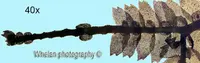
The species name striatum refers to the fine longitudinal grooves on its stems, which are visible under magnification and help distinguish it from related woodland mosses.
This moss is characteristic of mildly basic, nutrient-rich woodland soils, often occurring on decaying logs and humus where calcium content is higher than in typical acidic forest substrates.
It forms broad, glossy, yellow‑green mats with regularly pinnate, feather-like shoots, a growth pattern that creates stable microhabitats for small invertebrates on the forest floor.
This species does not climb. It forms low, creeping mats made of many branching stems that root as they contact moist substrate. Over time it spreads horizontally, creating a dense carpet over soil, rotting wood, or stones.
Keep your plants happy and healthy with plant identification, disease detection, and easy care guidance.