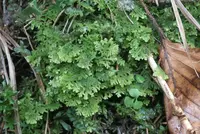
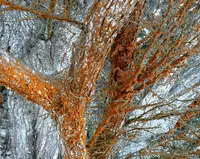
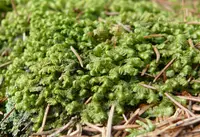
Use mineral-rich substrate
When establishing a patch, mix a small amount of crushed, lime-free rock or coarse sand with native soil to mimic the stony, mineral-rich sites this moss prefers and encourage tighter, more resilient cushions.

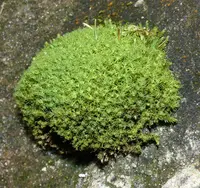
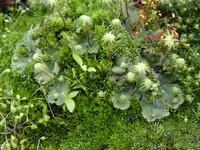
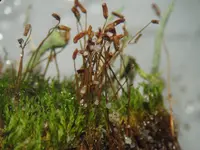
Tortured tortella moss, Tortella tortuosa, is a small, cushion-forming moss that creates dense, twisted tufts of bright to yellow-green shoots. It often grows on dry, calcareous rocks, thin soils, and old walls, especially in temperate regions with cool to mild climates.
This species is adapted to periods of dryness and can revive quickly when moisture returns, which makes it relatively resilient in cultivation. It stays low and compact, so it suits detail-focused displays like terrariums, rock gardens, or moss trays.
To care for tortured tortella moss, provide bright, indirect light, steady but moderate moisture, and a well-drained, mineral-rich substrate that does not stay waterlogged for long periods.

Care Difficulty
Moderate Care

Light Preference
Partial Shade

Water Requirements
Keep Soil Moist

Temperature Preference
Cool Climate

Hardiness Zone
3–8

Soil Texture
Loamy, Silty, Organic-rich

Soil pH
Strongly acidic (4.5–5.5), Acidic (5.5–6.5)

Soil Drainage
Moist but well-drained

Fertilization
Minimal (feed rarely)
Scan your plant to receive care tips personalized for your specific plant
Available on iOS and Android
This moss prefers bright but gentle light similar to open woodland or rock outcrop conditions.
This moss is adapted to periodic drying but needs consistent moisture pulses to stay dense and green.
This hardy moss tolerates a wide temperature range but grows best in cool to mild conditions.
This moss prefers moderately moist air but adapts to a wide range of humidity levels.
Tortella tortuosa grows best in a loose, mineral-rich, sharply drained substrate.
This species is suitable for shallow container culture that mimics rocky crevices.
This moss requires very little feeding, as Tortella tortuosa is adapted to low-nutrient habitats.
Pruning needs for Tortella tortuosa are minimal and mostly cosmetic.
This moss is usually grown on rocks or soil surfaces and is moved only when necessary.
Propagation of Tortella tortuosa is straightforward when whole clumps or fragments are used.
This moss is naturally cold hardy and usually needs no special winter care outdoors.

Plant Health Check
Not sure what's wrong with your plant? Check your plant's health inside the app.
The leaves form a distinctive twisted spiral when dry, then partially straighten when moist, a hygroscopic response that helps manage water uptake and reduce damage from rapid wetting and drying on exposed rock surfaces.
This species strongly favors calcium-rich substrates and is frequently found on basic or calcareous rocks, mortar, and concrete, making it a characteristic moss of limestone and urban masonry habitats across much of Europe and parts of North America.
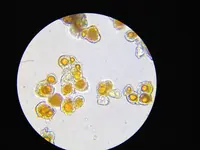
Under magnification, the stems often show a reddish to orange-brown outer layer (cortex), a trait used by bryologists to distinguish it from similar twisted-leaved mosses in dry, open habitats.
Growth is slow but steady. In suitable outdoor conditions it may spread a few millimeters to 1–2 cm per year. Development focuses on dense, low cushions rather than height, so visual change can be subtle over short periods.
Keep your plants happy and healthy with plant identification, disease detection, and easy care guidance.