Substrate anchoring
Press the mats gently onto rough, moisture-retentive rock or bark using plastic plant pins or cotton thread so the creeping shoots can attach securely and spread evenly rather than lifting and drying at the edges.

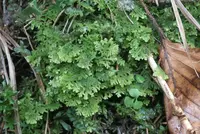
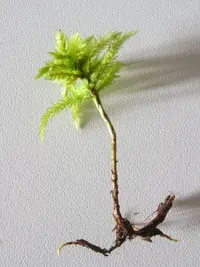
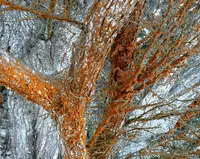
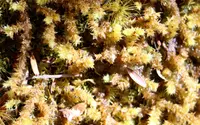
Handsome woollywort, Trichocolea tomentella, is a delicate leafy liverwort rather than a typical flowering plant. It forms soft, feathery mats that hug moist surfaces.
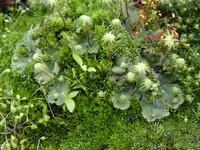
In nature it grows on shaded, damp rocks, soil, or rotting wood, often in cool, humid forests and near streams. Its fine, overlapping leaves create a velvety texture and help it trap moisture.
This species prefers constant humidity, gentle airflow, and protection from direct sun, so it suits terrariums or carefully managed indoor moss displays. Those conditions can make it moderately challenging to care for Handsome Woollywort, especially in dry homes.

Care Difficulty
Hard Care

Light Preference
Shade

Water Requirements
Keep Soil Moist

Temperature Preference
Cool Climate

Hardiness Zone
Unknown

Soil Texture
Peaty, Organic-rich, Silty

Soil pH
Strongly acidic (4.5–5.5)

Soil Drainage
Waterlogged tolerant

Fertilization
Minimal (feed rarely)
Scan your plant to receive care tips personalized for your specific plant
Available on iOS and Android
This shade-loving liverwort thrives in cool, consistently low-light conditions on moist, sheltered surfaces.
This species prefers constantly moist conditions and is sensitive to both drying and stagnant water.
This moss-like liverwort prefers cool, stable temperatures and does poorly in extremes.
This species needs very high, consistently moist air to thrive and is sensitive to drying out.
This moss-like liverwort prefers consistently moist, soft, organic-rich substrates rather than typical potting soil.
This species can be grown in shallow containers or terraria when moisture and airflow are carefully balanced.
This moss-like liverwort grows best in nutrient-poor, moist substrates and typically does not need supplemental fertilizer.
Trichocolea tomentella needs almost no structural pruning, only light grooming to maintain a healthy mat.
This delicate bryophyte is usually grown as a ground or substrate cover and dislikes frequent disturbance.
Propagation of this liverwort is usually done by vegetative division rather than by spores in home or research settings.
In mild, consistently moist climates this species overwinters with little intervention once established.

Plant Health Check
Not sure what's wrong with your plant? Check your plant's health inside the app.
This liverwort has extremely dissected, overlapping leaves that create a soft, woolly surface, a feature that helps trap moisture and protect delicate tissues in its humid forest habitats.
It often grows on constantly wet, shaded rocks or cliff faces near streams and waterfalls, reflecting a strong adaptation to cool, high-humidity microhabitats with very stable moisture levels.
Because this species is sensitive to drying and pollution, its presence can indicate relatively undisturbed, clean, and consistently moist forest or ravine environments.
This liverwort forms soft, creeping mats that spread steadily but not aggressively. It relies on constant moisture and shade, so it rarely overruns healthy companion mosses or ferns if those conditions are balanced and growth is monitored.
Keep your plants happy and healthy with plant identification, disease detection, and easy care guidance.