

Use Acidic Substrate
Mix finely shredded pine bark or long-fiber sphagnum into the base layer to maintain a slightly acidic, low-nutrient bed that mimics the natural forest floor and helps this moss anchor firmly.

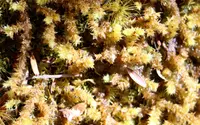
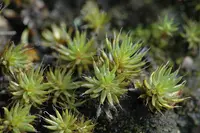
Pipe-cleaner moss, Ptychomnion aciculare, is a small terrestrial moss known for its dense, upright shoots that resemble tiny green pipe cleaners. It usually forms low, cushion-like carpets on soil, rocks, or rotting wood.
This species occurs mainly in moist, shaded forests, especially in temperate to subtropical regions of the Southern Hemisphere. Its fine, closely packed leaves create a soft texture that makes it useful in naturalistic terrariums and moss gardens.
Ptychomnion aciculare is generally considered moderately easy to grow if humidity is stable and the substrate stays evenly moist. Indirect light, good air circulation, and a non-compacting, slightly acidic substrate make it easier to care for pipe-cleaner moss.

Care Difficulty
Moderate Care

Light Preference
Partial Shade

Water Requirements
Keep Soil Moist

Temperature Preference
Cool Climate

Hardiness Zone
Unknown

Soil Texture
Peaty, Organic-rich, Loamy

Soil pH
Strongly acidic (4.5–5.5), Acidic (5.5–6.5)

Soil Drainage
Moist but well-drained

Fertilization
Minimal (feed rarely)
Scan your plant to receive care tips personalized for your specific plant
Available on iOS and Android
Ptychomnion aciculare prefers cool, shaded woodland-type light with no harsh direct sun.
Ptychomnion aciculare thrives in consistently moist, never waterlogged, conditions.
This moss prefers cool, stable temperatures similar to shaded forest floors.
This moss needs consistently moist, high-humidity conditions to stay dense and green.
Ptychomnion aciculare prefers a soft, consistently moist, organic substrate rather than typical potting soil.
This species adapts well to shallow containers and terrariums when moisture is stable.
Ptychomnion aciculare, often called pipe-cleaner moss, usually thrives without added fertilizer when grown on suitable substrates.
Ptychomnion aciculare benefits from light grooming rather than true pruning to keep mats dense and healthy.
Transplanting Ptychomnion aciculare focuses on moving surface mats rather than disturbing deep roots.
Multiplying Ptychomnion aciculare is usually done by simple division of existing mats.
Ptychomnion aciculare is generally cold hardy and needs minimal winter care outdoors in suitable climates.

Plant Health Check
Not sure what's wrong with your plant? Check your plant's health inside the app.
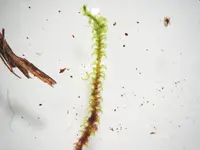
This moss forms long, densely leafed shoots that resemble pipe cleaners, with narrow, acicular (needle-like) leaves tightly arranged around the stem, giving it a distinctly bristly texture compared with many cushion-forming mosses.
It commonly colonizes well-decayed logs and stumps in humid forests, playing a role in breaking down lignified wood and helping retain moisture on the surface of decomposing substrates.
The species is mainly found in temperate to subtropical regions of the southern hemisphere, including parts of Australia, New Zealand, and South America, where it occupies shaded, moist forest microhabitats.

In some temperate rainforests this species can form extensive, continuous mats on fallen logs and root plates, creating a distinct microhabitat that shelters small invertebrates and early-stage seedlings of vascular plants by moderating moisture and temperature at the wood surface.
This species performs best outdoors in cool, humid, shaded conditions that mimic forest floors. It can be kept inside in terrariums, but long-term pipe-cleaner moss indoor care is harder without stable high humidity and gentle airflow.
Keep your plants happy and healthy with plant identification, disease detection, and easy care guidance.

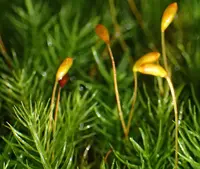
pyrrhobryum moss
Pyrrhobryum spiniforme
Spreading Threadwort
Cephaloziella divaricata
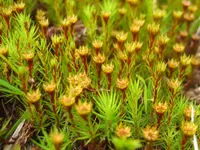
polytrichum moss
Polytrichum strictum
polytrichum moss
Polytrichum piliferum
angled paludella moss
Paludella squarrosa

Lindberg's Hypnum Moss
Calliergonella lindbergii
Dilated Scalewort
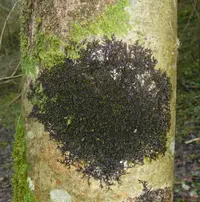
Frullania dilatata
juniper polytrichum moss
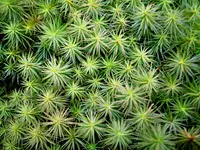
Polytrichum juniperinum