angled paludella moss Care (Paludella squarrosa)

Also known as: Tufted Fen-moss
angled paludella moss

About angled paludella moss

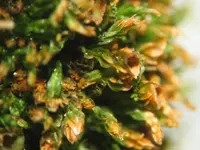
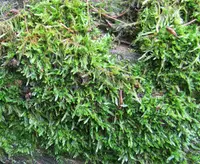
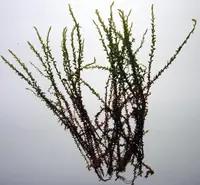
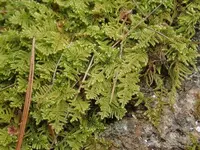
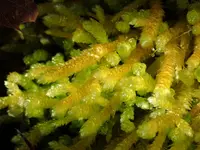
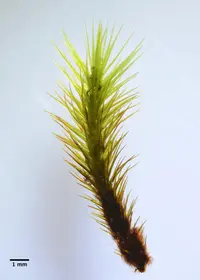
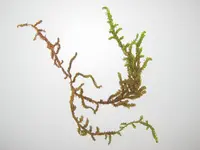
Angled paludella moss (Paludella squarrosa) is a cold-loving, semi-aquatic moss often found in peat bogs, seeps, and wet tundra-like habitats. It forms dense, bright green carpets with distinctly upright, angled stems that create a tidy, architectural look.

This species is native to cool regions of the Northern Hemisphere, especially northern Europe and parts of North America, where it thrives in saturated, acidic substrates. It prefers consistently wet conditions, soft light, and clean, low-nutrient water, which makes it sensitive to drying out or pollution. For those who want to care for angled paludella moss, stability of moisture and temperature is usually the main challenge, rather than rapid growth or pruning needs.

Main Plant Requirements

Care Difficulty

Hard Care

Light Preference

Partial Shade

Water Requirements

Aquatic

Temperature Preference

Cold Hardy

Hardiness Zone

2–6

Soil Texture

Silty, Peaty, Organic-rich

Soil pH

Strongly acidic (4.5–5.5), Acidic (5.5–6.5)

Soil Drainage

Waterlogged tolerant

Fertilization

Minimal (feed rarely)

Get Personalized Care Plan

Scan your plant to receive care tips personalized for your specific plant

Available on iOS and Android

How to Care for the angled paludella moss

This moss thrives in cool, moist habitats with soft, indirect light.

  • Provide bright, filtered light or light dappled by shrubs or grasses, aiming for 2–4 hours of gentle morning sun and full shade by early afternoon.
  • Tolerates partial shade well; in open sites, protect angled paludella moss from intense midday and afternoon sun to prevent bleaching and drying of shoots.
  • In summer, increase shading or use taller companion plants; in low winter light, ensure it is not blocked completely so it still receives diffuse daylight.

This species prefers constantly moist conditions and does not tolerate drying out.

  • Keep substrate consistently damp; the surface should feel moist to the touch at all times, never crusted or powder-dry.
  • Use soft, low-mineral water if possible, and allow gentle saturation rather than fast pouring that can dislodge the small shoots.
  • Reduce intensity of watering in cold winter periods but do not allow standing water; pale, brittle shoots indicate drought stress, while dark, mushy patches suggest overwatering or stagnation.

This moss is adapted to cool, temperate climates and dislikes prolonged heat.

  • Optimal growth occurs around 50–68°F (10–20°C), with steady moisture and shelter from drying winds.
  • Tolerates brief drops to about 23°F (-5°C) under snow cover, but exposed frost and repeated freeze–thaw cycles can damage shoots.
  • In hot spells above 77°F (25°C), increase shade and humidity; avoid locations that exceed 86°F (30°C), where desiccation and heat stress become likely.

This moss needs very high, constant humidity to stay lush and green.

  • Aim for 80–100% humidity, similar to a saturated bog or terrarium environment.
  • Angled paludella moss dries quickly in air below 60%, leading to browning tips and crisp, shrinking cushions.
  • Increase humidity by using closed or semi-closed terrariums, misting with soft water, and placing the container over a shallow water reservoir without submerging the moss.

Paludella squarrosa thrives in saturated, soft, organic substrates that mimic cool, standing-water habitats.

  • Use a fine, peat-heavy mix with added sphagnum moss and a little sand to create a spongy, water-holding layer.
  • Keep the substrate constantly wet to waterlogged, but avoid strong currents or deep submersion that can dislodge the moss.
  • Aim for slightly acidic conditions around pH 5.0–6.5, avoiding alkaline materials like limestone chips or hard tap water deposits.
  • Avoid coarse, fast-draining, or compacted mineral soils; improve structure with fibrous peat and chopped sphagnum for both aeration and moisture retention.

This species can be grown in shallow containers or trays if waterlogged conditions are maintained.

  • Choose a broad, shallow tray so water can form a thin, stable layer over the substrate without covering the moss completely.
  • Line the container base with an inert layer, such as rinsed sand or fine gravel, to keep the organic substrate from floating or shifting.
  • Use non-porous materials like plastic or glazed ceramic to slow evaporation and maintain a consistently wet microhabitat.

Paludella squarrosa needs very little added nutrition when grown in suitable, moist, low-nutrient substrates.

  • If growth is weak in cultivation, use a very dilute balanced NPK liquid fertilizer at 10–25% strength.
  • Apply only during active growth in spring–summer, about every 4–6 weeks at most.
  • Avoid compost or heavy slow-release products that can burn delicate moss tissue or encourage algae.
  • Rinse with soft, clean water occasionally to prevent fertilizer salt buildup on the moss surface.

Paludella squarrosa benefits from light grooming rather than structural pruning.

  • Trim away dead, browned, or decaying shoots at any time to keep cushions clean.
  • In late spring or early summer, thin out crowded patches to improve light and airflow across the moss surface.
  • Use fine scissors or tweezers to make small, precise cuts without disturbing the substrate.
  • Gentle shaping encourages dense, low growth but does not influence flowering in this moss.

This moss is usually grown on permanent substrates, so transplanting Paludella squarrosa is infrequent and should be gentle.

  • Transplant when patches detach, the substrate decomposes, or water flow and growth become uneven.
  • Best timing is in cool, moist conditions during spring or early fall to limit stress.
  • Lift small mats with a thin spatula, keeping rhizoids and attached substrate as intact as possible.
  • Place onto fresh, clean, consistently moist medium and mist thoroughly to ensure good contact and reduce shock.

Paludella squarrosa is commonly propagated by division of existing mats rather than by spores in home culture.

  • Best season is spring or early fall when moisture is stable and temperatures are mild.
  • Gently tear or cut healthy cushions into small sections, each with living green tips.
  • Press divisions onto fresh, saturated but not waterlogged substrate, ensuring firm surface contact.
  • Maintain high humidity, soft water, and low to medium light to help new rhizoids anchor and spread.

This cold-hardy moss usually needs minimal winter care when grown outdoors in climates similar to its native range.

  • Tolerates freezing and snow cover if the substrate stays consistently moist, not bone-dry.
  • For containers, move trays to a cold, sheltered spot to prevent repeated freeze–thaw of the substrate.
  • Avoid heavy mulches that smother the moss; use only a light leaf layer if desiccation is a concern.
  • Indoor angled paludella moss care in winter focuses on cool temperatures, high humidity, and gentle, indirect light.

Care Tips

Flowing water setup

Place the moss on gently sloped, water-soaked substrate with very shallow, slow-moving water to mimic stream margins and prevent stagnation that can cause dieback.

Cool root zone

If kept indoors or in a terrarium, position the container on a ceramic or stone tray with cool water or gel packs beneath (not touching the moss) to keep the root zone cooler than room air, which supports denser shoot growth.

Substrate anchoring

Lightly pin the shoots to the substrate with small, inert plastic or stainless-steel U-pins until new rhizoids form, which stabilizes the colony and encourages even, carpet-like spread.

Soft water management

Use rainwater, distilled, or reverse-osmosis water and perform small, frequent water exchanges to keep conductivity and hardness low, reducing mineral crusts that inhibit new growth.

Algae competition control

Limit direct overhead artificial light on surrounding bare substrate, add fast-growing, rooted marginal plants as nutrient competitors, and manually siphon off algae to maintain an open, clean surface for growing angled paludella moss.

Common Pests and Diseases

Water mites

These insects are tiny arachnids that feed on moss tissue in slow, nutrient-rich water, causing thinning and pale patches in the cushions. Symptoms include reduced vigor and irregular, patchy growth in submerged or semi-submerged areas.

Solution

Limit excess organic debris and fish food in the water, then flush the area with several gentle water changes to reduce populations. If needed, physically rinse the moss in clean, cool, dechlorinated water and improve water movement with a mild current while avoiding strong turbulence that could dislodge the mats.

Aquatic springtails

These insects live in wet substrates and on moss surfaces, feeding on decaying material and sometimes on tender new shoots, especially in closed paludariums. Symptoms include slow recovery of new growth tips and visible tiny, jumping white or gray insects on very wet surfaces.

Solution

Reduce overfeeding of tank inhabitants and remove excess detritus so that organic matter does not accumulate in the moss layer. Briefly lower water level, gently rinse the moss, and increase water circulation and surface ventilation; in enclosed setups, short-term use of predatory microfauna such as small copepods can also help stabilize populations.

Algal overgrowth

This disease is a colonization problem where filamentous or slimy algae smother moss shoots in bright, nutrient-rich water. Symptoms include green, slimy threads or films covering the moss, blocking light and reducing photosynthesis.

Solution

Reduce light intensity or duration to 6–8 hours, cut back dissolved nutrients from fertilizers or fish waste, and manually remove algae by gently twirling it out with forceps or a soft brush. Increase mild water movement and perform frequent small water changes to keep nutrients low, allowing the moss to reoccupy the surface; these steps match general Paludella squarrosa care instructions for clean, cool, oligotrophic water conditions.

Saprolegnia mold

This disease involves water molds that colonize damaged or decaying moss patches, forming cottony white or gray growth in cold, stagnant water. Symptoms include soft, decomposing shoots covered with a fuzzy layer that spreads over weak areas.

Solution

Carefully trim and remove all visibly infected moss and any trapped animal waste or dead organic material. Improve circulation with a gentle flow, avoid overstocking animals, and perform several partial water changes; in severe cases, temporarily move healthy moss fragments to a clean, cool container with fresh, low-nutrient water until new growth stabilizes.

Nutrient-enrichment dieback

This physiological disorder occurs when moss adapted to low-nutrient, cold streams is exposed to chronically high nutrients and warmer, stagnant water, leading to browning and loss of dense cushion structure. Symptoms include gradual yellowing from the base upward, followed by fragmentation and detachment from the substrate.

Solution

Shift conditions toward cool, oligotrophic water by reducing fertilizer use, livestock load, and decomposing organic matter, and keep temperature near the species’ natural range. Increase mild flow, provide shaded to moderate light, and re-anchor healthy, firm fragments on clean, mineral substrates such as gravel or rocks so they can re-establish compact growth.

Interesting Facts

Boreal peatland specialist

This moss occurs mainly in cold, nutrient-poor, groundwater-fed fens and peatlands in boreal and subarctic regions, where it forms low, bright-green carpets along wet runnels and spring lines.

Strong groundwater indicator

Ecologists use this species as an indicator of stable, calcium-influenced groundwater flow, because it tends to disappear when peatlands dry, become shaded by shrubs, or shift to more acidic bog conditions.

Formerly more widespread

Historical records from parts of central and western Europe show that it used to be more common, but drainage of fens and peat extraction have caused strong declines, so it is now considered regionally rare or threatened in several countries.

Botan icon

Did you know?

Genetic and morphological studies have shown that this species is distinct enough from related mosses to be placed in its own monotypic genus, meaning Paludella contains only a single recognized species, Paludella squarrosa.

FAQs about angled paludella moss

This species spreads slowly to moderately by creeping rhizoids and stem fragments, forming low, tufted patches. It usually does not become aggressive in controlled garden or terrarium settings, especially when competing vegetation and moisture levels are managed thoughtfully.

Grow Healthy Plants with Botan Care

Keep your plants happy and healthy with plant identification, disease detection, and easy care guidance.

Botan plant care app — identify plants on mobile

Explore More Plants