Use Shallow Trays
Grow mats in wide, shallow trays with a 1–2 cm deep, freely draining moss substrate so the thin shoots can spread laterally and stay evenly moist without waterlogging the rhizoids.

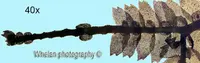
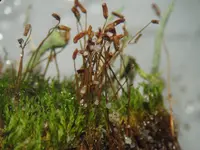
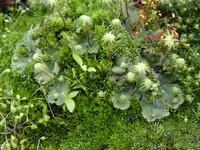
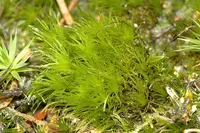
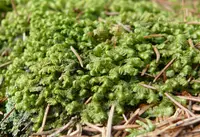
Bazzania liverwort (Bazzania denudata) is a small, non-vascular plant that forms soft, overlapping mats on soil, rock, or decaying wood. It belongs to a group of simple plants that reproduce with spores rather than seeds.
Its shoots are flattened, with neat, regularly arranged leaf-like lobes that give a delicate, fern-like texture at close view. The plant is usually found in cool, humid forests, especially in shaded, undisturbed sites.
Because it depends on constant moisture and stable humidity, it is more demanding than many common houseplants. Anyone who wants to care for Bazzania Liverwort needs to provide low light, gentle airflow, and an evenly damp, acidic substrate.

Care Difficulty
Hard Care

Light Preference
Shade

Water Requirements
Keep Soil Moist

Temperature Preference
Cool Climate

Hardiness Zone
Unknown

Soil Texture
Peaty, Organic-rich, Loamy

Soil pH
Strongly acidic (4.5–5.5), Acidic (5.5–6.5)

Soil Drainage
Waterlogged tolerant

Fertilization
Minimal (feed rarely)
Scan your plant to receive care tips personalized for your specific plant
Available on iOS and Android
This shade-loving liverwort prefers cool, consistently low-light conditions similar to a moist forest floor.
This species requires constantly moist conditions and is very sensitive to drying.
This liverwort thrives in cool, humid climates with only narrow temperature fluctuations.
This moss-like liverwort needs very high humidity to stay hydrated and photosynthetically active.
This species prefers a constantly moist, soft, and highly organic substrate rather than typical potting soil.
This liverwort is suitable for shallow, enclosed containers such as terrariums or dish gardens.
This moss-like liverwort is adapted to nutrient-poor habitats and usually needs no fertilizer when grown on suitable, moist, acidic substrates.
Bazzania denudata needs minimal pruning, mainly to keep mats tidy and healthy in cultivation.
Handling focuses on transplanting small patches rather than traditional repotting, since this liverwort forms surface mats on bark, rock, or soil.
Bazzania denudata is usually propagated vegetatively by dividing or relocating small mat sections rather than grown from spores at home.
This species is generally cold hardy in its native range and needs little targeted winter care in outdoor, shaded, moist sites.

Plant Health Check
Not sure what's wrong with your plant? Check your plant's health inside the app.
This species forms flattened, regularly branching shoots with overlapping leaf-like lobes arranged in two lateral rows and a smaller underleaf row, creating a distinct three-dimensional mat structure on logs and soil in cool forests.
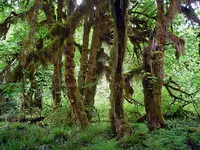
It is strongly associated with humid, cool-temperate and boreal forests, where it often carpets shaded, acidic substrates such as decaying wood, humus-rich soil, and rock, contributing to moisture retention and microhabitat formation.
Because it prefers undisturbed, moist, and relatively clean environments, its presence is often used by bryologists as part of species assemblages that indicate long-term forest continuity and high habitat quality.
This species spreads slowly to moderately by creeping stems and fragmentation, forming low mats rather than running aggressively. It can gradually fill moist, shaded surfaces but is usually easy to manage by gently lifting or trimming unwanted patches.
Keep your plants happy and healthy with plant identification, disease detection, and easy care guidance.