star campylium moss Care (Campylium stellatum)

Also known as: Yellow Starry Fen Moss, Yellow Starry Feather-moss
star campylium moss

About star campylium moss

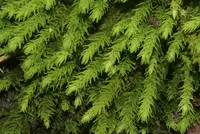
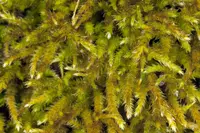
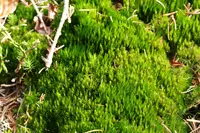
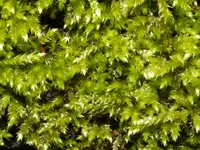
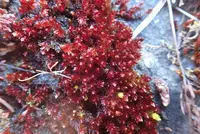
Star campylium moss (Campylium stellatum) is a low, mat-forming moss often found in wet, calcareous habitats such as fens, marsh edges, and seeps. It forms dense, yellow-green to olive-green carpets with fine, feathery stems that spread horizontally over soil, rock, or decaying material.

This species is common in cooler regions of North America and Europe, where constant moisture and clean water support its growth. It is generally considered moderately easy to keep if given stable moisture, gentle light, and a loosely textured, slightly alkaline substrate. Understanding how to care for star campylium moss starts with recreating these consistently damp, cool conditions.

Main Plant Requirements

Care Difficulty

Moderate Care

Light Preference

Partial Shade

Water Requirements

Aquatic

Temperature Preference

Cold Hardy

Hardiness Zone

3–8

Soil Texture

Silty, Peaty, Organic-rich

Soil pH

Neutral (7.0), Slightly alkaline (7.0–7.5)

Soil Drainage

Waterlogged tolerant

Fertilization

Minimal (feed rarely)

Get Personalized Care Plan

Scan your plant to receive care tips personalized for your specific plant

Available on iOS and Android

How to Care for the star campylium moss

Campylium stellatum thrives in consistently bright but gentle outdoor light that mimics open, moist habitats.

  • Provide 3–5 hours of weak morning sun with bright, filtered light or high open shade for the rest of the day.
  • Tolerates partial shade, but in deep shade fronds become sparse and pale; in strong midday sun they dry, bleach, or scorch.
  • In summer, protect from intense afternoon sun with taller plants or shade cloth; in winter, more open exposure helps compensate for lower light, supporting healthy star campylium moss growth.

Campylium stellatum prefers constant surface moisture but suffers in stagnant or completely dried-out conditions.

  • Keep the substrate evenly moist, not submerged; the surface should feel damp but not spongy or muddy when pressed with a finger.
  • Allow only the top 1–2 mm to begin losing sheen before rewetting with a fine mist or gentle flow that does not disturb the moss structure.
  • Reduce watering frequency in cool seasons but never let the colony dry to a crisp; overwatering shows as slimy, foul-smelling patches, while underwatering leads to crisp, brown tips.

This moss is cold-tolerant and prefers cool to mild temperatures, with some sensitivity to extreme heat and drying winds.

  • Optimal growth occurs around 50–68°F (10–20°C), especially in consistently moist, humid sites such as seeps and boggy ground.
  • Campylium stellatum tolerates drops to around 23°F (-5°C) or lower under insulating snow, but exposed frozen-thaw cycles can damage shallow mats.
  • In hot weather above 77–86°F (25–30°C), provide shade and higher humidity; drying winds and heat together cause rapid desiccation and browning, even if soil is still damp.

This moss prefers consistently moist, high-humidity conditions to stay dense and green.

  • Aim for 70–100% humidity; frequent fine misting helps where air is drier.
  • It tolerates short dry spells but dehydrates quickly in heated, low-humidity rooms.
  • Crisping tips and dull, gray-green fronds indicate humidity stress and inadequate surface moisture.
  • Increase humidity with a closed terrarium, covered dish garden, or humidity dome that traps evaporated water when caring for star campylium moss.

Campylium stellatum thrives on moist, fine-textured, calcareous substrates that stay damp but not stagnant.

  • Use a shallow layer of sphagnum peat blended with fine sand or loamy mineral soil to mimic wetland margins.
  • Maintain very moist conditions with slow drainage; the surface should never dry out completely, but avoid standing water above the moss mats.
  • Aim for neutral to slightly alkaline pH by adding a pinch of crushed limestone or dolomitic lime to peat-heavy mixes.
  • Improve aeration by using fine sand rather than dense silt or clay, and avoid compacted substrates or chunky bark that dry unevenly.

This species can be grown in shallow containers or trays that maintain constant surface moisture.

  • Choose a broad, shallow tray so the moss can form an even carpet with uniform water access.
  • Select a rigid, non-porous container (plastic or glazed ceramic) to slow evaporation and keep the substrate steadily damp.
  • Raise the container slightly in a watertight outer tray so excess water collects below, not over the moss surface, preventing rot while preserving humidity.

This moss usually grows well on nutrient-poor, calcareous substrates and generally does not need additional feeding in gardens or containers.

Campylium stellatum needs only minimal pruning to keep mats tidy and healthy.

  • Trim lightly at any season to remove browned, damaged, or contaminated patches using fine scissors or small snips.
  • Lift and discard decaying clumps to improve air flow across the moss surface and limit fungal problems.
  • Shape uneven mats by cutting back overgrown edges in small sections to avoid exposing bare substrate.
  • Gently brush off leaves and debris by hand rather than cutting if growth is dense but healthy.

In cultivation, this moss is moved or transplanted mainly when a mat becomes patchy, overgrown, or the substrate breaks down.

  • Transplant in cool, moist weather in spring or fall to reduce desiccation stress on the rhizoids.
  • Shift mats only when growth thins, algae dominates, or the base substrate compacts and drains poorly.
  • Lift mats in broad, shallow sections, keeping attached substrate intact to avoid tearing the fine anchoring structures.
  • Press the moss gently onto fresh, moist, calcareous medium, then mist frequently until it reattaches and resumes steady growth.

Campylium stellatum is commonly propagated by simple division rather than from spores in typical hobby settings.

  • Divide healthy mats in spring or early fall, when moisture levels are high and temperatures mild.
  • Tear or cut mats into small pads, ideally 2–5 cm across, each with living shoot tips and attached substrate.
  • Lay divisions onto moist, stable, calcareous medium, then press lightly to ensure good contact without burying shoots.
  • Maintain constant surface moisture and bright, indirect light until new green tips spread from the edges of each pad.

This cold-hardy moss usually needs no special winter care in most temperate climates.

  • Star campylium moss tolerates freezing and thawing when established on consistently moist, not waterlogged, substrates.
  • Container-grown mats in very exposed sites may be moved to a shaded, wind-sheltered area to limit repeated freeze–thaw cycles.
  • Avoid heavy mulch directly on the moss; instead, stabilize surrounding soil so meltwater drains away without scouring the mat.

Care Tips

Water Table Management

For outdoor culture in bogs or trays, keep the moss just above the water table by adjusting water depth 0.5–2 cm below the surface so rhizoids stay moist but the leafy shoots are not submerged for long periods.

Calcium-Rich Substrate

Use a thin topdressing of crushed limestone grit or dolomitic lime chips in calcareous bog setups to mimic the natural alkaline habitat and stabilize pH for healthier cushions.

Clean Propagation Technique

When propagating by fragments, rinse collected shoots in clean, chlorine-free water and trim away browned tissue before pressing them gently onto the new substrate to reduce algae and fungal issues.

Algae and Moss Balance

If algae starts to overgrow in shallow trays, slightly improve water movement or briefly lower the water level and gently siphon surface algae films, taking care not to disturb the moss carpet.

Seasonal Shade Adjustment

In summer, provide light shade using a fine mesh or shade cloth over outdoor trays to limit heat stress and moisture loss, then gradually remove it in cooler seasons to maintain compact, dense growth when growing star campylium moss.

Common Pests and Diseases

Slime molds

This disease appears as gray, white, or brightly colored slimy patches that spread across moss cushions, often in nutrient-rich, stagnant sites. Symptoms include temporary suppression or smothering of the moss surface.

Solution

Increase water movement or gentle flow over the moss, remove excess organic debris, and physically lift or rinse off visible slime masses with clean water. In outdoor or bog setups, reduce nutrient inputs and avoid fertilizing nearby areas to limit future outbreaks as part of broader Campylium stellatum care.

Algal overgrowth

This disease presents as a smooth, slippery green film or crust that coats the moss, especially in standing water and highly lit, nutrient-enriched sites. Symptoms include reduced moss vigor and patches that turn dull or brown under the algal mat.

Solution

Improve water circulation and reduce nutrient enrichment by limiting runoff and avoiding fertilizer in the water supply. Gently rinse or brush off algal films, provide partial shading if light is intense, and maintain slightly cooler, clean water conditions to favor moss growth over algae.

Fungal leaf blight

This disease causes localized brown to dark-olive patches on moss shoots, sometimes with a water-soaked look in persistently wet, stagnant air conditions. Symptoms include thinning cushions and slow dieback from affected patches.

Solution

Thin surrounding vegetation to improve air movement, avoid stagnant splashing water, and carefully remove or trim out heavily blighted moss sections. Use only clean, low-nutrient water, and if grown in controlled conditions, allow short periods where the surface is moist but not constantly saturated to reduce fungal pressure.

Springtails

These insects are tiny, pale to dark jumping arthropods that live in wet moss and organic layers, usually feeding on decaying matter but occasionally grazing on tender moss tips in heavily populated colonies. Symptoms include minor surface roughening or uneven growth where feeding is intense.

Solution

Reduce excessive organic debris and keep the substrate clean to limit food sources. If populations are very high and damaging, briefly lower water levels to make the habitat less favorable, then gently flush the area with clean water; in terraria, introduce better ventilation and avoid overfeeding any cohabiting animals or microfauna.

Moss mites

These pests are microscopic to very small arachnids that feed on moss tissues and associated microorganisms, most common in long-untouched, organic-rich cushions. Symptoms include patchy thinning, short brittle shoots, and slow, uneven regrowth in affected areas.

Solution

Carefully lift and discard the most damaged patches, then re-establish healthy moss from clean fragments. Reduce accumulated litter and maintain moderate but not excessive moisture, and in enclosed setups, temporarily increase air exchange and gently rinse the moss surface with clean, low-mineral water to physically reduce mite numbers.

Interesting Facts

Carbonate‑rich fen specialist

This moss is strongly associated with calcareous fens, where groundwater is rich in dissolved calcium carbonate, and its presence is often used by ecologists as an indicator of base‑rich, minerotrophic wetland conditions.

Star‑shaped shoot tips

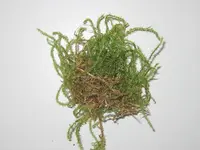
The plant forms loose, yellow‑green mats with shoot tips that spread into a distinct star shape when moist, a feature that makes it easily recognizable in the field compared with many similar mosses.

Key peatland engineer

By trapping fine sediments and organic particles in its dense mats, this species helps stabilize fen surfaces, influences small‑scale water flow, and contributes to peat accumulation in certain calcareous wetlands.

Botan icon

Did you know?

In parts of its broad Holarctic range, this moss can dominate extensive minerotrophic fen complexes, where its distribution patterns are used in detailed vegetation classification schemes and in monitoring long‑term hydrological change in peatland conservation projects.

FAQs about star campylium moss

This species performs better outdoors in consistently moist, cool to mild conditions, such as boggy or calcareous sites. Indoors, it is harder to keep humidity, airflow, and substrate chemistry stable, so long-term vigor is less reliable.

Grow Healthy Plants with Botan Care

Keep your plants happy and healthy with plant identification, disease detection, and easy care guidance.

Botan plant care app — identify plants on mobile

Explore More Plants