


Substrate anchoring
Press the moss firmly onto a stable, fine-textured substrate such as clean sand or compacted aquatic soil so the stems can root along their length and form a dense, erosion-resistant mat.

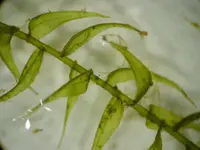
Drepanocladus aduncus is an aquatic to semi-aquatic moss commonly found in wetlands, ditches, and along slow-moving streams. It forms loose, green to yellow-green mats with slender, curved shoots.
This moss attaches to soil or submerged substrates rather than tree bark and often grows in nutrient-rich, slightly standing water. Its fine, overlapping leaves give it a soft, feathery look that can create a natural, carpet-like effect in suitable setups.
In cultivation, it prefers cool to mild conditions, constant moisture, and clean, low-pollution water. It is generally considered moderately easy to keep if the water level and oxygen remain stable, and learning how to care for drepanocladus moss mainly involves managing moisture quality rather than complex pruning or feeding.

Care Difficulty
Moderate Care

Light Preference
Partial Shade

Water Requirements
Aquatic

Temperature Preference
Cold Hardy

Hardiness Zone
3–8

Soil Texture
Silty, Peaty, Organic-rich

Soil pH
Acidic (5.5–6.5)

Soil Drainage
Waterlogged tolerant

Fertilization
Minimal (feed rarely)
Scan your plant to receive care tips personalized for your specific plant
Available on iOS and Android
This semi-aquatic moss prefers soft, indirect light that mimics stream banks and wet meadows.
This species thrives in consistently wet to saturated conditions and tolerates shallow standing water.
This moss is cold-hardy yet also tolerates mild summer warmth when kept wet.
This moss prefers consistently high humidity close to saturation and declines quickly in dry air.
This species is adapted to saturated, organic substrates rather than typical potting soil.
This species can be grown in shallow containers or trays if permanent wet conditions are maintained.
This moss generally thrives without added fertilizer, especially in nutrient-rich, naturalistic setups.
Pruning needs for Drepanocladus aduncus are minimal and mostly aesthetic.
Transplanting is mainly needed when mats overgrow their space or conditions become unsuitable.
Propagation of this moss is straightforward and typically done by division of existing mats.
Outdoor clumps are quite cold tolerant and usually need little specific winter care.

Plant Health Check
Not sure what's wrong with your plant? Check your plant's health inside the app.
This moss is most often found in and along slow-moving freshwater, such as fens, marsh ditches, and the edges of ponds and streams, where it can grow fully submerged or in very wet soils.
Its narrow leaves end in a distinctly hooked or bent tip, which increases overlap between leaves and likely helps the shoots trap a thin film of water and resist water flow in its aquatic habitats.
Populations of this species often decline when water becomes heavily polluted or nutrient-enriched, so its presence in ditches and wetlands can indicate relatively clean, low- to moderately nutrient waters and can guide caring for drepanocladus moss in managed sites.
This species spreads by creeping stems and can form dense mats in consistently wet areas. It is not usually aggressive in gardens but may gradually cover available saturated soil or shallow water surfaces if conditions stay favorable.
Keep your plants happy and healthy with plant identification, disease detection, and easy care guidance.

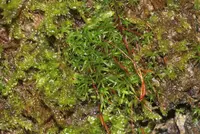
Red Beard-moss
Bryoerythrophyllum recurvirostrum
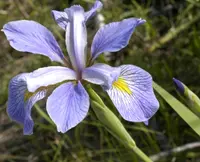
Virginia iris
Iris virginica

black mangrove
Avicennia germinans
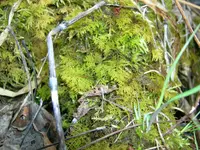
delicate thuidium moss
Thuidium delicatulum
antitrichia moss
Antitrichia curtipendula
California antitrichia moss
Antitrichia californica
Pennywort
Centella asiatica
 POPULAR
Lemon bacopa
Bacopa caroliniana