


Substrate layering
Create a thin, even base of clean, inert sand or fine pumice over your main medium to anchor the moss and reduce competition from algae and liverworts when growing alternateleaf archidium moss.

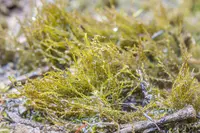
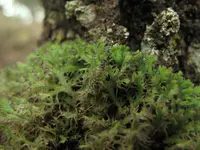
Alternateleaf archidium moss (Archidium alternifolium) is a tiny, low-growing moss that forms delicate, scattered tufts rather than dense carpets. Its leaves are arranged alternately along very small stems, giving it a fine, textured look that rewards close inspection.
This species is typically found on moist soil or fine sediment in open, periodically wet habitats, such as stream margins, seepage areas, or damp ground. It tends to appear where light is moderate and substrates stay evenly moist but not permanently submerged.
Because of its small size and preference for stable moisture, it can be more demanding than common terrarium mosses. Understanding how to care for alternateleaf archidium moss starts with providing gentle light, constant humidity, and clean, low-nutrient substrates.

Care Difficulty
Moderate Care

Light Preference
Partial Shade

Water Requirements
Keep Soil Moist

Temperature Preference
Cool Climate

Hardiness Zone
Unknown

Soil Texture
Silty, Peaty, Organic-rich

Soil pH
Acidic (5.5–6.5)

Soil Drainage
Moist but well-drained

Fertilization
Minimal (feed rarely)
Scan your plant to receive care tips personalized for your specific plant
Available on iOS and Android
This moss prefers cool, consistently moist habitats with gentle, filtered light rather than strong sun.
This moss needs steadily moist conditions and reacts quickly to prolonged drying or stagnant water.
This species is adapted to mild, temperate conditions and dislikes both hard frost and intense heat.
This moss prefers consistently moist air similar to its natural streamside habitats.
This species thrives on fine, moist, mineral substrates rather than typical potting mixes.
This moss can be grown in shallow containers or trays if moisture and stability are well managed.
This moss is adapted to low-nutrient habitats and usually needs no additional fertilizer under normal conditions.
Archidium alternifolium needs only minimal pruning, mainly to keep cultured patches neat and healthy.
Archidium alternifolium is usually grown on rocks or soil surfaces rather than in deep containers, so disturbance should be minimal.
Propagation of this moss is mainly done by dividing and relocating small patches rather than by spores in home culture.
This moss is generally cold hardy in temperate climates and usually needs little special winter care outdoors.

Plant Health Check
Not sure what's wrong with your plant? Check your plant's health inside the app.
This moss is unusually small even for Archidium, forming minute, scattered plants directly on bare, compacted soil rather than cushions or mats, which makes it easy to overlook in the field.
As its species name suggests, the leaves are arranged in an alternate pattern along the stem rather than strongly spiraled, which helps separate it from other tiny soil-dwelling mosses under the microscope.
It behaves as a pioneer on disturbed, open ground, often appearing on recently exposed or compacted soils and disappearing once taller vegetation increases shade and competition.
Growth is slow, typically forming small cushions or patches that expand only a few millimeters to a couple of centimeters per year. Rate depends on constant moisture, clean water, mild temperatures, and absence of trampling or disturbance when trying to grow Archidium alternifolium.
Keep your plants happy and healthy with plant identification, disease detection, and easy care guidance.

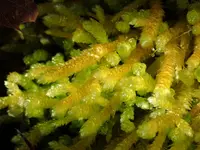
bryoandersonia moss
Bryoandersonia illecebra
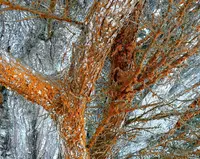
Orange Rock Hair
Trentepohlia aurea
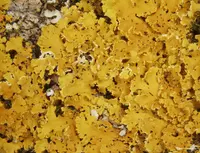
Xanthoria ulophyllodes
Xanthoria ulophyllodes
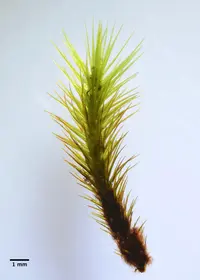
Menzies' anacolia moss
Anacolia menziesii
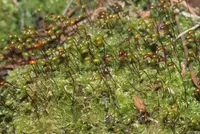
velvet feather-moss
Brachytheciastrum velutinum
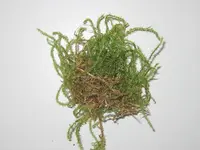
star campylium moss
Campylium stellatum
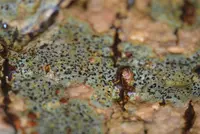
Arthothelium ruanum
Arthothelium ruanum
Great Ciliated Lichen
Anaptychia ciliaris