funaria moss Care (Funaria hygrometrica)

Also known as: Cord Moss, Water Measuring Moss, Bonfire moss
funaria moss

About funaria moss

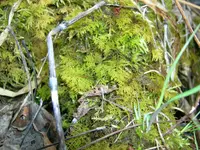
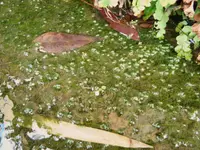
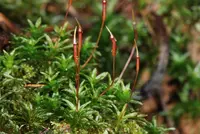
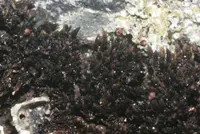
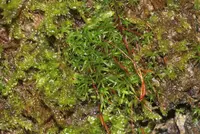
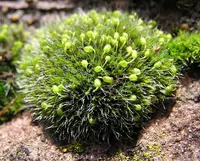
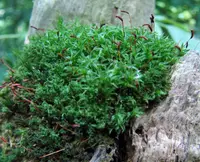
Funaria hygrometrica, often called cord moss or bonfire moss, is a small, fast-colonizing moss that thrives on disturbed, damp, or recently burned soil. It forms soft, bright green cushions with slender, upright stems and tiny capsules held on curved stalks.

This moss is common in temperate regions worldwide, especially in nutrient-rich, open sites that stay moist but not waterlogged. It adapts well to containers and terrariums, so many people explore how to care for funaria moss for simple indoor displays.

Its rapid growth and tolerance of poor, compacted substrates make it relatively easy to establish, provided it receives consistent moisture and gentle, indirect light without prolonged drying out.

Main Plant Requirements

Care Difficulty

Moderate Care

Light Preference

Partial Shade

Water Requirements

Keep Soil Moist

Temperature Preference

Cool Climate

Hardiness Zone

3–9

Soil Texture

Loamy, Peaty, Organic-rich

Soil pH

Strongly acidic (4.5–5.5), Acidic (5.5–6.5)

Soil Drainage

Waterlogged tolerant

Fertilization

Minimal (feed rarely)

Get Personalized Care Plan

Scan your plant to receive care tips personalized for your specific plant

Available on iOS and Android

How to Care for the funaria moss

This moss thrives in cool, consistently moist sites with gentle, indirect light.

  • Provide bright, indirect light or light dappled shade, with 2–4 hours of soft morning sun and no harsh afternoon sun.
  • Grow funaria moss in north- or east-facing exposures, or under tree canopy where light is filtered through foliage.
  • Avoid full, direct midday sun, which scorches and dries cushions; in deep shade, growth becomes sparse and stems elongate toward any light source.

This moss prefers constantly moist conditions but reacts quickly to both drying and stagnation.

  • Keep the substrate consistently damp, not flooded; the surface should feel cool and moist, never cracked or dusty.
  • Increase misting or gentle watering when the upper 0.5–1 cm looks pale or feels only slightly damp, especially in hot, windy weather.
  • Reduce watering in cool seasons while preventing complete drying; soggy, foul-smelling patches signal overwatering, while crisp, brittle shoots indicate underwatering for Funaria hygrometrica.

This species tolerates a wide climate range but grows best in cool to mild conditions.

  • Aim for active growth at 50–70°F (10–21°C), where shoots remain dense, green, and recover well after brief drying.
  • It survives short drops to about 25°F (-4°C), but repeated hard frost with dry substrate can cause browning and dieback.
  • Above 80°F (27°C), provide extra moisture and shade; prolonged heat over 90°F (32°C) with strong sun quickly desiccates cushions, especially on exposed soil or rock.

This moss prefers constantly moist, high-humidity conditions to stay dense and green.

  • Aim for 70–90% humidity, using a covered terrarium, propagation box, or cloche to trap moisture.
  • Dry air leads to pale, crispy, thinning cushions and browned tips, especially at the edges of the patch.
  • Raise humidity with daily fine misting, shallow water trays, or placing funaria moss above, not in, standing water.

This species prefers consistently moist, fine-textured, organic-rich substrates rather than traditional potting soil.

  • Use a mix of milled sphagnum peat or coco coir with fine sand or very fine grit to mimic compact, moist ground.
  • Keep the substrate evenly damp but never waterlogged; excess standing water quickly causes decay of the thin rhizoids.
  • Slightly acidic conditions around pH 5.0–6.5 support healthy Funaria hygrometrica growth and vibrant green color.
  • Avoid chunky bark, coarse perlite, or fast-drying, loose mixes that interrupt capillary moisture movement across the moss surface.

This moss is suitable for shallow containers and terrariums where consistent surface moisture is easy to maintain.

  • Choose wide, shallow dishes so the colony can spread horizontally while staying close to the moisture source.
  • Select glazed ceramic, glass, or plastic containers to slow evaporation and maintain a stable, damp microclimate.
  • If using drainage holes, place a saturated capillary layer of fine sand or peat over a thin gravel base to retain surface moisture without pooling.

This moss is adapted to low-nutrient habitats and usually needs no added fertilizer under normal indoor or outdoor culture.

Funaria hygrometrica requires only minimal pruning, mainly for tidiness and to manage spread in containers or trays.

  • Trim back overgrown or patchy areas at any time using fine scissors or small snips for precise control.
  • Remove brown, dead, or contaminated patches to maintain a dense, healthy carpet and reduce mold risk.
  • Cut lightly above the substrate surface, avoiding scalping the moss so new shoots can regenerate from remaining tissue.

Transplanting this moss is simple and mainly needed when refreshing its substrate or expanding the patch area.

  • Transplant when growth thins, substrate compacts, or excess algae appears, rather than on a fixed schedule.
  • Choose mild conditions in spring or fall so humidity is moderate and light is gentle.
  • Lift thin mats or clumps with a spatula, keeping as much of the underlying rhizoids attached as possible.
  • Set pieces onto fresh, clean, moist substrate and mist well to reduce stress and maintain close contact.

This species is commonly multiplied by vegetative division and, in more controlled setups, from spores.

  • For division, gently tear or cut mats into small sections and press onto fresh, moist acidic substrate.
  • Maintain high humidity, low to medium light, and consistent moisture to encourage rapid reattachment and new shoot growth.
  • Spore-based Funaria hygrometrica plant care starts with scattering capsules’ spores on sterile, damp medium in covered trays.
  • Keep propagation trays covered but ventilated, avoiding direct sun, until a uniform green film and new tufts appear.

This moss is naturally cold hardy and usually needs little specific winter care in the ground or on outdoor surfaces.

  • In very exposed sites, a light, breathable mulch around the substrate edges can moderate freeze–thaw stress.
  • Container cultures can be moved into a cold, bright, frost-free space if temperatures drop well below 20°F.
  • Reduce watering in winter, keeping the substrate barely moist while avoiding complete desiccation for long periods.

Care Tips

Use Shallow Trays

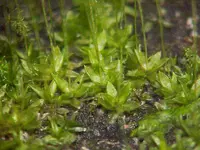
Grow colonies in wide, shallow trays (2–5 cm deep) with a fine, even substrate layer so moisture stays uniform and the delicate protonema mat can spread without drying edges.

Capillary Watering

Place pots or trays on a saturated capillary mat or in a shallow water bath that just touches drainage holes to keep the substrate evenly moist from below and avoid surface disturbance of gametophytes and sporophytes.

Control Algae Growth

Limit algae by keeping light bright but indirect, avoiding nutrient-rich substrates, and periodically rinsing hard surfaces with clean water so the moss mat is not shaded or overgrown.

Sporophyte Management

If the goal is a low, carpeted look rather than spore production, trim or pinch off taller sporophyte stalks before capsules mature so the colony stays compact and less prone to lodging or breakage.

Spore-Based Renewal

To maintain genetic diversity and dense coverage when growing funaria moss, allow some capsules to ripen, then gently tap them over fresh, moist substrate in another tray to start new patches from spores.

Common Pests and Diseases

Fungus gnats

These insects are attracted to constantly wet, organic-rich moss cultures and their larvae feed in the moist substrate around the moss clumps. Symptoms include tiny black flies hovering over trays and reduced moss vigor where larvae are abundant.

Solution

Allow the surface to become just slightly less saturated between waterings, improve air movement, and bottom-water rather than misting heavily. Use yellow sticky traps to capture adults and, if needed, apply a biological control such as Bacillus thuringiensis israelensis (BTI) in the irrigation water to target larvae without harming the moss.

Green algae overgrowth

This disease-like condition occurs when filamentous or slimy green algae outcompete the moss on constantly wet, nutrient-rich surfaces under high light. Symptoms include a bright green film or mat that smothers the moss and slows new sporophyte formation.

Solution

Reduce dissolved nutrients, lower light intensity slightly, and increase short drying intervals at the surface without letting the moss fully desiccate. Gently rinse or brush off thick algal films and improve air circulation so the substrate surface does not stay continuously waterlogged.

Mite feeding damage

These insects are microscopic or very small arthropods that can graze on moss tissues in dense, humid cultures, especially in enclosed terrariums. Symptoms include patchy, thinned cushions and uneven, browned tips on the moss shoots.

Solution

Lower humidity slightly, increase ventilation, and avoid overcrowded, sealed containers. If damage continues, gently rinse the moss under a soft stream of water and introduce predatory mites suited for biological control rather than using broad-spectrum insecticides that can harm the moss.

Slugs and snails

This pest is common in outdoor or greenhouse cultures on moist substrates where moss is grown in trays or on soil. Symptoms include grazed patches, missing cushions, and small slime trails on or near the moss surface.

Solution

Hand-pick slugs and snails in the evening, use copper tape barriers around trays, and keep nearby debris and hiding spots to a minimum. In outdoor beds, iron phosphate bait can be used sparingly around but not directly on the moss to reduce populations while remaining relatively safe for non-target organisms.

Damping-off complex

This disease is caused by soil- or substrate-borne fungi and oomycetes that thrive in stagnant, saturated conditions, especially in very dense sowings of spores or young protonema (early moss filaments). Symptoms include sudden collapse and decay of new growth, with a water-soaked or mushy appearance at the base of the green tissue.

Solution

Use well-rinsed, low-organic, clean substrates and avoid nutrient-rich potting soil for starting cultures. Provide bright light, gentle airflow, and avoid deep standing water; thin or divide dense mats and allow the surface to briefly dry between mistings to limit pathogen activity, which is a key part of Funaria hygrometrica care instructions.

Interesting Facts

Pioneer after fire

This moss is one of the first plants to colonize burned or disturbed soil, quickly forming green patches that help stabilize loose substrates and begin soil recovery.

Hygroscopic setae response

Its spore capsules sit on slender stalks that twist and bend with humidity changes due to hygroscopic cell walls, a response that aids in spore dispersal during suitable moisture conditions.

Short-lived yet prolific

The leafy moss stage typically lives only one season in exposed sites but produces large numbers of spores that form persistent soil spore banks, allowing rapid reappearance after new disturbances.

Botan icon

Did you know?

Charles Darwin studied this species in detail while investigating plant movements and development, using it as a model to understand how simple land plants grow and respond to their environment.

FAQs about funaria moss

Growth is relatively quick for a moss. New patches can establish in a few weeks, with noticeable thickening over 2–3 months if moisture is consistent. Disturbance, low humidity, or drying cycles slow development substantially.

Grow Healthy Plants with Botan Care

Keep your plants happy and healthy with plant identification, disease detection, and easy care guidance.

Botan plant care app — identify plants on mobile

Explore More Plants