Mueller's Pouchwort Care (Calypogeia muelleriana)

Mueller's Pouchwort

About Mueller's Pouchwort

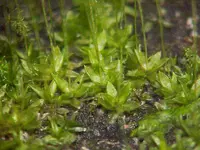
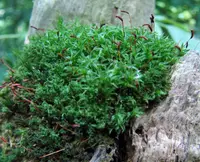
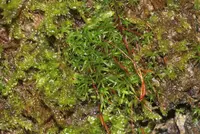
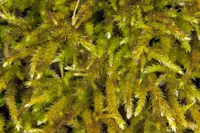
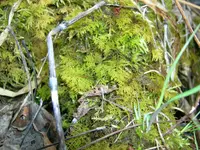
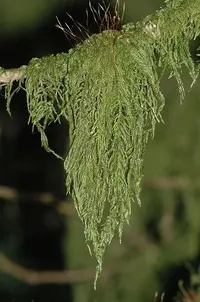
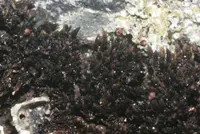
Mueller's pouchwort, Calypogeia muelleriana, is a small leafy liverwort rather than a true moss or vascular plant. It forms soft, flat mats of overlapping, green to bluish-green leaves that hug moist surfaces.

In nature it grows on shaded, damp soil, rotting wood, or peat in cool, humid forests, especially in the Northern Hemisphere. Its fine, delicate structure and need for constant moisture make it more sensitive than many houseplants.

Those conditions also mean it is best suited to terrariums or very humid, low-light setups. Anyone learning how to care for Mueller's Pouchwort should focus on stable humidity, gentle airflow, and avoiding direct sun or drying winds.

Main Plant Requirements

Care Difficulty

Hard Care

Light Preference

Shade

Water Requirements

Keep Soil Moist

Temperature Preference

Cool Climate

Hardiness Zone

Unknown

Soil Texture

Peaty, Organic-rich, Silty

Soil pH

Strongly acidic (4.5–5.5), Acidic (5.5–6.5)

Soil Drainage

Waterlogged tolerant

Fertilization

Minimal (feed rarely)

Get Personalized Care Plan

Scan your plant to receive care tips personalized for your specific plant

Available on iOS and Android

How to Care for the Mueller's Pouchwort

This small liverwort prefers low, gentle light similar to a shaded forest floor.

  • Provide bright, fully shaded to dappled light with at most 1–2 hours of weak early-morning sun; avoid direct midday or afternoon sun to prevent bleaching and desiccation.
  • Aim for locations under shrubs, logs, or rocks where light is filtered; north- or east-facing exposures with constant shade suit Mueller's Pouchwort outdoors.
  • In summer, shield from intense light and drying winds; in winter, ensure it still receives ambient daylight, avoiding deep, prolonged darkness under dense debris.

This species requires consistently moist conditions and does not tolerate drying out.

  • Keep the substrate evenly moist, not waterlogged; the surface should feel damp at all times and never fully dry or crusted.
  • Use soft, low-mineral water if possible, applying gentle watering or misting so the thin mats of Calypogeia muelleriana are not physically disturbed.
  • During hot, windy, or low-humidity periods, increase watering frequency and misting; reduce slightly in cool, still weather while ensuring the substrate stays constantly moist.

This cool-temperate liverwort thrives in mild, stable conditions without temperature extremes.

  • Optimal growth occurs around 45–65°F (7–18°C), mimicking shaded woodland or stream-bank microclimates with steady coolness.
  • It tolerates down to about 25–30°F (-4 to -1°C) if briefly exposed, but repeated or hard frost can damage delicate tissues, especially when combined with drying winds.
  • Heat above 75–80°F (24–27°C) stresses the plant, so provide extra shade, high humidity, and constant moisture, and avoid hot, exposed rock or soil surfaces in summer.

This small liverwort needs consistently high humidity to stay healthy in cultivation.

  • Aim for 70–90% humidity, mimicking its naturally moist forest floor habitat.
  • It tolerates only brief dips to 50–60% before fronds dull, curl, or develop dry, brown edges.
  • Increase humidity with closed or semi-closed terrariums, covered trays with damp sphagnum, or placement above but not touching water.
  • Mueller's Pouchwort shows humidity stress as shrinking mats, brittle texture, and slow regrowth after minor handling.

This species prefers a soft, constantly moist, organic-rich substrate rather than mineral-heavy soils.

  • Use a very fine-textured mix of milled sphagnum, leaf mold, and a little sand to mimic decaying wood and forest litter.
  • Ensure the substrate stays moist but not waterlogged by using shallow containers with wide surface area and gentle, even watering.
  • Aim for slightly acidic conditions, roughly pH 5.0–6.0, which supports healthy Calypogeia muelleriana growth and discourages lime-loving competitors.
  • Avoid dense potting soil, bark-heavy orchid mixes, or any substrate that compacts, dries hard, or holds standing water for long periods.

This species can be grown in shallow containers or trays when humidity and moisture are tightly controlled.

  • Choose low, wide trays that allow horizontal spreading while keeping the substrate layer thin for stable moisture levels.
  • Select plastic or glazed containers to slow evaporation so the fine substrate does not dry rapidly between misting or watering.
  • Raise the container slightly on supports so drained water can escape freely and the base does not stay in constant contact with runoff.

This small liverwort usually needs no fertilizer, especially when grown on moist, humus-rich substrates similar to its natural habitat.

Pruning needs for Calypogeia muelleriana are minimal and mainly hygienic rather than shaping.

  • Trim away dead, discolored, or decomposing patches with fine scissors or tweezers to prevent mold build-up.
  • Remove any overgrown, crowding mats only where they smother neighboring mosses or liverworts.
  • Lift or thin sections gently instead of tearing, keeping the moist substrate as undisturbed as possible.

Transplanting is infrequent, as this liverwort is best left undisturbed once established on a suitable substrate.

  • Consider moving it only if the substrate dries too fast, becomes compacted, or strong competitor plants invade.
  • Carry out transplanting in cool, consistently moist weather to limit desiccation stress.
  • Lift thin mats with a spatula or label, keeping attached substrate intact beneath the thallus.
  • Press gently onto the new moist, shaded site and mist thoroughly to settle contact with the surface.

Propagation of this species is possible but usually left to natural spread rather than routine human intervention.

  • Use small thallus fragments; this method aligns best with natural Calypogeia muelleriana care.
  • Take fragments in cool, humid conditions, avoiding direct sun and wind during handling.
  • Place pieces on acid, low-nutrient, consistently moist substrate, such as sphagnum-based mixes or rotten wood.
  • Cover with a clear vented dome or use a closed terrarium setup to maintain very high humidity while avoiding waterlogging.

Outdoor colonies generally tolerate typical cool, moist winters in mild to moderate climates with little intervention.

  • In regions with hard frost, grow Mueller's Pouchwort in shaded, cold but frost-free frames or indoor terraria.
  • Keep substrate just moist, never frozen solid or waterlogged, to protect delicate rhizoids.
  • Avoid exposure to drying winter winds and low indoor humidity by providing a sheltered, humid microclimate.

Care Tips

Substrate layering

Create a 0.5–1 cm base layer of inert gravel or sand under the acidic substrate to keep the rhizoids from sitting in stagnant water while still maintaining constant moisture.

Shaded capillary mat

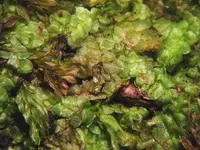
Place culture trays on a capillary mat kept evenly moist under shade cloth, so the colony receives uniform bottom moisture without direct water flow dislodging the fragile thalli.

Gentle water quality

Use rainwater, distilled, or reverse-osmosis water and let it reach room temperature before use to avoid mineral buildup and sudden temperature shocks to the tissue.

Low-disturbance inspection

Inspect the colony for algae, mold, or moss invasion using a hand lens and remove intruders with blunt tweezers or a soft brush rather than touching or lifting the mat, which tears easily.

Seasonal culture rotation

Rotate cultures between slightly cooler, dimmer locations in summer and brighter, still cool positions in winter to mimic natural woodland microclimates, which supports long-term stability when caring for Mueller's Pouchwort.

Common Pests and Diseases

Fungal overgrowth

This disease develops in constantly wet, stagnant conditions and causes thinning, browning, and patchy dieback of the liverwort mat. Symptoms include a soft, water-soaked texture and weak, disintegrating shoots.

Solution

Reduce surface moisture by improving air movement and avoiding standing water, then gently remove and discard affected patches with tweezers. Rinse the surrounding substrate with clean, non-chlorinated water and, if needed, apply a very mild, moss-safe fungicide spot treatment while keeping light moderate and moisture only evenly damp, which supports stable Calypogeia muelleriana care.

Green algae competition

This problem appears when free water and high nutrients favor fast-growing algae, which form bright green films or patches over the liverwort surface. Symptoms include smothered shoots, reduced growth, and decline of the colony under the algal layer.

Solution

Lower nutrient levels by reducing fertilizer or nutrient runoff, increase gentle water movement, and carefully wipe or siphon off algal films without scraping the delicate thallus. Provide bright but diffused light rather than strong direct light, and maintain only a thin film of moisture instead of constant surface water to give the liverwort a competitive edge.

Springtail grazing

These insects usually act as decomposers but can graze on delicate new growth when populations surge in very damp, organic substrates. Symptoms include uneven nibbling on young tissue, irregular thinning of fresh edges, and slowed spread of the patch.

Solution

Lower excess moisture slightly and improve ventilation to bring populations down, then trap springtails using shallow dishes of soapy water or sticky cards placed near the colony. For persistent infestations, relocate small sections of healthy liverwort to fresher, less decomposed substrate and discard heavily infested material.

Mite damage

This pest occurs in confined, humid setups and can feed on liverwort tissues, causing pale stippling, roughened surfaces, and very fine webbing across the mat. Symptoms include gradual weakening, patchy discoloration, and poor recovery of affected areas.

Solution

Increase air circulation and gently rinse the colony with a soft stream of clean water to dislodge mites, repeating several times over a week. If needed, use a targeted, moss-safe miticide at low dose and remove the most damaged sections to limit reinfestation while keeping humidity stable but not stagnant.

Bacterial soft rot

This disease appears in poorly ventilated, saturated conditions and leads to rapid softening and collapse of local patches with a slimy, sometimes foul-smelling texture. Symptoms include dark, water-soaked spots that spread along the mat and leave bare, decayed areas in the substrate.

Solution

Immediately excise and discard all affected tissue and some of the adjacent substrate, then increase airflow and reduce standing moisture on the surface. Use only clean tools and water for any handling, and maintain a cool, evenly moist but not waterlogged environment to prevent recurrence when attempting to grow Calypogeia muelleriana again in the same setup.

Interesting Facts

Oil bodies as identifiers

This liverwort has distinctive oil bodies inside its cells that taxonomists use as a key microscopic character to separate it from closely related Calypogeia species in the field and laboratory.

Preference for acidic substrates

The species is strongly associated with acidic, nutrient-poor substrates such as rotting conifer wood, peaty soils, and humus-rich banks, which makes it a good indicator of low-pH, low-calcium habitats.

Widespread temperate distribution

It occurs across large parts of the Northern Hemisphere in cool, moist temperate regions, often forming discrete patches within forest understorey bryophyte communities rather than continuous carpets.

FAQs about Mueller's Pouchwort

This liverwort spreads slowly to moderately by creeping stems and spores, forming small mats rather than large carpets. It usually does not become aggressive in gardens, especially when grown with other shade-loving mosses and ferns.

Grow Healthy Plants with Botan Care

Keep your plants happy and healthy with plant identification, disease detection, and easy care guidance.

Botan plant care app — identify plants on mobile

Explore More Plants