


Algae anchoring
Use soft, inert ties or mesh to gently secure the thallus to rocks or shells in marine setups, as firm anchoring improves water flow around the plant and reduces mechanical damage from currents.

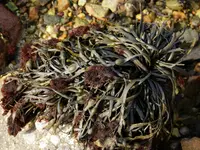
Vertebrata lanosa is a small marine red alga, often called a tufted or woolly seaweed, forming dense, soft clumps on rocky shores. It usually appears dark red to purplish, with fine, branching fronds that give it a fuzzy look.
This species is native to cold North Atlantic coasts and is commonly found attached to other seaweeds or stones in the intertidal zone. Its tough, resilient structure and simple needs in clean, cool, well-lit seawater make it relatively easy to maintain in a specialized marine setup.
Aquarists who care for Vertebrata lanosa generally focus on stable salinity, good water movement, and moderate to bright light to keep its compact form and healthy color.

Care Difficulty
Moderate Care

Light Preference
Partial Shade

Water Requirements
Moderate Water

Temperature Preference
Warm Climate

Hardiness Zone
Unknown

Soil Texture
Loamy

Soil pH
Slightly acidic (6.5–7.0)

Soil Drainage
Well-drained

Fertilization
Minimal (feed rarely)
Scan your plant to receive care tips personalized for your specific plant
Available on iOS and Android
This species prefers bright conditions with protection from harsh midday sun.
This plant prefers evenly moist but not saturated conditions in free-draining substrate.
Stable, cool to mild conditions support steady growth and reduce stress.
This species prefers moderate humidity and reacts quickly to very dry air.
This species performs best in a loose, sharply drained yet moderately organic substrate.
This species adapts well to container culture when drainage and root space are managed carefully.
This species usually grows in low-nutrient habitats and needs only minimal feeding in cultivation.
Pruning needs are modest and focus on keeping Vertebrata lanosa healthy and well-shaped.
This plant is more often transplanted in outdoor settings than maintained long term in small containers.
Propagation of Vertebrata lanosa is typically done by seed and requires patience and stable conditions.
This species is generally cold tolerant in its native range and often needs little targeted winter care.

Plant Health Check
Not sure what's wrong with your plant? Check your plant's health inside the app.
Vertebrata lanosa is a small red seaweed most often found in cold North Atlantic and Arctic waters, especially around Iceland, Greenland, and northern Europe.
This species commonly grows attached to other larger algae, particularly Ascophyllum nodosum, rather than on bare rock, making it an epiphyte, which is an organism that lives on another plant without taking nutrients from its tissues.
The fronds have a compact, finely branched, almost wool-like texture, which has led to its common name woolly fringe seaweed and helps distinguish it from many smoother red algae in the same habitats.
Yes, this species adapts well to containers if given stable water quality and regular nutrient additions. Use a wide, shallow vessel, maintain gentle water movement, and divide or thin clumps periodically to prevent overcrowding and decline.
Keep your plants happy and healthy with plant identification, disease detection, and easy care guidance.

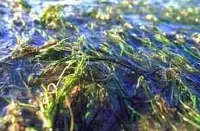
Shoalgrass
Halodule wrightii
 POPULAR
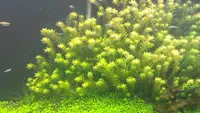
Dwarf rotala
Rotala rotundifolia
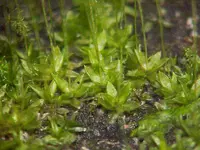
funaria moss
Funaria hygrometrica
scurvygrass
Cochlearia groenlandica
floating antlerfern
Ceratopteris pteridoides
delicate thuidium moss
Thuidium delicatulum
Red Beard-moss
Bryoerythrophyllum recurvirostrum
California antitrichia moss
Antitrichia californica