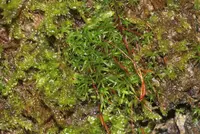
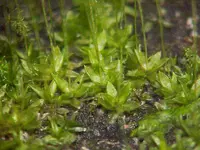
American climacium moss Care (Climacium americanum)

Also known as: American Tree Moss, Kindberg's Climacium Moss
American climacium moss

About American climacium moss

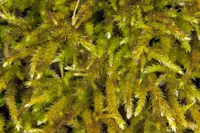
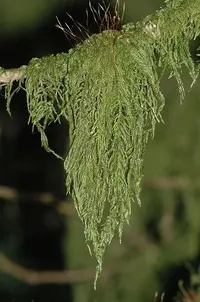
American climacium moss (Climacium americanum) is a terrestrial moss that forms low, tree-like tufts, giving patches a miniature forest appearance. Its stems are upright with dense, fine branches that create soft, cushiony clumps.

This moss is native to North America and typically grows in moist woodlands, along stream banks, and in shaded, damp soil. It spreads slowly over the ground rather than climbing surfaces.

Climacium americanum is generally considered adaptable but prefers consistent moisture, shade to dappled light, and humus-rich, stable substrates. These traits make it moderately easy to care for American climacium moss in controlled garden or terrarium settings, provided its moisture needs are met.

Main Plant Requirements

Care Difficulty

Moderate Care

Light Preference

Partial Shade

Water Requirements

Keep Soil Moist

Temperature Preference

Cold Hardy

Hardiness Zone

3–8

Soil Texture

Loamy, Silty, Organic-rich

Soil pH

Acidic (5.5–6.5), Slightly acidic (6.5–7.0)

Soil Drainage

Moist but well-drained

Fertilization

Minimal (feed rarely)

Get Personalized Care Plan

Scan your plant to receive care tips personalized for your specific plant

Available on iOS and Android

How to Care for the American climacium moss

This moss prefers cool, moist sites with soft, filtered light rather than direct, intense sun.

  • Provide bright shade or dappled forest light, with 1–3 hours of gentle morning sun and no harsh midday or afternoon sun exposure.
  • American climacium moss tolerates full shade but grows denser with filtered light; too little light produces pale, open growth, while too much sun scorches and dries fronds.
  • In summer, protect from reflected heat and strong sun near rocks or pavement; in cooler months, slightly more open light is acceptable if humidity stays high.

Climacium americanum needs consistently moist conditions, mimicking a damp forest floor or streambank.

  • Keep the substrate evenly moist at 1–3 cm depth; surface may dry slightly, but deeper layers should feel cool and damp to the touch.
  • Increase misting or gentle watering during warm, windy, or drought periods; reduce frequency in cool, wet seasons to avoid standing water and rot.
  • Signs of underwatering include crisp, dull, or curling shoots, while overwatering shows as soggy, slimy patches and a sour smell in poorly drained areas.

This moss is cold-hardy but grows best in cool to mild temperatures without extreme heat or sudden swings.

  • Optimal growth occurs around 50–70°F (10–21°C), especially in shaded, moist microclimates with stable humidity.
  • Climacium americanum tolerates winter lows below 20°F (-7°C) under insulating leaf litter or snow but may desiccate if exposed to freezing dry winds.
  • Sustained heat above 80–85°F (27–29°C) stresses the moss; provide extra shade, moisture, and airflow during hot spells to limit drying and thermal damage.

This moss prefers consistently moist air but survives in a fairly wide humidity range if the substrate stays damp.

  • Aim for 60–90% humidity, keeping the moss cushion and underlying substrate evenly moist rather than relying only on air moisture.
  • In very dry indoor air below 40%, fronds may brown at the tips, feel crispy, and lose their dense, tufted look.
  • Increase humidity with a shallow water tray under the container, frequent fine misting, or placing American climacium moss in a closed or semi-covered terrarium.

This species thrives in consistently moist, organic-rich substrates that mimic damp forest or streambank conditions.

  • Use a soft, spongy mix of 2 parts peat or coco coir, 1 part fine compost, and 1 part fine sand to recreate the loose, humic soil Climacium americanum prefers.
  • Ensure slow but steady drainage; the mix should hold moisture without forming puddles or remaining waterlogged for more than a few hours.
  • Keep soil pH slightly acidic to neutral, around 5.5–7.0, avoiding alkaline amendments such as large amounts of lime or crushed shells.
  • Improve aeration by mixing in finely shredded bark or leaf mold, and avoid compacted, clay-heavy soils that restrict oxygen and trap stagnant water.

This moss can be grown successfully in shallow containers that maintain stable surface moisture.

  • Choose a broad, shallow tray so the rhizomes can spread horizontally and form a continuous moss carpet rather than a thick vertical mat.
  • Select a non-porous container material such as glazed ceramic or plastic to slow evaporation and keep the substrate evenly damp near the surface.
  • Use drainage holes with a thin gravel layer under the substrate to prevent standing water while still allowing the upper layer to remain constantly moist.

This moss species thrives in low-nutrient conditions and usually needs no additional fertilizer when grown outdoors or on suitable substrates.

Climacium americanum benefits from light, corrective pruning to keep mats healthy and visually tidy in managed plantings.

  • Carry out pruning in early spring or early fall, when growth conditions are mild and moisture is reliable.
  • Gently remove dead, browned, or decaying patches by hand to limit fungal issues and encourage fresh growth.
  • Thin overly dense clumps to improve air movement and reduce excessive moisture retention on shaded sites.
  • Use fingers or soft tweezers rather than blades to avoid tearing the delicate stems and rhizoids.

This moss is usually grown as a ground or substrate cover, so management focuses on careful transplanting rather than routine repotting.

  • Transplant when patches become too dense, shaded, or waterlogged, or when coverage is needed in a new area.
  • Plan moves for cool, moist weather in spring or early fall to reduce desiccation stress and transplant shock.
  • Lift moss as shallow, intact pads with underlying substrate, keeping rhizoids and soil together as much as possible.
  • Set pads onto the new, clean, slightly acidic, consistently moist surface and press gently for firm contact, then mist well.

Climacium americanum is most commonly propagated by division of existing mats rather than by spores in garden settings.

  • Divide healthy, dense moss pads in cool, damp conditions in spring or early fall for the best establishment.
  • Use a sharp, clean knife or hand tearing to separate small sections that each include stems and attached substrate.
  • Place divisions firmly onto a compatible, moist surface such as acidic soil, rotting wood, or a moss-friendly mix.
  • Maintain high humidity and even moisture with frequent misting and shade until new anchoring rhizoids develop.

This moss is naturally cold hardy across much of its native range and generally needs no special winter care in the ground.

Care Tips

Substrate anchoring

Press the moss fronds gently but firmly into a rough, stable substrate such as textured rock, decaying wood, or fibrous peat so the rhizoids can attach and form a dense, upright colony instead of sliding or washing away.

Microtopography planning

Create small height differences, pockets, and ledges in the planting area so moisture can collect in low spots while higher bumps stay slightly drier, which reduces rot while still providing the constantly damp conditions this species prefers.

Gentle water delivery

Use a fine-rose watering can, pipette, or spray bottle on a low setting to wet the moss and substrate from the side or below canopy level, avoiding direct high-pressure spray that can flatten or break the tree-like shoots.

Seasonal thinning

Once or twice a year, lift and remove small patches of older, compacted growth in the thickest areas so light and airflow can reach the lower parts of the colony and stimulate healthy new frond development.

Clean, low-nutrient water

Irrigate with rainwater, distilled, or low-mineral filtered water and avoid runoff from fertilized areas, since caring for American climacium moss in nutrient-poor, clean conditions helps preserve its compact form and reduces algae and liverwort overgrowth.

Common Pests and Diseases

Slime molds

This disease appears as slimy or powdery patches on the moss surface, often gray, white, or yellow, especially in very wet, nutrient-rich spots. Symptoms include temporary discoloration and a matted look where the slime organism grows over the moss cushions.

Solution

Reduce excess nutrients by avoiding fertilizer runoff, gently rinse the moss surface with clean water, and thin surrounding vegetation to increase airflow and light. In small patches, carefully lift and discard affected moss and organic debris, then re-establish fresh, clean cushions in better-drained conditions.

Algal overgrowth

This disease shows up as bright green, flat, slick patches that form a film over the moss, usually in sites with standing water, fertilizer wash, or heavy shade. Symptoms include reduced moss vigor, patchy dieback, and a shiny or slippery surface.

Solution

Improve drainage and reduce standing water, and limit nutrient inputs such as lawn fertilizer or compost leachate reaching the moss. Lightly agitate and flush the surface with clean water, remove heavily coated pieces of moss and underlying muck, and encourage more diffuse light to reach the area without exposing the moss to direct, drying sun.

Moss mites

This pest consists of tiny arachnids that feed on moss tissues and micro-organisms, creating uneven, thinned, or browned patches, especially in very old cushions. Symptoms include a crumbly texture and fine, dust-like frass within the moss mat.

Solution

Keep the habitat slightly cleaner by removing excess leaf litter and decaying organic matter where mite populations build up. If damage is obvious, gently lift and shake affected clumps to dislodge mites, discard the most damaged sections, and maintain stable, cool, evenly moist but not waterlogged conditions that favor healthy regrowth over mite dominance.

Fungus gnat larvae

This pest occurs when larvae of small black gnats develop in saturated, organic-rich substrates under the moss, sometimes grazing on tender stems and rhizoids and weakening the carpet. Symptoms include dull, thinning patches and the presence of small gnats that fly up when the area is disturbed.

Solution

Allow the substrate to drain more thoroughly between waterings or flooding events and reduce organic sludge buildup beneath the moss. In trays or contained displays, use a well-drained, mineral-rich base, remove decayed material regularly, and if necessary introduce a biological control such as Bacillus thuringiensis israelensis (Bti) in water to target larvae without harming the moss.

Interesting Facts

Miniature tree growth

Climacium americanum forms upright, tree-like stems with a distinct crown of branchlets, giving colonies a miniature forest appearance that is unusual among mosses in its habitats.

Rhizome-like stems

This moss produces creeping, root-like axes that run horizontally through the substrate, anchoring the plant and allowing clonal spread across moist soil or decaying wood.

Moist lowland specialist

Natural populations are strongly associated with seasonally wet lowland habitats such as floodplains, stream banks, and swampy depressions, where periodic flooding and high moisture help maintain stable colonies.

Botan icon

Did you know?

In suitable conditions, patches of Climacium americanum can develop distinct vertical layering, with older, decaying basal parts and younger, tree-like shoots above, creating a small-scale structural complexity that resembles a tiny forest canopy over its own organic substrate.

FAQs about American climacium moss

This species performs better outdoors in cool, shaded, consistently moist locations that mimic forest conditions. Indoors, it often struggles with low humidity and stagnant air unless placed in a carefully managed terrarium or moss display setup.

Grow Healthy Plants with Botan Care

Keep your plants happy and healthy with plant identification, disease detection, and easy care guidance.

Botan plant care app — identify plants on mobile

Explore More Plants