


Stable substrate choice
Grow mats on long-lived, non-calcareous materials like lava rock, hardwood, or inert foam instead of soft wood or bark, which decompose and destabilize the colony over time.

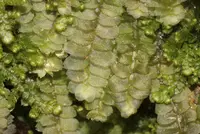
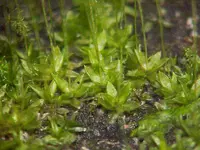
Common pouchwort, Calypogeia fissa, is a small liverwort that forms soft, flat mats on soil, decaying wood, or damp rock. It has delicate, overlapping green to bluish-green leaves that stay close to the surface and create a low, carpet-like cover.
This species is native to cool, humid regions across Europe, parts of Asia, and North America, where it thrives in shaded forests and stream banks. It prefers consistent moisture, low light, and stable, undisturbed substrates, which means it can be sensitive to drying out or handling.
Because it is adapted to naturally moist, sheltered habitats, how to care for Common Pouchwort in cultivation usually involves recreating a cool, humid, shaded environment with gentle air movement and low disturbance.

Care Difficulty
Hard Care

Light Preference
Shade

Water Requirements
Keep Soil Moist

Temperature Preference
Cool Climate

Hardiness Zone
Unknown

Soil Texture
Peaty, Organic-rich, Loamy

Soil pH
Strongly acidic (4.5–5.5), Acidic (5.5–6.5)

Soil Drainage
Waterlogged tolerant

Fertilization
Minimal (feed rarely)
Scan your plant to receive care tips personalized for your specific plant
Available on iOS and Android
This moss-like liverwort prefers low, cool light that mimics a shaded forest floor.
This species needs consistently moist conditions and does not tolerate drying out.
This cool-temperate liverwort thrives in mild, stable conditions without temperature extremes.
This liverwort needs very high humidity to stay hydrated and photosynthetically active.
This species prefers a constantly moist, loose, organic substrate rather than conventional potting soil.
This species is suitable for container culture only in shallow trays or terrarium-style setups that maintain constant surface moisture.
This small liverwort has very low nutrient demand, so any feeding should be light and infrequent to avoid damage.
Pruning needs for Calypogeia fissa are minimal and mainly cosmetic, aimed at keeping mats even and healthy.
This liverwort is usually grown as a ground layer on moist substrates, so transplanting is rare and should be gentle.
Propagation of Calypogeia fissa is usually done vegetatively, using small sections of the existing mat.
In climates within its natural range, this hardy liverwort usually needs no special winter care outdoors.

Plant Health Check
Not sure what's wrong with your plant? Check your plant's health inside the app.
This liverwort forms distinctive oil-bodies inside its cells that contain specialized lipids arranged in a lobed pattern, a feature useful for identifying the species under a microscope.
The plant shows a characteristic dull bluish-green to yellow-green hue, which helps distinguish it from many similar leafy liverworts on forest floors and decaying wood.
It occurs most often on moist, shaded, acidic substrates such as rotting logs and peat-rich soils, and tends to avoid calcareous or nutrient-rich sites.
This liverwort spreads slowly across moist substrates using creeping shoots and small fragments that easily root. It can form low, patchy carpets but is not typically aggressive or smothering in garden or terrarium settings.
Keep your plants happy and healthy with plant identification, disease detection, and easy care guidance.

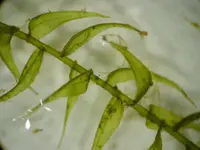
drepanocladus moss
Drepanocladus aduncus
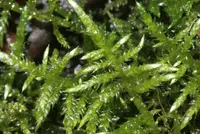
cirriphyllum moss
Cirriphyllum piliferum
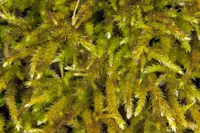
California antitrichia moss
Antitrichia californica
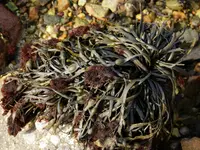
Vertebrata lanosa
Vertebrata lanosa
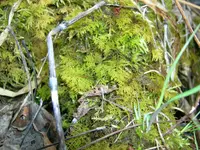
delicate thuidium moss
Thuidium delicatulum
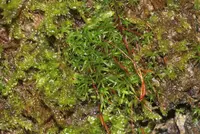
Red Beard-moss
Bryoerythrophyllum recurvirostrum
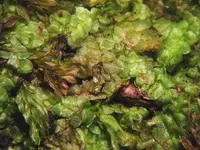
Mueller's Pouchwort
Calypogeia muelleriana
funaria moss
Funaria hygrometrica