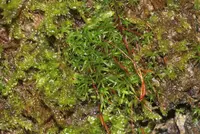
square goose neck moss Care (Rhytidiadelphus squarrosus)

Also known as: Springy Turf-moss
square goose neck moss

About square goose neck moss

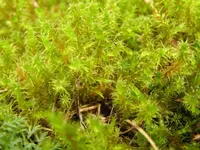
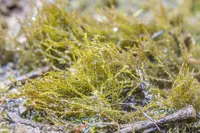
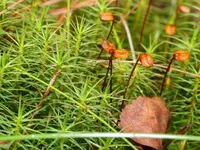
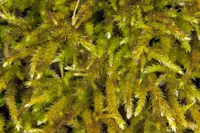
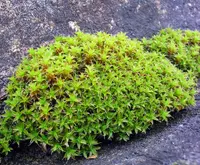
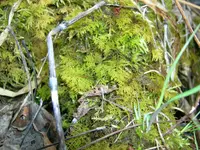
Square goose neck moss, Rhytidiadelphus squarrosus, is a low-growing moss that forms dense, springy mats with distinctly curved, “goose neck” stems. Its bright to yellow-green foliage gives lawns, paths, and woodland edges a soft, carpeted look.

This moss is common in temperate regions, especially in Europe and North America, where it often colonizes lawns, compacted soil, and moist grassy areas. It is generally tough and adaptable, which makes it relatively easy to establish in moss gardens if its basic needs are met.

It prefers consistent moisture, cool to mild temperatures, and low to moderate light, which guides how to care for square goose neck moss in home settings.


Main Plant Requirements

Care Difficulty

Moderate Care

Light Preference

Partial Shade

Water Requirements

Keep Soil Moist

Temperature Preference

Cold Hardy

Hardiness Zone

3–9

Soil Texture

Loamy, Silty, Organic-rich

Soil pH

Acidic (5.5–6.5), Slightly acidic (6.5–7.0)

Soil Drainage

Moist but well-drained

Fertilization

Minimal (feed rarely)

Get Personalized Care Plan

Scan your plant to receive care tips personalized for your specific plant

Available on iOS and Android

How to Care for the square goose neck moss

This moss thrives in cool, moist sites with low to moderate light rather than intense direct sun.

  • Provide bright shade or dappled light, such as under shrubs or light tree canopy, with at most 1–2 hours of weak morning sun per day.
  • Avoid strong midday and afternoon sun, which can bleach and dry square goose neck moss; leaf tips turning pale or crisp indicate too much light.
  • In summer, favor shadier, north- or east-facing exposures; in winter, more open sites are acceptable as the sun is weaker and angles are lower.

Rhytidiadelphus squarrosus prefers evenly moist conditions and does not tolerate extended drying.

  • Outdoors, aim for consistently moist but not waterlogged soil; the surface may feel just barely damp rather than soggy between waterings or rainfall.
  • Increase watering during hot, windy weather if the top moss layer feels dry and brittle; hydrated shoots should feel springy and look deep green.
  • Reduce added water in cool, wet seasons to avoid stagnant conditions; yellowing, slimy patches suggest oversaturation, while brown, crisp fronds indicate drought stress.

This species is adapted to cool, temperate climates and tolerates a wide temperature range when moisture is adequate.

  • Optimal growth occurs around 50–68°F (10–20°C), especially in moist, shaded habitats where evaporation stays low.
  • Mats can usually survive light freezes down to about 20–25°F (-6 to -4°C), especially under snow cover, but repeated bare-soil frosts can cause thinning.
  • Heat tolerance is moderate; above 80°F (27°C) the moss needs higher humidity and shade, as prolonged heat with full sun can cause desiccation and dieback.

This moss prefers consistently moist, high-humidity conditions to stay dense and green.

  • Aim for 60–90% humidity, avoiding prolonged exposure to heated, dry indoor air.
  • Crisping tips, dull color, and shrinking cushions indicate humidity stress and insufficient surface moisture.
  • Use frequent fine misting, pebble trays, or placement near a humidifier to keep square goose neck moss evenly damp without standing water.

This species thrives on moist, loose, organic-rich substrates rather than standard potting soil.

  • Use a finely textured mix of sifted compost, leaf mold, and milled bark over a mineral base such as sand or fine grit.
  • Maintain constant light moisture with excellent drainage so the substrate is never waterlogged or compacted.
  • Aim for slightly acidic conditions, roughly pH 5.0–6.5, similar to many woodland and lawn soils.
  • Improve aeration by avoiding dense peat blocks and gently roughening the surface so Rhytidiadelphus squarrosus can anchor between particles.

This moss can be grown in shallow containers if moisture and stability are carefully managed.

  • Choose a wide, shallow tray that allows the mat to spread horizontally while keeping the full surface easy to re-wet.
  • Line the base with coarse grit or small stones under the substrate to prevent water from pooling at the roots.
  • Select heavier ceramic or stone containers outdoors so the spreading mat does not tip the container in wind or when watered.

This moss generally grows well without added fertilizer, especially in outdoor lawns or naturalized areas.

Rhytidiadelphus squarrosus needs only light pruning to keep mats tidy and healthy.

  • Trim small patches any time growth becomes uneven, using clean scissors or sharp snips.
  • Remove browned, dead, or compacted tufts to improve air flow and reduce mold risk.
  • Shape edges gently rather than cutting deeply into dense mats to avoid bare patches.
  • Brush away leaves and debris instead of tearing moss to maintain an even surface.

Transplanting is mainly relevant when this moss is grown in trays, terrariums, or as a collected lawn patch.

  • Transplant when mats lift easily from the substrate, growth thins, or containers dry out too fast.
  • Best timing is in cool, moist seasons such as early spring or early fall.
  • Move mats every few years at most, into a shallow, moisture-retentive but well-drained substrate.
  • Handle sheets gently, press onto the new surface, water thoroughly, and keep evenly moist to limit stress.

Rhytidiadelphus squarrosus plant care usually relies on simple vegetative propagation rather than spores for home growers.

  • Divide existing mats into small sections with intact stems and rhizoids during cool, damp weather.
  • Lay pieces onto firm, rough substrate, then press lightly so stems contact the surface closely.
  • Maintain constant surface moisture with fine misting and shade from strong sun while new anchoring forms.
  • Avoid burying fragments; they root and spread best when exposed but kept humid.

This moss is naturally cold hardy and generally needs no special winter care in temperate climates.

Care Tips

Shallow Substrate Layer

Use a very thin (0.5–1 cm) layer of fine, low-nutrient medium such as washed sand mixed with milled sphagnum on top of compacted soil to give rhizoids something to anchor into while still letting the moss carpet over the surface.

Fragment Propagation

Gently tear healthy tufts into small fragments and press them firmly onto the prepared surface, then mist and cover loosely with a clear lid or plastic for 1–2 weeks to speed up establishment and achieve an even moss lawn.

Foot-Traffic Management

If used in a lawn or pathway, limit foot traffic by adding stepping stones or defined paths and keep mowing equipment blades set slightly higher to prevent tearing and scalping the moss layer.

Debris Control

Regularly remove fallen leaves, pine needles, and grass clippings with a soft brush or by hand so they do not shade and smother the moss or encourage rot in the dense mat.

Microhabitat Stability

For growing square goose neck moss in containers or trays, keep the container in a fixed orientation and avoid frequent repositioning so light and moisture patterns remain consistent and the colony can develop an even, dense structure.

Common Pests and Diseases

Moss mites

These pests are tiny arachnids that feed on moss tissues, causing a thinned, patchy appearance and reduced vigor in cushions. Symptoms include dull, uneven color and a dusty look when infestations are heavy.

Solution

Limit dry, exposed conditions that favor mites by maintaining stable, moderate moisture and avoiding chronic desiccation. If colonies are observed, rinse the moss gently with water to dislodge mites, remove and discard heavily affected patches, and, in severe outdoor cases, consider a targeted miticide labeled for ornamentals while protecting nearby non-target invertebrates.

Slugs and snails

These insects feed on tender moss shoots, tearing cushions and leaving irregular bare or flattened patches, especially in damp, shaded sites. Symptoms include shredded growth and slime trails across the moss surface and surrounding soil or stone.

Solution

Hand-pick slugs and snails during cool, moist periods and reduce hiding places such as dense debris, boards, or thick leaf litter around the colony. Use physical barriers (copper tape on edging stones, sharp grit) and, if needed, low-toxicity slug baits placed away from pets and wildlife to reduce pressure on recovering moss patches.

Algal overgrowth

This disease is a surface colonization by green algae that forms slick, bright-green films on the moss. Symptoms include smothered, weakened shoots and reduced photosynthesis, often in areas with stagnant water and high nutrient input.

Solution

Improve drainage and airflow by gently lifting or thinning extremely dense mats and redirecting runoff or irrigation so the surface does not stay waterlogged. Reduce nutrient inputs from fertilizers or lawn runoff, lightly rinse the surface with clean water to remove loose algal film, and allow the site to dry slightly between wet periods without letting the moss fully desiccate.

Fungal leaf spot

This disease is caused by opportunistic fungi that create small, dark, water-soaked spots on moss leaves and stems, which can merge into dull brown patches under persistently damp, stagnant conditions. Symptoms include localized dieback in thick, poorly ventilated cushions.

Solution

Remove and discard affected clumps to reduce inoculum, then thin overly dense areas to improve air movement and faster surface drying after rain or misting. Avoid frequent overhead watering, especially in the evening, and in high-value displays consider applying a low-dose, broad-spectrum fungicide labeled safe for mosses or bryophytes, testing first on a small section.

Bryophyte rust fungus

This disease produces tiny, orange to rust-colored pustules or patches on moss surfaces, interrupting normal growth and sometimes causing localized dieback. Symptoms include discolored tufts scattered irregularly through the colony, often following periods of high humidity and mild temperatures.

Solution

Carefully remove infected tufts with minimal disturbance to surrounding healthy moss and dispose of them with yard waste, not compost. Reduce prolonged leaf wetness by adjusting irrigation, increasing air movement around the site, and, if rust persists in a cultivated display, consider a moss-safe fungicide used according to label directions as part of broader Rhytidiadelphus squarrosus care instructions.

Interesting Facts

Characteristic square shoots

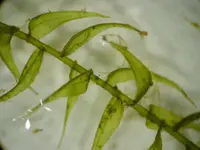
This moss forms creeping stems with leaves that bend outward at right angles, giving the shoots a distinctly square or starry cross‑section when viewed from above, which is a key feature used to identify it in the field.

Dominant lawn colonizer

It commonly invades nutrient‑rich, compacted lawns and sports fields across Europe and introduced regions, forming dense carpets that can outcompete turf grasses under cool, moist conditions.

High tolerance to trampling

The thick, interwoven mats of this species allow it to tolerate frequent foot traffic and soil compaction far better than many other mosses, which is one reason it thrives along paths, in parks, and on playing surfaces.

Botan icon

Did you know?

This moss is often used as an indicator of high nitrogen deposition from air pollution or fertilizers, because it responds strongly to elevated nitrogen in soils and can become unusually abundant in enriched, human‑influenced habitats.

FAQs about square goose neck moss

This species spreads by creeping stems and fragments that root easily, so in lawns, compacted soil, or damp turf it can become dominant. In ornamental beds, regular edging and removing loose fragments keeps growth in check.

Grow Healthy Plants with Botan Care

Keep your plants happy and healthy with plant identification, disease detection, and easy care guidance.

Botan plant care app — identify plants on mobile

Explore More Plants