


Use mineral substrates
Establish cushions on shallow trays filled with fine gravel, sand, or crushed brick rather than organic potting mixes, which helps anchor the rhizoids and mimics the mineral surfaces it naturally colonizes.

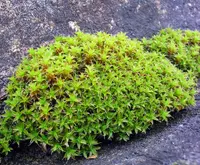
Great hairy screw-moss, Syntrichia ruralis, is a drought-tolerant moss commonly found on dry rocks, roofs, sandy soils, and exposed ground. It forms dense, low cushions with narrow leaves that twist into a spiral when dry and spread out again when rehydrated.
This moss is naturally widespread in temperate and semi-arid regions, including much of North America and Europe. It is well adapted to poor, shallow substrates where many other plants struggle.
Its ability to survive drying makes it relatively forgiving in cultivation, provided it gets good light and is not kept constantly waterlogged. Understanding how to care for great hairy screw-moss mainly involves balancing moisture with excellent drainage and air movement.

Care Difficulty
Easy Care

Light Preference
Full Sun

Water Requirements
Low Water

Temperature Preference
Cold Hardy

Hardiness Zone
3–9

Soil Texture
Sandy, Rocky, Loamy

Soil pH
Slightly acidic (6.5–7.0), Neutral (7.0)

Soil Drainage
Well-drained

Fertilization
Minimal (feed rarely)
Scan your plant to receive care tips personalized for your specific plant
Available on iOS and Android
This moss prefers bright, open conditions but tolerates a wide light range in nature.
This species is drought-adapted and handles drying between wet periods very well.
This moss is highly cold-tolerant and also manages moderate heat when kept from extreme drying.
This moss tolerates low humidity but responds best to moderately dry air with brief humid periods.
Syntrichia ruralis grows best on very lean, mineral-based substrates with rapid drainage.
This species is suitable for shallow container culture, especially in rock-garden style dishes or trays.
Syntrichia ruralis in cultivation needs only minimal feeding, as it is adapted to very low nutrient conditions.
Pruning needs for Syntrichia ruralis are minimal and mostly cosmetic.
Transplanting great hairy screw-moss is simple but should be done gently to keep cushions intact.
Syntrichia ruralis is commonly propagated by division of cushions rather than by spores in home settings.
Syntrichia ruralis is very cold hardy and usually needs no special winter care in outdoor settings.

Plant Health Check
Not sure what's wrong with your plant? Check your plant's health inside the app.
In dry conditions the leaves twist tightly around the stem, forming a compact spiral that reduces surface area and water loss, then rapidly uncoil and turn green again after rewetting.
This moss commonly colonizes exposed sandy or rocky soils, stabilizing the surface and trapping dust and organic particles that help build early soil structure in dry, open habitats.
Individual shoots can survive extended periods almost completely dry, then resume photosynthesis within minutes to hours after moisture returns, a strategy known as poikilohydry, where internal water content follows environmental moisture.

Spores and small plant fragments of this moss are known to be carried long distances by wind, allowing the species to form nearly continuous belts across dry steppe and temperate regions of the Northern Hemisphere, making it one of the most widespread mosses in open, arid landscapes.
This species performs best outdoors in shallow, free-draining substrates with natural rainfall and airflow. Indoors it can survive in bright, cool, humid setups, but growth is slower and long-term stability is harder to maintain compared with outdoor conditions.
Keep your plants happy and healthy with plant identification, disease detection, and easy care guidance.

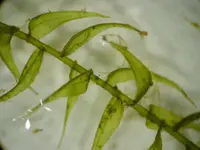
drepanocladus moss
Drepanocladus aduncus
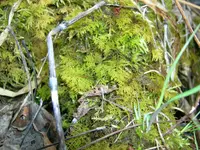
delicate thuidium moss
Thuidium delicatulum
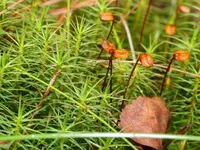
Common Haircap Moss
Polytrichum commune
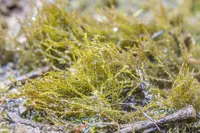
alternateleaf archidium moss
Archidium alternifolium
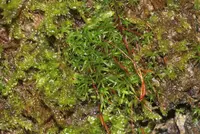
Red Beard-moss
Bryoerythrophyllum recurvirostrum
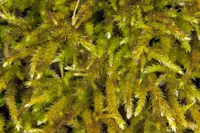
California antitrichia moss
Antitrichia californica
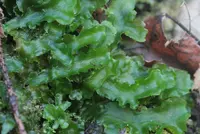
greasewort
Aneura pinguis
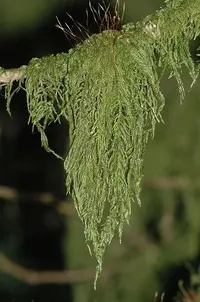
antitrichia moss
Antitrichia curtipendula