Acidic water source
Use rainwater, distilled water, or reverse-osmosis water to avoid mineral buildup, and flush the container every 4–6 weeks to remove any accumulated salts that can damage the moss tips.

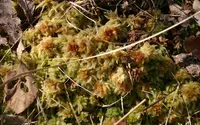
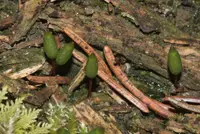
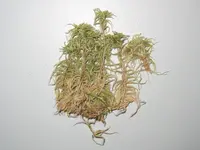
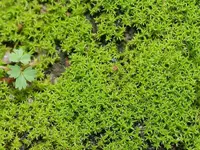
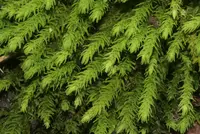
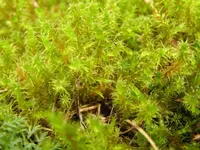
Sphagnum fuscum, often called brown peat moss, is a small, non-vascular moss that forms dense, cushion-like hummocks. It has compact, upright stems with tiny overlapping leaves, usually in brownish-green tones.
This species naturally occurs in cool, nutrient-poor bogs across the Northern Hemisphere, especially in peatlands. It grows slowly but can build thick peat layers over long periods.
Sphagnum fuscum retains large amounts of water and acidifies its surroundings, which shapes bog ecosystems and makes it valuable as a moisture-holding medium. Anyone learning how to care for sphagnum benefits from understanding that it prefers consistently damp conditions, soft water, and gentle, indirect light.

Care Difficulty
Hard Care

Light Preference
Partial Shade

Water Requirements
Aquatic

Temperature Preference
Cold Hardy

Hardiness Zone
2–6

Soil Texture
Peaty, Organic-rich

Soil pH
Strongly acidic (4.5–5.5)

Soil Drainage
Waterlogged tolerant

Fertilization
Minimal (feed rarely)
Scan your plant to receive care tips personalized for your specific plant
Available on iOS and Android
This moss prefers cool, bright conditions that avoid harsh, drying sun.
This bog moss requires consistently saturated conditions without long dry periods.
This species is adapted to cool climates and tolerates cold better than heat.
This moss needs consistently very high humidity to remain actively growing and hydrated.
Provide a saturated, fibrous, low-nutrient substrate that mimics acidic bog conditions.
This species is suitable for shallow container culture when moisture and stability are controlled carefully.
This moss is adapted to nutrient-poor habitats and usually grows best with no added fertilizer.
Pruning Sphagnum fuscum is mainly about gentle grooming rather than shaping.
Transplanting is only needed when the moss outgrows its area or medium becomes degraded.
Propagation of Sphagnum fuscum is commonly done by vegetative division.
This species is naturally cold hardy and usually needs no special winter care outdoors.

Plant Health Check
Not sure what's wrong with your plant? Check your plant's health inside the app.
This species is a characteristic moss of nutrient-poor, rain-fed (ombrotrophic) raised bogs, and its presence is used by ecologists to classify and map these specialized peatland habitats.
The dense, reddish-brown carpets formed by this species are especially efficient at accumulating undecomposed plant material, making it one of the dominant peat-forming mosses in boreal and subarctic regions.
This moss thrives in harsh northern climates, tolerating long periods of low temperatures and short growing seasons, which helps it dominate in boreal and subarctic peatlands where many other plants cannot persist.

Populations of this species are commonly used as bioindicators in climate and paleoecological studies, because its remains are well preserved in peat deposits and allow scientists to reconstruct past environmental and hydrological conditions over thousands of years.
Growth is slow, usually about 1–3 cm per year in cultivation. Rate depends on constant moisture, cool temperatures, and soft, low‑nutrient water. Disturbance, drying, or fertilizer quickly reduce growth and may kill new tips.
Keep your plants happy and healthy with plant identification, disease detection, and easy care guidance.