Use Rain Or RO
Collect rainwater or use reverse-osmosis (RO) water to avoid mineral buildup that can stunt growth and discolor the moss over time.

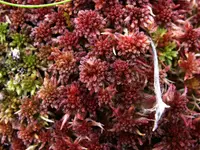
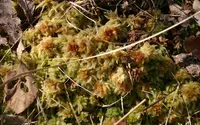
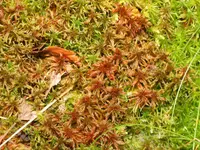
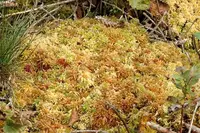
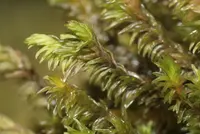
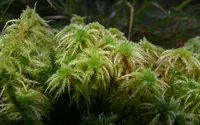
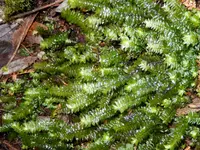
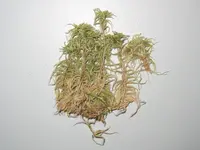
Red bog-moss, Sphagnum rubellum, is a small, carpet-forming moss that builds soft, spongy mats in cool, wet habitats. It stores large amounts of water in its tissues, which helps shape acidic bog and wetland ecosystems. The plant usually shows red to pink tones, especially in bright light, and grows slowly but steadily in dense cushions. It naturally occurs across northern Europe, parts of Asia, and North America, mostly in peat bogs and wet heaths. Its need for constant moisture, acidity, and good light makes it moderately challenging to care for red bog-moss outside of controlled terrariums or bog-style containers.

Care Difficulty
Hard Care

Light Preference
Partial Shade

Water Requirements
Aquatic

Temperature Preference
Cool Climate

Hardiness Zone
2–7

Soil Texture
Peaty, Organic-rich, Silty

Soil pH
Strongly acidic (4.5–5.5)

Soil Drainage
Waterlogged tolerant

Fertilization
Minimal (feed rarely)
Scan your plant to receive care tips personalized for your specific plant
Available on iOS and Android
This moss prefers bright, indirect light that mimics open but not fully exposed bog conditions.
This species is adapted to waterlogged, acidic bogs and must never be allowed to dry out.
This moss is cool-temperate and tolerates a wide range of outdoor conditions when moisture is constant.
This moss needs constantly high humidity to stay healthy and photosynthetically active.
This species thrives in saturated, acidic, organic substrates rather than conventional potting soil.
This moss is suitable for shallow containers and trays when moisture is controlled carefully.
This moss occurs in nutrient-poor bogs and Sphagnum rubellum usually needs no fertilizer in cultivation.
Pruning needs are minimal and focus on hygiene and maintaining a low, even mat.
Transplanting Sphagnum rubellum is mainly about renewing its wet, acidic substrate rather than handling a true root system.
Propagation relies on vegetative fragmentation, using healthy stem pieces to start new cushions.
This moss is naturally cold hardy, so outdoor colonies in suitable climates usually need little specific winter care.

Plant Health Check
Not sure what's wrong with your plant? Check your plant's health inside the app.
This species develops a distinct red to brick-red color, especially on exposed, nutrient-poor bog surfaces, due to protective pigments that shield its tissues from high light and UV while it continues slow growth in harsh conditions.
It typically occupies raised, ombrotrophic bog hummocks in cool, oceanic climates and is strongly associated with very acidic, nutrient-poor conditions, so its presence can indicate intact, relatively undisturbed peatland ecosystems.
By growing at the top while its lower layers die and accumulate as peat, this species contributes to long-term carbon storage in northern bogs and helps maintain the waterlogged, acidic conditions that slow decomposition.

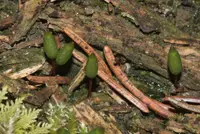
Genetic and morphological studies have shown that this moss is part of a closely related complex of red Sphagnum species, and careful microscopic examination of stem and branch leaf shapes is required to distinguish it reliably from similar species such as Sphagnum capillifolium.
Growth is slow to moderate. In consistently wet, acidic conditions it may extend 2–5 cm per year. Cooler temperatures and low light slow it further. Disturbance, drying, or nutrient-rich substrates can halt growth or cause dieback.
Keep your plants happy and healthy with plant identification, disease detection, and easy care guidance.